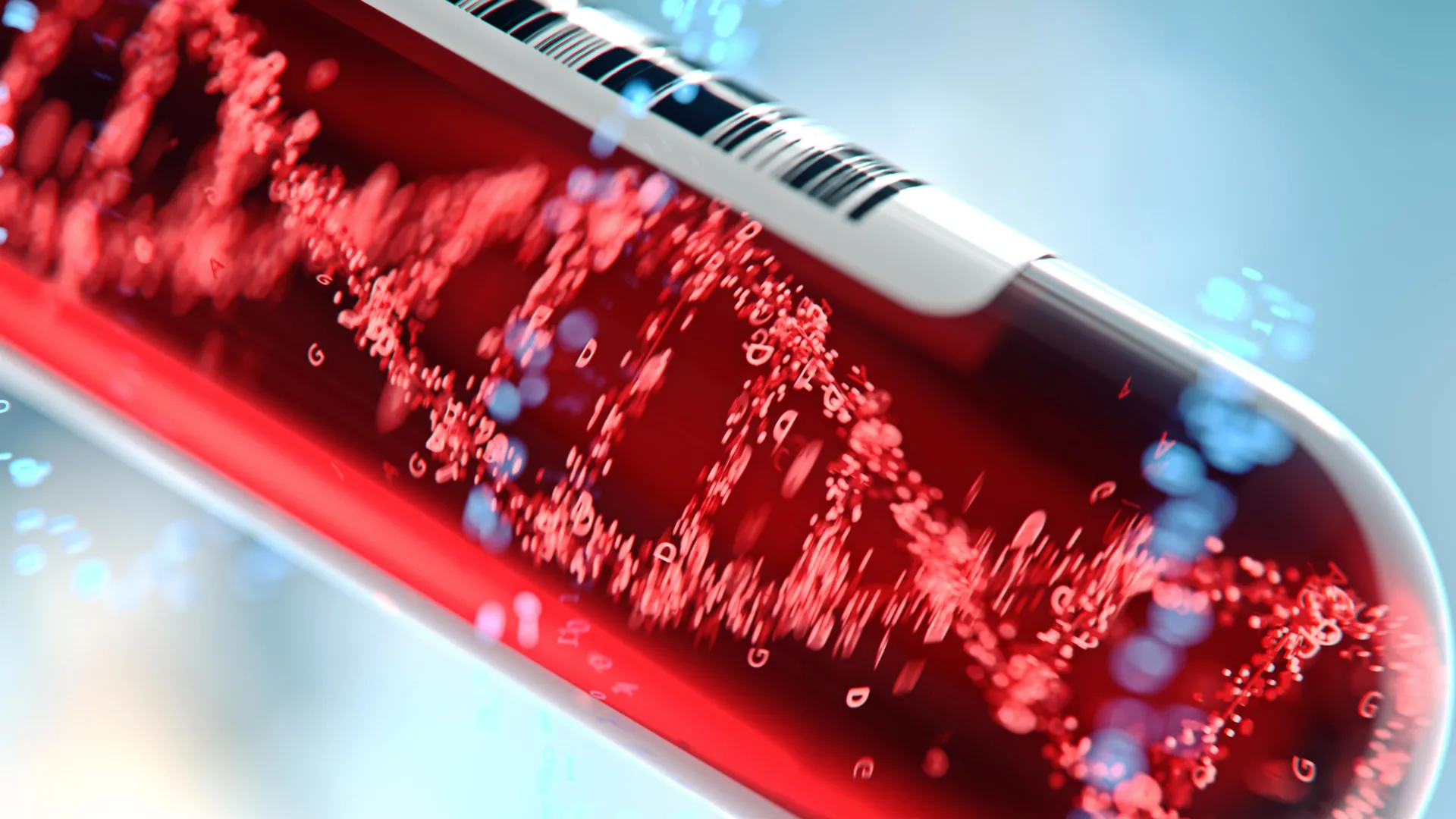
In a significant leap for precision medicine, researchers at the University of California, Los Angeles (UCLA), have unveiled a novel, cost-effective blood test capable of identifying multiple types of cancer, chronic liver diseases, and various organ-related pathologies simultaneously. By harnessing the molecular signatures found in cell-free DNA (cfDNA), this new diagnostic tool—dubbed "MethylScan"—could fundamentally reshape how clinicians screen for disease, moving the medical community closer to the elusive goal of a universal, non-invasive health assessment.
The findings, published in the Proceedings of the National Academy of Sciences, detail a methodology that bypasses the limitations of traditional liquid biopsies, which often rely on costly and exhaustive genetic sequencing. Instead, MethylScan reads the "epigenetic" language of the body, identifying chemical markers that reveal the health status of specific organs before symptoms ever manifest.
The Genesis of MethylScan: Moving Beyond Genetic Mutations
For decades, the "holy grail" of oncology has been the liquid biopsy. These tests look for circulating tumor DNA (ctDNA) in the blood, searching for specific genetic mutations—the "typos" in the genetic code—that signal the presence of malignancy. While revolutionary, these tests have been hampered by high costs and technical hurdles. Because tumor DNA is often present in trace amounts, finding it requires massive, expensive sequencing depth to distinguish a malignant signal from the noise of healthy cells.
UCLA researchers, led by Dr. Jasmine Zhou and Dr. Wenyuan Li, recognized that searching only for mutations was a limiting strategy. They shifted their focus to DNA methylation: chemical tags that attach to DNA and act as switches, turning genes on or off without changing the underlying sequence.
"DNA methylation reflects the health status of a tissue," explains Dr. Wenyuan Li, co-corresponding author and professor of pathology and laboratory medicine at UCLA. "It is a highly informative signal."
Because every organ in the body possesses a unique "methylation profile," these patterns are effectively a biological fingerprint. When cells die—a natural process that accounts for 50 to 70 billion cells in the human body every day—they release their DNA into the bloodstream. By analyzing these patterns, the MethylScan test can determine not just that a cell is malfunctioning, but precisely which organ that cell originated from.
Filtering the Noise: The Technical Breakthrough
The primary obstacle in liquid biopsy development is the "background noise" problem. Approximately 80% to 90% of the cell-free DNA circulating in a healthy person’s blood originates from normal blood cells. Detecting a rare, cancer-associated fragment against that overwhelming backdrop is akin to finding a needle in a haystack of needles.
To solve this, the UCLA team developed a sophisticated filtering process. Rather than sequencing everything in the blood, the researchers employed specialized enzymes to selectively degrade unmethylated DNA fragments, which are primarily derived from benign blood cells. Following this, they utilized a genome-wide hybridization panel to enrich the sample for methylated DNA specifically linked to solid organs.
This refinement is the key to the test’s affordability. By stripping away the "noise" before the sequencing process begins, the researchers can achieve a high level of sensitivity with far less data. A sequencing depth of 300x—the standard for accuracy—requires only 5 gigabases of data. At current market rates for sequencing, this brings the cost of the raw data to less than $20 per sample, a fraction of the price of current industry-standard liquid biopsies.
Clinical Validation: A Study of Over 1,000 Participants
The efficacy of the MethylScan technique was tested against a diverse cohort of 1,061 participants. The study population was carefully curated to ensure the test could distinguish between various health states, including:
- Patients with confirmed lung, liver, ovarian, and stomach cancers.
- Individuals suffering from chronic liver conditions, including hepatitis B, hepatitis C, alcohol-related liver disease, and metabolic-associated liver disease.
- Patients with benign lung nodules.
- A control group of healthy individuals.
By feeding the methylation data into advanced machine learning algorithms, the researchers were able to interpret the complex biological patterns. The results were striking. At a 98% specificity rate—meaning the test was exceptionally reliable at avoiding false positives—MethylScan identified roughly 63% of all cancers across various stages. Crucially, in the early stages of cancer, where survival rates are significantly higher, the test detected approximately 55% of cases.
The method showed particularly high performance in the high-risk liver disease category. In patients with liver cirrhosis or hepatitis B, MethylScan detected nearly 80% of liver cancers with a false-positive rate of less than 10%.
Official Perspectives: The Value of Early Detection
The significance of these findings lies in the concept of "actionable information." Dr. Jasmine Zhou, an investigator at the UCLA Health Jonsson Comprehensive Cancer Center, emphasizes that the timing of detection is the primary determinant of survival.
"Early detection is crucial," Dr. Zhou stated. "Survival rates are far higher when cancers are caught before they spread. If you detect cancer at stage one, outcomes are dramatically better than at stage four."
Beyond cancer, the test’s ability to pinpoint the "tissue of origin" is a major clinical advantage. "Being able to trace signals back to their source is important because a positive blood test needs to be followed by imaging or other diagnostic procedures directed at the right organ," Dr. Li noted.
This capability effectively turns the blood test into a "health radar." Because it scans for broad methylation changes rather than specific, pre-programmed mutations, it can detect cellular stress in the lungs, liver, or other organs even when the clinician isn’t looking for a specific disease. This could lead to the early discovery of liver fibrosis or other organ damage long before a patient presents with symptomatic illness.
Implications for Global Healthcare and Diagnostic Policy
The implications of the MethylScan platform extend far beyond the laboratory. If these results are replicated in larger, prospective trials, the technology could shift the paradigm of routine physical exams. Currently, identifying liver disease often requires invasive biopsies—a painful procedure with potential complications. The ability to distinguish between viral hepatitis and metabolic liver disease via a simple blood draw would not only improve patient comfort but also reduce the administrative and financial burden on the healthcare system.
However, the researchers remain cautious. While the data is compelling, the transition from a research study to a clinical tool requires rigorous validation in real-world screening environments. Scientists must determine how the test performs in "wild" populations where comorbidities and lifestyle factors might further complicate the methylation signatures.
Nevertheless, the potential for a "universal assay" is the driving force behind this research. By reducing the cost of sequencing and broadening the scope of what can be detected in a single sample, UCLA has provided a roadmap for a new generation of diagnostic tools.
"This study demonstrates that blood-based methylation profiling can deliver clinically meaningful information across multiple diseases," Dr. Zhou concluded. "It’s an exciting advancement that brings us closer to realizing the dream of a single assay for universal disease detection."
The study, which was supported by grants from the National Cancer Institute, involved a multidisciplinary effort, with Weihua Zeng, Shuo Li, and Yonggang Zhou serving as co-first authors. As the research moves into the next phase of development, the medical community will be watching closely to see if this "health radar" can truly move from the bench to the bedside, potentially saving countless lives through the simple, powerful act of reading the body’s own chemical signals.