










Every year, the influenza A virus triggers a global health crisis of staggering proportions. Responsible for 3 to 5 million cases of severe illness and up to 650,000 deaths annually, the virus remains a persistent threat, punctuated by the looming danger of new pandemics—much like the catastrophic 1918 Spanish Flu. Despite decades of study, the precise "battlefield map" of how the virus hijacks the machinery of a human cell has remained elusive.
Now, a breakthrough study from a collaborative team at the European Molecular Biology Laboratory (EMBL) Hamburg and the Leibniz Research Institute for Molecular Pharmacology (FMP) has provided the most detailed look yet at this molecular conquest. By observing protein interactions directly inside living, intact cells, researchers have unveiled the sophisticated strategies influenza uses to turn a host cell into a virus-producing factory.
The Chronology of an Invisible Coup
The life cycle of the influenza A virus is a masterclass in biological espionage. Upon entering a host cell, the virus releases its genetic payload—RNA strands containing the blueprints for its own survival. These instructions are quickly translated into viral proteins, which fan out across the host cell, systematically dismantling and redirecting its molecular infrastructure.
Phase 1: Infiltration and Reconfiguration
Historically, scientists have struggled to track these interactions because the standard laboratory methods required "breaking" the cell. To analyze protein contacts, researchers traditionally pulverized cell samples, a process that inadvertently destroys the delicate, compartmentalized architecture of the cell. This "smash-and-grab" approach often led to false positives—where proteins that never actually met in nature were suddenly forced into proximity—while simultaneously causing transient or weak interactions to disappear entirely.
Phase 2: The Breakthrough Methodology
The breakthrough occurred when the EMBL team, led by Group Leader Jan Kosinski, joined forces with Boris Bogdanow and Fan Liu at the FMP in Berlin. They utilized a specialized, high-resolution version of cross-linking mass spectrometry (XL-MS). Unlike previous methods, XL-MS allows researchers to "freeze" protein interactions in their native state, directly inside the cell, before the structural analysis begins.
Phase 3: Computational Integration
The final piece of the puzzle involved integrating this experimental data with artificial intelligence. Using a modified version of AlphaFold—the revolutionary protein-folding algorithm—the researchers were able to map the spatial positioning of these interacting proteins. By feeding their cross-linking data directly into the AI, the team could visualize exactly how viral proteins "dock" with human proteins, providing a structural roadmap of the infection.
Supporting Data: Mapping the Hijack
The findings, published in Nature Microbiology, identify two critical, previously under-researched strategies employed by influenza A to secure its dominance.
The Hemagglutinin Supply Chain
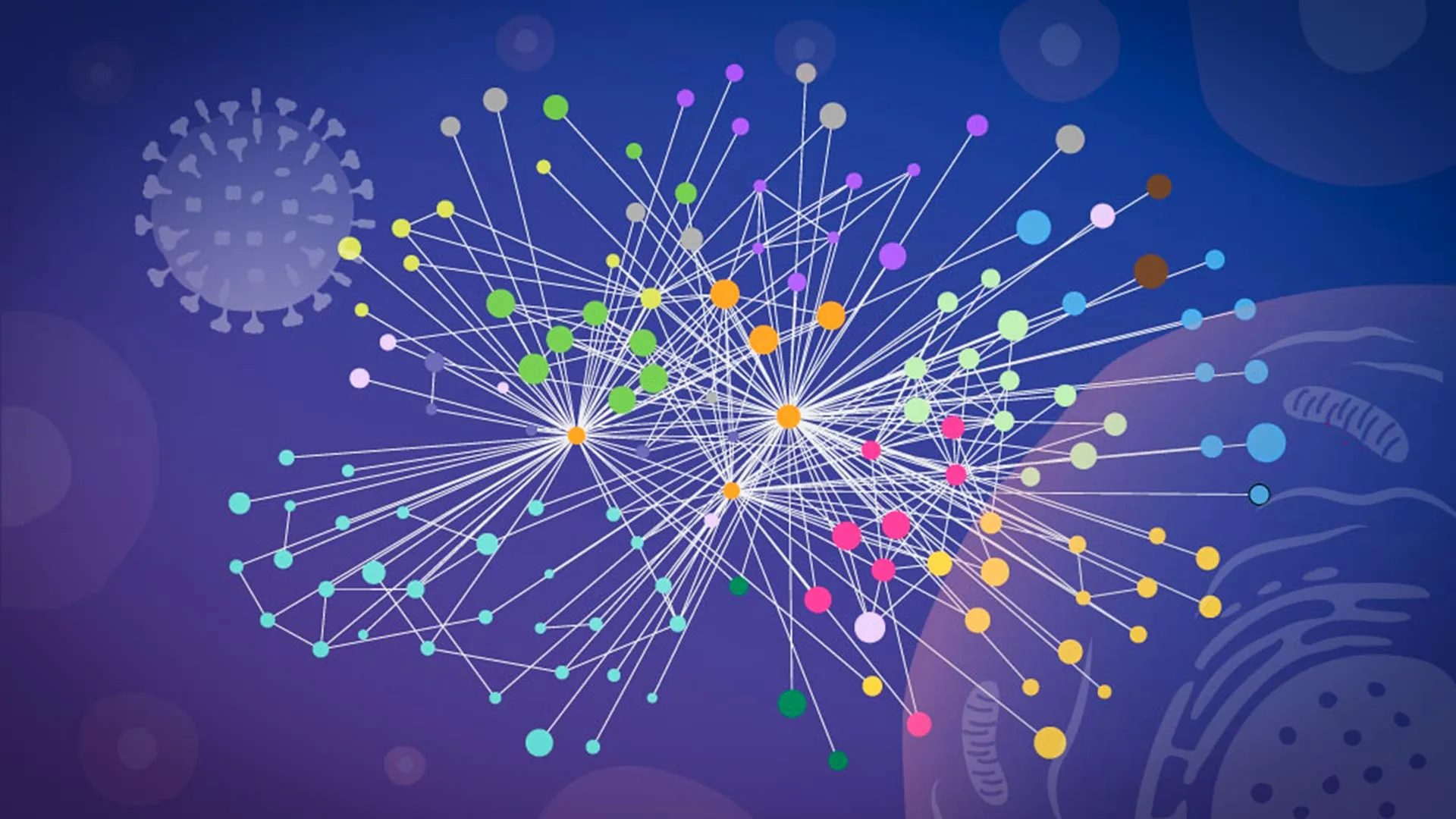
The first strategy involves hemagglutinin, the spike-like protein on the virus’s surface that acts as a key to enter human cells. Once inside, hemagglutinin must be processed and folded within the cell’s internal transport network. The research team discovered that the virus systematically recruits specific human proteins to act as "chaperones," ensuring the hemagglutinin is correctly modified. Many of these host proteins were previously enigmatic, with their biological functions poorly understood by the scientific community. By hijacking these specific host systems, the virus ensures that its "keys" are perfectly manufactured for the next round of infection.
The Paraspeckle Dissolution
Perhaps the most striking discovery concerns "paraspeckles"—tiny, droplet-like organelles sequestered within the cell nucleus. The team observed that influenza A infection consistently triggers the dissolution of these structures.
"What surprised us most was the paraspeckles," said Iuliia Kotova, the study’s first author and former predoctoral fellow at EMBL. "Watching these tiny organelles in the nucleus dissolve, consistently across every cell line and every flu strain we tested, told us this isn’t a side effect of infection—it might be a strategy."
When these droplets break apart, they release RNA-binding proteins that the virus then repurposes to accelerate its own replication. Furthermore, because paraspeckles are known to play a role in the cell’s stress response and antiviral gene regulation, the virus likely dissolves them to effectively "silence" the cell’s internal alarm system, preventing it from mounting an effective immune defense.
Official Perspectives: The Experts Weigh In
The study represents a triumph of cross-institutional collaboration. By combining the strengths of EMBL’s computational biology, the FMP’s specialized mass spectrometry, and the imaging expertise of the Centre for Structural Systems Biology (CSSB), the team has set a new gold standard for virology research.
Jan Kosinski, Group Leader at EMBL Hamburg and CSSB, emphasized the utility of this "snapshot" approach. "Our work provides a new way to study flu-host interactions in their native context and with structural insight," Kosinski stated. "The current results are a snapshot of a moment during infection, and it opens the door to studying flu-host interactions across the entire infection cycle."
Boris Bogdanow, now a Junior Research Group Leader at Charité – Universitätsmedizin Berlin, highlighted the clinical potential of these findings. "XL-MS allows us to capture protein-protein interactions directly in infected intact cells, while also providing structural information about how these interactions are happening," he explained. "This gives us insight into the interface between the virus and the human cell and may, through structural modeling, help identify actionable targets for future pharmaceutical interventions."
Implications for Future Pandemic Preparedness
The implications of this research extend far beyond the seasonal flu. By demonstrating that it is possible to map the "native" interactions of a virus, the researchers have created a blueprint for investigating more dangerous pathogens.
A Broadly Applicable Framework
The methodology—combining in-cell cross-linking, AlphaFold-based structural modeling, and targeted cell biology—is not limited to influenza. It provides a robust framework that can be applied to virtually any virus. As researchers look toward viruses with high pandemic potential, such as H5N1, this approach could prove invaluable.
The Path to Novel Therapeutics
Current antiviral drugs often target the virus directly, which can lead to rapid viral mutation and drug resistance. By mapping the interaction network between the virus and the human host, scientists can begin to identify "bottleneck" proteins—human proteins that the virus must hijack to survive. Targeting these host factors, rather than the virus itself, could lead to a new generation of antivirals that are significantly harder for viruses to circumvent through mutation.
Looking Ahead
The team is already looking toward the future. By refining their ability to observe these interactions across different stages of infection, they hope to create a dynamic "movie" of the viral takeover rather than just a static map.
"Although this study has focused on a lab-adapted strain, this study lays the groundwork to apply the methodology to viruses of potential pandemic relevance," Bogdanow noted.
As global health authorities continue to monitor the evolution of influenza, the work of the EMBL and FMP researchers provides a beacon of progress. By seeing exactly how the virus plays its hand, humanity is finally gaining the tools to change the rules of the game. This collaborative effort has not only provided a clearer view of an old enemy but has also fundamentally altered the landscape of how we study the microscopic wars occurring within our own cells.