









In recent years, a seismic shift has occurred in the digital wellness landscape. If you spend any time on TikTok, Instagram, or the darker corners of health forums, you have likely encountered a crusade against "seed oils." Viral posts frequently brand vegetable oils as "toxic sludge," "motor oil," or "the biggest cause of chronic disease that nobody knows about."
This fervor, often amplified by proponents of the carnivore diet and various ancestral-living influencers, has cast a long shadow over modern cooking fats. But is the skepticism justified? Or is the "anti-seed oil" movement a classic case of nutritional reductionism? To make sense of the noise, we must look beyond the memes and examine the science, the history, and the reality of how these fats impact human health.
The Evolution of the Anti-Oil Narrative
To understand the current hostility toward vegetable oils, we must look at the historical timeline of dietary advice. For decades, vegetable oils were marketed as the "heart-healthy" alternative to animal fats like butter and lard. During the 1980s and 90s, the public was encouraged to avoid saturated fats, leading to the rise of margarine—a product that, as we now know, was often loaded with harmful trans fats.
When the medical establishment eventually realized that trans fats were a public health disaster, the pendulum swung. Critics of the modern diet began to argue that if the "healthy" alternative (margarine) was actually dangerous, perhaps the entire class of industrial seed oils was fundamentally flawed.
This skepticism gained significant momentum with the rise of social media. Influencers began labeling corn, soybean, canola, and sunflower oils as "The Hateful Eight." The core argument is rooted in an evolutionary perspective: animal fats have sustained humans for millennia, whereas industrial seed oils were "invented" in the last century by profit-driven corporations. Proponents argue that the human body is not adapted to metabolize these highly refined, chemically extracted oils, leading to a host of modern ailments including obesity, depression, and systemic inflammation.
The Science of Extraction: Why Process Matters
The fundamental issue with the "seed oil" debate often comes down to how these products are manufactured. Not all oils are created equal.
Oils like olive or avocado are derived from fruits that are naturally rich in lipids. You can, quite literally, press an olive and extract oil with minimal intervention. These are "whole food" fats. In contrast, seeds like corn, canola, and soy have relatively low fat content. A cup of green olives provides approximately 20 grams of fat, while a cup of corn provides only about 2 grams.

Because of this, manufacturers must employ an intensive, multi-step process to extract the oil:
- Cleaning and Dehulling: Removing foreign material and outer husks.
- Heating and Mechanical Pressing: Using high temperatures to soften the seeds.
- Solvent Extraction: Often using hexane to strip every remaining drop of oil from the seed pulp.
- Refining, Bleaching, and Deodorizing: Removing impurities, color, and odors that occur during the harsh extraction process.
During this industrial journey, the oil loses its natural stabilizing nutrients—polyphenols and antioxidants—that would otherwise protect the oil from oxidation. Furthermore, the high-heat processing can cause a small percentage of unsaturated fats to transform into trans fatty acids. While the FDA banned the addition of trans fats to processed foods in 2018, the small amounts inherent in refined oils remain a point of contention among nutritionists.
Head-to-Head: Extra Virgin Olive Oil vs. Canola Oil
When navigating the grocery store, the choices can be overwhelming. Let’s look at the science behind two of the most discussed oils.
The Case for Extra Virgin Olive Oil (EVOO)
EVOO is widely considered the gold standard of cooking fats. Unlike refined oils, it is mechanically pressed without heat or solvents, preserving its rich profile of monounsaturated fatty acids (MUFAs) and potent polyphenols.
The evidence supporting EVOO is vast. A landmark study involving 22,892 adults in Southern Italy found that those who consumed more than two tablespoons of olive oil daily had a 20 percent lower mortality rate over 13 years compared to those who consumed the least. Furthermore, EVOO has been linked to lower risks of cardiovascular disease, cognitive decline, and certain cancers. Despite old myths about its "low smoke point," recent research suggests that the antioxidants in high-quality EVOO make it surprisingly stable at high cooking temperatures.
The Case for Expeller-Pressed Canola Oil
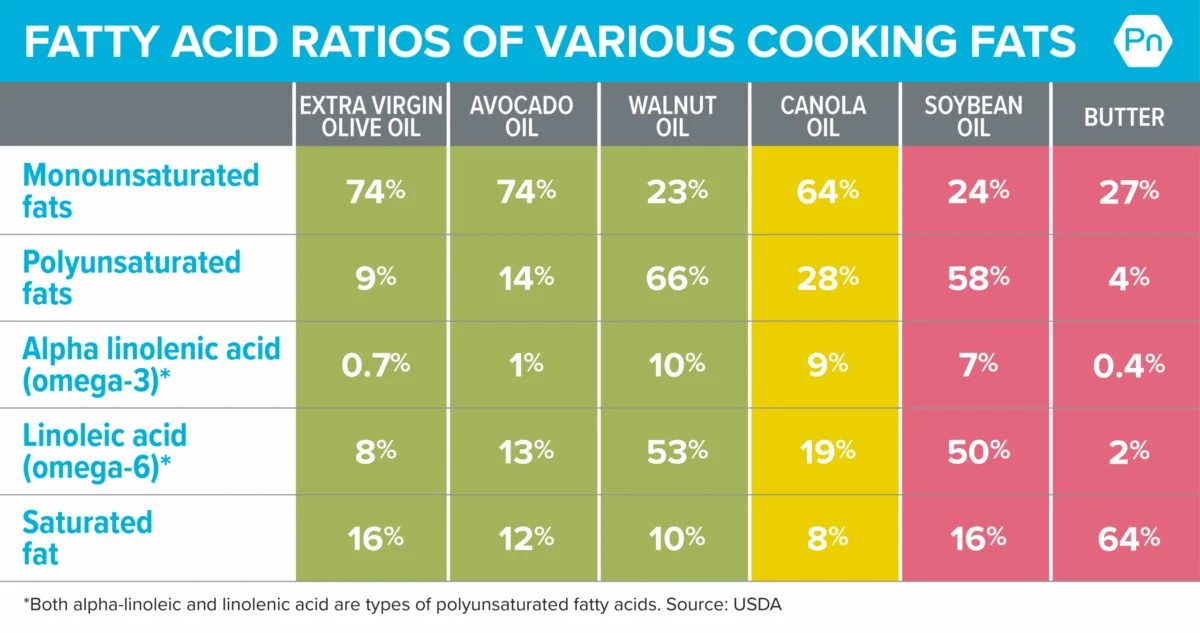
Canola oil is often the primary target of "seed oil" critics, but it occupies a unique space. Derived from a hybrid of the rapeseed plant, it is one of the more affordable options on the shelf. While it lacks the dense polyphenol profile of EVOO, it is high in monounsaturated fats and contains alpha-linolenic acid (an omega-3 fatty acid). When expeller-pressed—meaning it is squeezed mechanically without chemical solvents—it is a relatively clean product. It is a "health-neutral" option that functions well for those on a budget or for baking where a neutral flavor is required.
The Omega-6 Inflammation Debate
A major pillar of the anti-seed oil argument is the ratio of omega-6 to omega-3 fatty acids. Critics point out that the typical American diet contains 16 to 20 times more omega-6 than omega-3, which they claim triggers chronic systemic inflammation.

However, modern nutritional science is shifting its view. The American Heart Association has noted that when omega-6 fats are consumed within the context of a healthy diet (such as in nuts and seeds), they are not inherently inflammatory; in fact, they are associated with reduced risks of heart disease and stroke. The distinction lies in the source. When you eat a handful of walnuts, you get omega-6s packaged with fiber, protein, and antioxidants. When you consume a refined, ultra-processed seed oil, you get the fatty acids stripped of their protective matrix, which may indeed make them more prone to oxidation.
The Reality of Ultra-Processed Foods
The real villain in the modern diet is likely not the bottle of canola oil in your pantry, but the "invisible" oils found in ultra-processed foods.
When you eat a store-bought cookie, a bag of chips, or a frozen meal, you are consuming oils that have been exposed to multiple rounds of heat, processing, and long-term storage. These oils are often oxidized, low in nutritional value, and part of calorie-dense, hyper-palatable food matrices that are designed to be over-consumed. Research involving nearly 10 million people has consistently linked the high consumption of ultra-processed foods to premature death and chronic disease.
The strategy should not be to obsessively fear a specific oil, but to focus on the 80/20 rule: obtain 80 percent of your calories from whole, minimally processed foods, and allow the remaining 20 percent for flexibility.
Practical Implications for Your Kitchen
If you are looking to optimize your diet, the following guidelines provide a science-backed approach:
- Prioritize Minimally Processed Fats: Choose extra virgin olive oil, avocado oil, and walnut oil whenever possible. These are rich in beneficial compounds and are the least chemically altered.
- Use "Eat Some" Oils Sparingly: Expeller-pressed canola oil, high-oleic sunflower, and safflower oils are acceptable for cooking, especially when the budget is a factor or a neutral flavor is needed.
- Minimize Deep-Fried Foods: The temperature and duration of industrial deep-frying cause oils to degrade and oxidize rapidly, regardless of the oil’s original quality.
- Get Fats from Food, Not Bottles: The best way to consume fats is through whole foods like olives, avocados, nuts, and fatty fish. These sources provide a complex matrix of fiber, vitamins, and minerals that isolated oils simply cannot replicate.
Conclusion: Nuance Over Dogma
The debate over vegetable and seed oils is a perfect example of how nutritional science is often distorted for the sake of simplicity. While the "toxic" labels found on social media are an exaggeration, there is legitimate scientific merit to the idea that we should reduce our reliance on highly processed, industrial oils.
However, replacing one fear-based obsession with another is rarely the path to better health. By focusing on whole-food sources of fat and limiting ultra-processed products, you can cultivate a diet that is both protective against disease and sustainable for the long term. The truth, as is so often the case in nutrition, isn’t found in a meme—it’s found on your plate, in the quality of the ingredients you choose, and in the balance of your overall intake.