











In an era defined by deep political polarization, a singular, visceral issue is forging an unlikely alliance between the corridors of the Department of Health and Human Services (HHS) and the legacy of public health advocacy. HHS Secretary Robert F. Kennedy Jr. and former FDA Commissioner Dr. David Kessler have launched a coordinated, high-stakes campaign to dismantle a 67-year-old regulatory loophole that critics argue has facilitated a silent public health catastrophe.
At the center of this firestorm is the "Generally Recognized As Safe" (GRAS) designation—a 1958 provision originally intended to exempt common food staples like vinegar and salt from rigorous pre-market testing. Today, it has morphed into a convenient back door for the food industry to flood the American diet with thousands of proprietary, ultra-processed additives without ever informing federal regulators. As the nation faces an unprecedented epidemic of metabolic disease, the push to reform this loophole represents the most significant challenge to the industrial food complex in modern history.
The Core Conflict: A Loophole Gone Rogue
The "GRAS" designation was meant to be a narrow exception, a common-sense measure to save the FDA from having to review ingredients whose safety was established by decades of widespread use. However, the regulatory environment shifted dramatically in 1997, when the FDA implemented a voluntary notification system. This policy change effectively shifted the burden of proof from the manufacturer to the public.
Under current rules, companies can "self-affirm" that a new chemical or synthetic additive is safe, often relying on internal research, without ever submitting their findings to the FDA. The scale of this regulatory vacuum is staggering. According to data analyzed by the Environmental Working Group (EWG), a staggering 99% of the 766 food chemicals introduced to the U.S. market between 2000 and 2021 circumvented FDA scrutiny entirely through this self-policing mechanism.
Secretary Kennedy has characterized this as a systemic failure of oversight. "This agency does not know how many ingredients there are in American food," Kennedy recently remarked, highlighting a stark global disparity. While the European Union restricts the food supply to approximately 400 approved additives, the American market is estimated to contain between 4,000 and 10,000 substances, many of which are synthesized in industrial laboratories rather than grown in fields.
Chronology: From 1958 to the Modern Crisis
The trajectory of the American diet can be traced through a series of legislative and corporate milestones that have prioritized shelf-stability and hyper-palatability over nutritional integrity.
- 1958: The Food Additives Amendment is passed, establishing the GRAS provision. At the time, it was intended to streamline the approval of ingredients with a long history of safe use.
- 1997: The FDA introduces a voluntary notification program for GRAS substances, effectively allowing industry to bypass mandatory federal review.
- 2000–2021: A "wild west" era of food innovation ensues. During this period, the vast majority of new food additives enter the U.S. market without any meaningful government oversight.
- 2020–2024: Federal data from the CDC confirms a grim milestone: 55% of all calories consumed by American adults, and 62% of calories consumed by children, now derive from ultra-processed formulations.
- 2025–2026: The emergence of a bipartisan movement, led by Secretary Kennedy and Dr. Kessler, marks the first serious legislative attempt to revoke the GRAS status for refined carbohydrates and synthetic additives.
The Metabolic Havoc: Dr. Kessler’s Diagnosis
Dr. David Kessler, whose tenure as FDA Commissioner in the 1990s was marked by his relentless pursuit of the tobacco industry, views the current state of the American food supply as a biological crisis. Kessler argues that the current generation is the first in human history to be exposed to a diet that our bodies were not evolutionarily equipped to process.
"Over the last 40 years, the United States has been exposed to something that our biology was never intended to handle," Kessler stated. He describes the modern ultra-processed diet as "energy-dense, highly palatable, and rapidly absorbable." These characteristics trigger a feedback loop in the brain’s reward centers, overriding the body’s natural satiety signals.
Kessler is currently petitioning the FDA to force a re-evaluation of refined carbohydrates, such as corn syrup solids and maltodextrin. His argument is rooted in the "metabolic havoc" these substances wreak: the insulin spikes, the inflammation, and the systemic damage to the liver and pancreas. For Kessler, the similarity to his fight against big tobacco is not merely metaphorical; he sees the same pattern of engineering products for maximum addictiveness while systematically obscuring the health consequences.
The Paradox of Subsidies: Funding the Disease
A major focal point of the current reform effort is the inherent contradiction in federal agricultural policy. Author Michael Pollan has long criticized the government’s role in subsidizing the very raw materials—primarily commodity corn and soy—that are processed into the cheap, calorically dense ingredients fueling the diabetes epidemic.
"We are supporting both sides in the war on Type 2 diabetes," Pollan notes. Taxpayer-funded subsidies artificially lower the cost of high-fructose corn syrup and soy-based additives, while the public concurrently bears the massive financial burden of the healthcare costs associated with obesity, heart disease, and metabolic dysfunction.
This financial feedback loop has caught the attention of local governments. In a landmark development, San Francisco City Attorney David Chiu has initiated litigation against ten major food manufacturers. The lawsuit alleges that these corporations knowingly engineered addictive products and concealed the health risks, a strategy the suit compares to the documented "playbook" used by tobacco companies in the late 20th century.
Official Responses and Industry Defense
The food industry has mounted a vigorous defense, emphasizing the importance of innovation and the lack of a standardized definition for "ultra-processed" foods. The Consumer Brands Association has maintained that its members operate under rigorous safety protocols and that the current FDA framework is sufficient to protect public health.
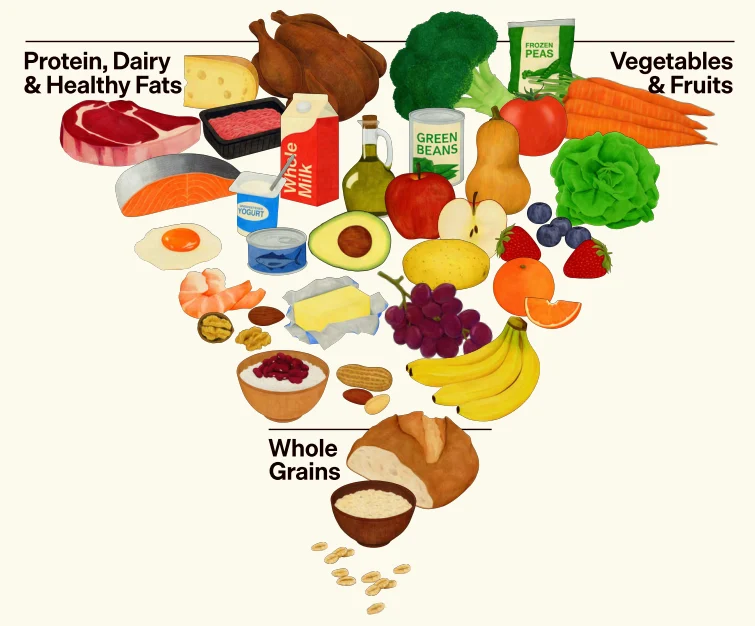
However, the political winds are shifting. Secretary Kennedy has signaled that he intends to act on the petitions put forth by experts like Kessler. Kennedy has already begun issuing new dietary guidelines that explicitly advise against the consumption of ultra-processed products, and he has expressed a clear intent to close the regulatory back door of the GRAS system, pending necessary White House approval.
Meanwhile, in Congress, momentum is building for the "Childhood Obesity Reduction Act," which would implement stricter labeling requirements and mandate more robust oversight for additives. These legislative efforts are being bolstered by a public increasingly concerned with food transparency.
Implications: A Turning Point for Public Health
The convergence of federal data, high-profile legal action, and a bipartisan push for transparency signals a potential "Great Reset" in how America conceptualizes its food system. The statistics offer a glimmer of cautious optimism; recent data suggests a slight, albeit statistically significant, decline in ultra-processed food consumption among adults over the last decade, indicating that consumer awareness is finally beginning to influence market demand.
Yet, the path forward remains treacherous. The lobbying power of "Big Ag" and "Big Food" remains formidable. These entities view the proposed reforms not as a public health necessity, but as a fundamental threat to their business models.
The ultimate resolution will depend on whether the redefined FDA can withstand political pressure to prioritize public health over industrial convenience. The nation is currently deciding whether to rebuild its food paradigm on a foundation of genuine nutritional health or to continue drifting under the influence of an outdated and hazardous regulatory architecture. For policymakers like Kennedy and Kessler, the mission is simple: return the American diet to a state that human biology can actually manage, before the long-term consequences of metabolic disease become irreversible for the next generation.