









The release of the 2025–2030 Dietary Guidelines for Americans (DGAs) this week was met with both anticipation and skepticism. Framed by the catchy, consumer-friendly tagline “Eat Real Food,” the latest iteration of the federal government’s nutrition roadmap aims to curb the nation’s epidemic of diet-related chronic disease. While the guidelines take a commendable, firmer stance against the pervasive consumption of added sugars and ultra-processed foods, the document is already drawing fire from the scientific community for internal contradictions, a potentially misleading visual pyramid, and a controversial shift in the development process that has left experts questioning the transparency of the final recommendations.
Main Facts: The Core of the New Guidelines
At their foundation, the 2025–2030 DGAs attempt to steer the American public away from the industrial food system and toward whole, nutrient-dense ingredients. The document explicitly advises against sugar-sweetened beverages, refined carbohydrates, and highly processed snack foods.
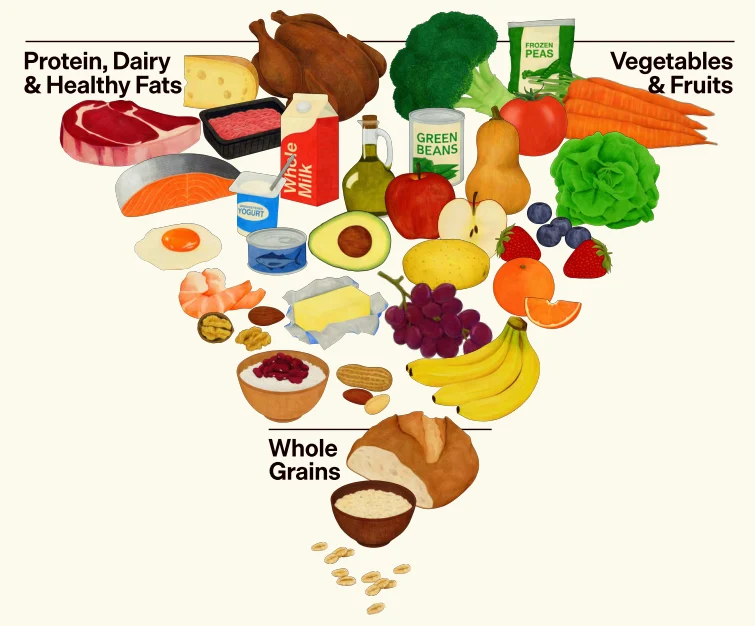
However, the headline-grabbing feature of this release is the return of a food pyramid—an iconic, if historically contentious, visual aid. In a dramatic twist, the new pyramid is “flipped on its head,” visually prioritizing steak, full-fat dairy, and butter. This design choice stands in stark contrast to the text of the guidelines themselves, which maintain the established scientific limit for saturated fat: no more than 10% of total daily caloric intake. This disconnect between the visual "New Food Pyramid" and the clinical text of the guidelines has created a sense of cognitive dissonance for nutrition professionals and consumers alike.
A Chronology of Controversy: How We Got Here
The journey to the 2025–2030 DGAs represents a significant departure from historical norms. Traditionally, the process is iterative and transparent: an independent Dietary Guidelines Advisory Committee (DGAC)—a panel of preeminent nutrition scientists—conducts a two-year, evidence-based review of the current state of nutritional science. Their findings are summarized in a Scientific Report, which then informs the final policy drafted by the U.S. Department of Agriculture (USDA) and the Department of Health and Human Services (HHS).
For this cycle, however, that established protocol was disrupted. The original Advisory Committee’s report was notably rejected by the administration. In its place, the government commissioned a "supplemental scientific analysis" conducted by a group of individuals selected through a private federal contracting process.
This change has sparked intense backlash. Critics, including Deirdre Tobias, an assistant professor at the Harvard T.H. Chan School of Public Health and a member of the original DGAC, have publicly lamented the lack of transparency in this new methodology. "There is no transparency in the methodology and rigor that was employed," Tobias noted in a recent Q&A, highlighting that the supplemental review process deviated significantly from the rigorous, replicable, and unbiased standards previously required by HHS. Furthermore, investigative reports have uncovered that several members of this supplemental panel possess documented financial ties to the beef and dairy industries—a detail that, while disclosed, has cast a long shadow over the visual prominence of those specific food groups in the new pyramid.
Supporting Data: The Saturated Fat and Protein Math
The tension between the visual guidelines and the physiological reality is perhaps best illustrated through basic nutritional math. If an individual follows a 2,000-calorie diet, the 10% threshold for saturated fat equates to approximately 22 grams per day.
If a consumer follows the DGA’s recommendation for three daily servings of dairy—opting for the "full-fat" versions featured in the new pyramid—the math becomes precarious. A single cup of whole milk (5g of saturated fat), three-quarters of a cup of full-fat Greek yogurt (6g), and one ounce of cheddar cheese (6g) bring the daily total to 17 grams of saturated fat. Adding a single tablespoon of butter (7g) or beef tallow (6g) for cooking puts the consumer at 23–24 grams, exceeding the recommended limit before a single gram of meat, poultry, or other protein is even considered.
Similarly, the guidelines have raised the recommended protein intake to 1.2 to 1.6 grams per kilogram of body weight—an increase of 50–100% over previous minimums. While protein is essential for metabolic health, the guidelines fail to distinguish between the "protein package." Research consistently shows that the source of protein—whether it be fiber-rich plant-based legumes, heart-healthy fish, or saturated-fat-laden red meat—drastically alters long-term health outcomes. By failing to prioritize the quality of protein sources, the DGAs may inadvertently encourage an intake pattern that increases cardiovascular risk.
Official Responses and Expert Critique
The scientific community’s response has been one of cautious critique. Dr. Frank Hu, chair of the Department of Nutrition at the Harvard T.H. Chan School of Public Health, acknowledges the positive steps regarding sugar and refined grains but warns of the "mixed messages" being broadcast to the public.
"The mixed messages surrounding saturated-fat-rich foods such as red meat, butter, and beef tallow may lead to confusion and potentially higher intake of saturated fat," Dr. Hu stated. He specifically highlighted that while the pyramid includes olive oil, it frames it as an alternative without explicitly advising consumers to replace animal fats with plant oils—a crucial distinction for heart health.
When asked about the new guidelines, government representatives have maintained that the supplemental report was conducted with "scientific rigor" and subjected to internal quality checks. However, the absence of a public, peer-reviewed methodology has made it difficult for academic nutritionists to defend the recommendations.
Implications for Public Health
The implications of these guidelines are far-reaching. Americans have historically struggled to adhere to federal dietary advice, and the complexity of the current document may only widen that gap.
1. Confusion in the Kitchen
The most immediate risk is consumer confusion. When a graphic encourages the consumption of foods that the text then warns against limiting, the average shopper is likely to default to the most visually appealing or convenient option. In the case of the new pyramid, this means an increase in the consumption of animal products high in saturated fats.
2. The "Hidden" Costs of Policy
The DGAs continue to ignore the environmental impact of food choices. In an era where the link between dietary patterns, climate change, and global food sustainability is well-documented, the omission of these factors suggests a policy framework that is increasingly disconnected from 21st-century realities.
3. A Need for Personalized Guidance
Because the federal guidelines lack the nuance required for individual health management, the burden of education falls on healthcare providers and registered dietitians. Experts suggest that rather than relying solely on the government’s new pyramid, individuals should look toward evidence-based tools like the Healthy Eating Plate. This model emphasizes a higher ratio of vegetables, fruits, and whole grains while providing clearer, more consistent guidance on healthy fats and protein sources.
Conclusion: A Turning Point for Nutrition Policy
The 2025–2030 Dietary Guidelines for Americans represent a pivotal moment in public health messaging. By finally identifying "highly processed foods" as a target for reduction, the government has moved closer to the scientific consensus. However, the path taken to reach these conclusions—and the contradictory nature of the resulting visual materials—undermines the very credibility the guidelines aim to project.
For the average American, the lesson is clear: nutritional literacy cannot be outsourced to a single document or a static pyramid. In an environment where dietary advice is often swayed by political and industrial interests, consumers must prioritize evidence-based, transparent, and consistent sources of information. Whether these new guidelines will lead to better health outcomes or further confusion remains to be seen, but for now, the recommendation from the scientific community remains unchanged: prioritize whole, plant-forward foods, keep saturated fats in check, and look beyond the latest government graphic for your health journey.