By Global Defense Correspondent
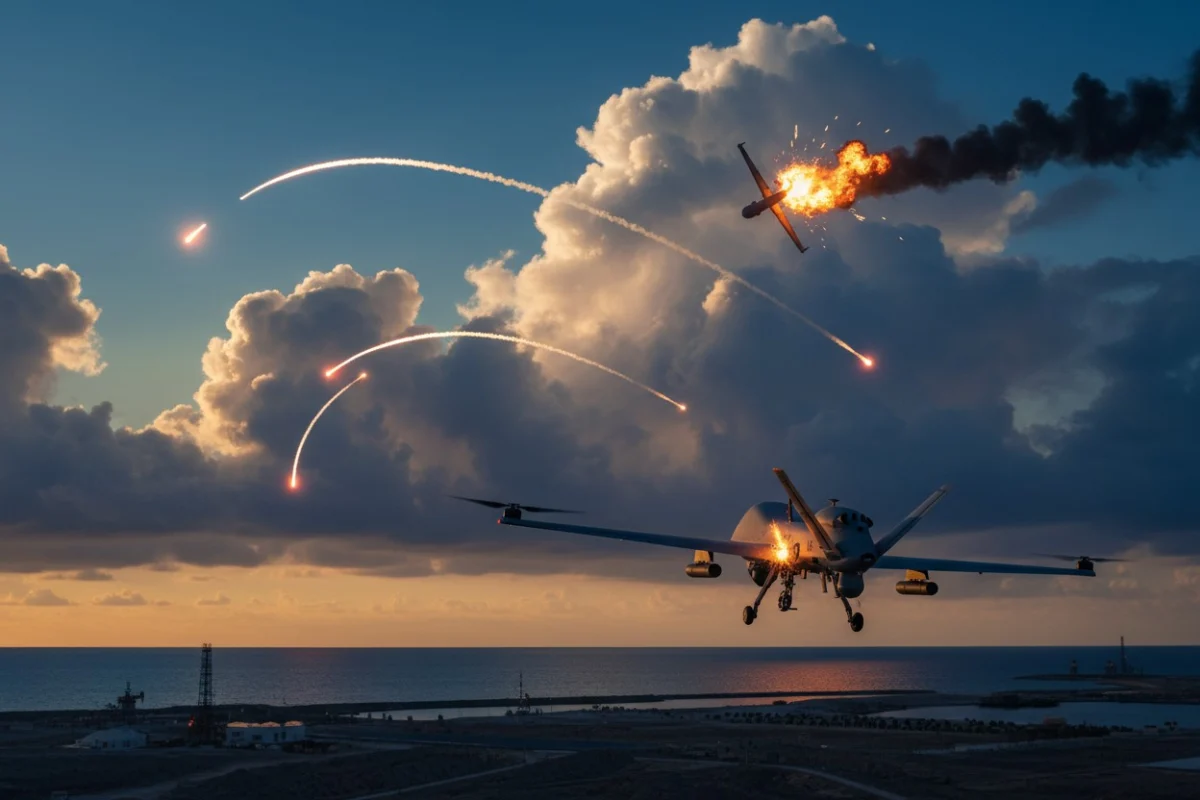
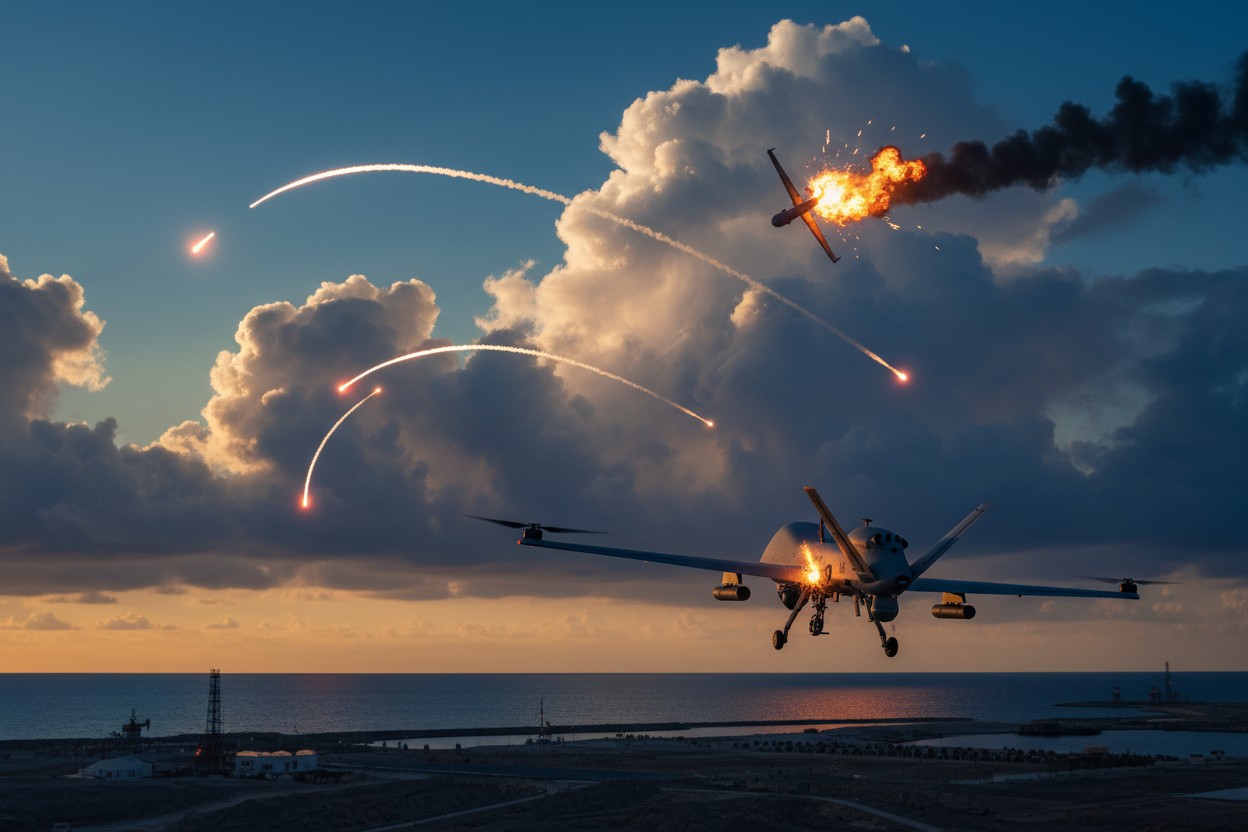
The U.S. military’s reliance on the MQ-9 Reaper drone—once touted as the pinnacle of remote-warfare technology—has hit a critical inflection point. According to a recent report by The Washington Post, the United States has lost at least 45 MQ-9 Reaper drones during the ongoing conflict with Iran. This figure represents roughly 25% of the entire operational fleet, marking one of the most significant degradations of U.S. aerial assets since the Vietnam War. As the conflict intensifies, these losses are not merely logistical setbacks; they serve as a stark indictment of the vulnerability of expensive, high-altitude platforms when pitted against a sophisticated adversary equipped with modern integrated air defense systems.
The Erosion of Air Superiority
For over two decades, the MQ-9 Reaper has been the workhorse of the U.S. "War on Terror," serving as a persistent surveillance and strike platform in theaters ranging from Somalia to the Middle East. However, the paradigm of "permissive environments"—where U.S. drones could operate with near-total impunity—has evaporated. Against Iranian air defense networks, the MQ-9 has been described by military analysts as "extremely vulnerable."
The depletion of the fleet is multifaceted. While high-profile shootdowns by Iranian surface-to-air missiles garner the most attention, a significant portion of the losses is attributed to structural and technological failures. The drones have been lost through a combination of kinetic intercepts, direct strikes on U.S. bases hosting drone hangars, and systemic communications failures that led to non-combat crashes. A U.S. official confirmed that a non-trivial number of these assets simply fell from the sky after losing the critical data link required for remote piloting, highlighting the susceptibility of these platforms to electronic warfare and signal jamming.
A Chronology of Strategic Attrition
The destruction of these assets has occurred in waves, tracking closely with the escalation of regional hostilities. The current attrition rate is exacerbated by simultaneous campaigns. Beyond the direct conflict with Iran, the U.S. military lost over 20 MQ-9 units during operations against Ansar Allah (the Houthi movement) in Yemen throughout 2024 and 2025.
The pattern of loss became undeniable by early 2024. In February of that year, Houthi forces claimed the downing of a $32 million MQ-9 near the Yemeni coast. This was not an isolated incident but part of a broader trend of technical vulnerability. Later, in March 2024, a Reaper was forced to make an emergency landing in Poland—far from the Iranian theater—after a total loss of connection with its ground control station. This incident prompted internal Pentagon reviews regarding the reliability of the MQ-9’s command-and-control architecture, which appears increasingly prone to interference or software-driven failures.
The intensity of the losses reached a new zenith with the launch of "Operation Epic Fury" on February 28, 2026, by the Trump administration. In the first five weeks of the operation alone, the financial and physical toll on the drone fleet surged, with American Enterprise Institute researchers estimating the initial phase of the campaign cost the U.S. taxpayer between $22.3 billion and $31 billion, a figure that continues to climb as the blockade of the Strait of Hormuz persists.
The Financial Burden: A Billions-Dollar Deficit
The economic implications of losing 45 MQ-9s are staggering. Estimates on the total cost to replace these assets vary, with some reports suggesting $1.3 billion, while more comprehensive assessments—factoring in specialized sensor suites, ground control upgrades, and inflationary adjustments in defense procurement—place the figure as high as $2.25 billion.
This fiscal hemorrhage is compounded by the structural inefficiencies of the defense-industrial complex. As detailed in David Dayen’s Monopolized, defense contractors like TransDigm have a documented history of escalating prices for spare parts and critical components, year after year. For the Pentagon, this creates a "double-bind": they must replace lost, high-cost assets in a market where price gouging is institutionalized, effectively fueling a cycle of spending that offers diminishing returns in terms of strategic advantage.
Official Responses and the "MVP" Paradox
Despite the heavy losses, top U.S. brass maintain that the MQ-9 remains an indispensable asset. Air Force Chief of Staff Gen. Kenneth S. Wilsbach, in recent testimony before Congress, characterized the Reaper as the "most valuable player" in the ongoing U.S.-Israeli joint bombing campaign. "No other platform is even close to the MQ-9 in terms of the number of strikes launched," Wilsbach stated, emphasizing the platform’s utility in minimizing risk to U.S. personnel.
By keeping operators thousands of miles away from the target zone, the military claims the MQ-9 fulfills a vital moral and strategic requirement. However, this "risk-free" narrative for U.S. forces stands in stark contrast to the human cost on the ground. The current bombing campaign has resulted in the deaths of over 3,400 Iranians, approximately half of whom are reported as civilians.
This tension between the clinical, remote nature of drone warfare and the brutal reality of the collateral damage it inflicts is not new. Historians like Nick Turse, author of The Complex, have long argued that the MQ-9 is merely an evolution of the MQ-1 Predator’s role as "judge, jury, and executioner." The transition from the Predator to the Reaper has only served to centralize these remote-piloted aircraft as the core pillar of U.S. foreign policy, regardless of the tactical failures or the diplomatic blowback.
Implications: The Future of Remote Warfare
The ongoing deployment of the MQ-9 over the Strait of Hormuz indicates that the U.S. is not yet willing to abandon this platform, despite its proven vulnerability. As recently as August 3, the Islamic Revolutionary Guard Corps (IRGC) claimed to have downed yet another MQ-9 in the region, signaling that Iranian defensive capabilities remain fully operational and highly effective.
The strategic deadlock persists. The U.S. continues to enforce a naval blockade of Iranian ports, maintaining a high-intensity posture in the region. U.S. officials have indicated that this blockade may be lifted only if a deal regarding the security of the Strait of Hormuz is finalized. However, until such a diplomatic resolution is reached, the Reaper fleet will continue to operate in a high-threat environment for which it was arguably never designed.
Conclusion: A Strategic Re-evaluation Needed?
The loss of 25% of the Reaper fleet is more than a budgetary concern; it is a signal that the era of uncontested drone dominance is over. The "staggering depletion" of stockpiles described in recent reports suggests that the Pentagon may need to accelerate the transition to smaller, cheaper, and more resilient unmanned systems, or risk further hemorrhaging billions of dollars in a conflict where the adversary has clearly identified the limitations of current U.S. technology.
As the U.S. stands at a crossroads in its Iran policy, the Reaper stands as a symbol of the limitations of airpower. When a weapon system becomes the "most valuable player" only to be neutralized at such a high frequency, it raises a fundamental question for policymakers: is the tactical utility of the MQ-9 worth the cost of the attrition, or has the strategy itself become a liability?
References:
- The Washington Post (Reporting on MQ-9 fleet depletion).
- Bloomberg (Estimated $1B loss in pre-war inventory).
- RT (Summaries on crash causes and fiscal impact).
- NaturalNews.com (Reporting on the Houthi shootdown of $32M units).
- Pentagon reports on Poland emergency landing (March 2024).
- American Enterprise Institute (Cost analysis of Operation Epic Fury).
- Dayen, David. Monopolized (Analysis of defense contracting price hikes).
- Turse, Nick. The Complex (Historical context of armed remote-piloted aircraft).
- Zero Hedge (Updates on the Strait of Hormuz blockade).