At the age of 54, most individuals are looking toward the horizon of their golden years with a sense of stability. For Ellen Lenox Smith, however, that milestone marked the beginning of an entirely unexpected, tumultuous, and ultimately transformative journey. After decades of battling unexplained ailments—ranging from debilitating chronic pain and gastrointestinal volatility to recurring, seemingly inexplicable physical injuries—Smith finally received a diagnosis that would fundamentally alter her trajectory: Ehlers-Danlos Syndrome (EDS).
What began as a flicker of relief—the validation of a medical mystery—quickly devolved into the cold reality of a progressive, incurable condition. Smith’s story is not merely one of medical diagnosis; it is a profound testament to the human capacity for recalibration. It is a narrative about the necessity of mourning the life one expected to lead while courageously constructing a new one from the remnants of the old.
The Anatomy of a Mystery: A Chronology of Discovery
The trajectory of EDS often resembles a labyrinth. For Smith, the symptoms were present long before they were named.
- The Years of Uncertainty: For decades, Smith navigated a life defined by "strange reactions" to food and medication. Simple, routine movements often resulted in injury, a hallmark of the connective tissue disorder that would eventually be identified as EDS.
- The Diagnosis (Age 54): The clinical confirmation of Ehlers-Danlos Syndrome provided an answer, but not a cure. The realization that the condition was progressive turned her initial sense of closure into existential dread.
- The Period of Loss: The subsequent years were marked by a systematic erosion of her established lifestyle. As a mother, a teacher, a swimmer, and an animal lover on a small farm, Smith faced the slow dismantling of her identity.
- The Adaptive Phase: Following four years in a wheelchair and multiple surgeries to address the damage caused by defective collagen, Smith reached a crossroads. She faced a binary choice: succumb to the identity of a "patient" or pivot toward a new, albeit different, version of her life.
- The Advocacy Era: Today, Smith serves as the co-director of Cannabis Advocacy for the U.S. Pain Foundation. Her journey has shifted from the classroom to the halls of government, where she lobbies for policy changes affecting those with chronic, invisible illnesses.
Understanding Ehlers-Danlos Syndrome: Supporting Data
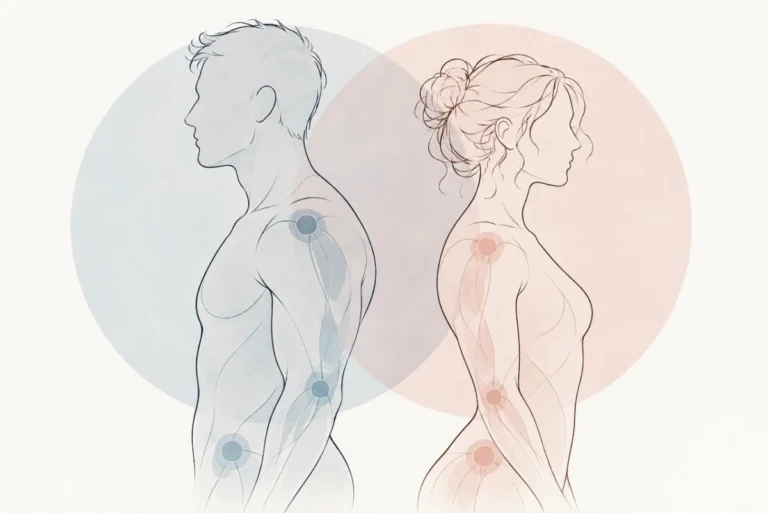
Ehlers-Danlos Syndrome (EDS) is a group of rare, inherited disorders that affect the connective tissues—primarily the skin, joints, and blood vessel walls. Connective tissue is a complex mixture of proteins and other substances that provide strength and elasticity to the underlying structures in your body.
Clinical Manifestations
The data surrounding EDS underscores why diagnosis is frequently delayed:
- Joint Hypermobility: Often mischaracterized as mere "flexibility," the reality is a chronic risk of subluxation (partial dislocation) and dislocation.
- Tissue Fragility: Patients often experience skin that is velvety or hyper-extensible, along with poor wound healing and significant internal organ complications.
- Systemic Involvement: EDS is not merely an orthopedic condition; it affects the autonomic nervous system, the digestive tract, and cardiovascular stability.
According to the Ehlers-Danlos Society, the prevalence of all types of EDS is estimated to be at least 1 in 5,000, though many experts believe this is an underestimation due to the high rate of misdiagnosis in the medical community. The "progressive" nature of the condition, as noted by Smith, often leads to an accumulation of trauma—surgical, emotional, and physical—that necessitates a multidisciplinary approach to care.
Medical and Societal Responses to Chronic Pain
The medical community has long struggled to address the needs of patients with rare, progressive conditions like EDS. The response to Smith’s experience highlights the gap between acute care—where doctors excel at fixing a broken bone—and chronic management, where the system often fails to provide holistic support.
The Institutional Shift
Medical institutions are slowly beginning to acknowledge that "curing" is not always the only metric of success. The U.S. Pain Foundation and similar advocacy groups argue that for conditions like EDS, the focus must shift to Pain Management and Functional Quality of Life (QoL).
"We are seeing a move toward patient-centered advocacy," says a spokesperson for a national chronic pain initiative. "When a patient like Ellen Lenox Smith enters the political sphere to advocate for her own community, she is essentially forcing the system to recognize that the patient is the ultimate expert on their own lived experience."
The Role of Advocacy
Smith’s transition into advocacy—particularly regarding the use of medical cannabis for pain management—reflects a broader, nationwide movement. Patients are increasingly circumventing traditional, often ineffective pharmaceutical paths, seeking legislative support for alternative treatments. This is not just a medical choice; it is a political statement regarding bodily autonomy and the management of chronic suffering.
The Implications: Finding Purpose in a Changed Landscape
The most difficult hurdle for those living with chronic pain is not the pain itself, but the loss of the "future self" that was once imagined. When Smith had to leave the classroom, she was not just losing a paycheck; she was losing a pillar of her social identity.
Psychological Reconstruction
Psychologists studying chronic illness point to "Post-Traumatic Growth" as a critical framework. This is the phenomenon where individuals who experience a life-altering event undergo a positive psychological change.
- Redefining Joy: For Smith, joy shifted from the competitive environment of master swimming to the therapeutic, modified movements of swimming for mobility.
- Externalizing the Struggle: By joining support groups and advocating for others, Smith transformed her pain from a solitary burden into a collective cause. This shift provides the "meaning" that she notes is essential for thriving.
- The Intergenerational Impact: Smith’s awareness that her sons are watching her navigate this struggle adds a layer of responsibility. She is modeling resilience—not the absence of pain, but the capacity to function alongside it.
Conclusion: A New Blueprint for Living
Ellen Lenox Smith’s journey serves as a blueprint for the millions of individuals who wake up every day to a body that does not cooperate. The lesson is not one of toxic positivity, where one simply "thinks" their way out of pain. Rather, it is a lesson in the radical acceptance of one’s current reality and the subsequent, active search for new meaning.
"Your plans may not be the same as they used to be, but it’s still worth it to make new ones," Smith notes. This sentiment encapsulates the modern approach to chronic illness: life is not a linear path of achievements, but a series of adaptations.
For those currently in the trenches of a new diagnosis, the path forward may seem invisible. However, as Smith demonstrates, the ability to pivot—to move from being a teacher in a classroom to a teacher of resilience—is the most potent tool in the human arsenal. The road is arduous, and the pain is real, but the pursuit of dignity and purpose remains the ultimate goal. As we look at the growing community of EDS advocates, it is clear: no one has to navigate the wreckage of a changed life alone. Support, advocacy, and the stubborn insistence on finding joy are the pillars upon which a new, meaningful life is built.