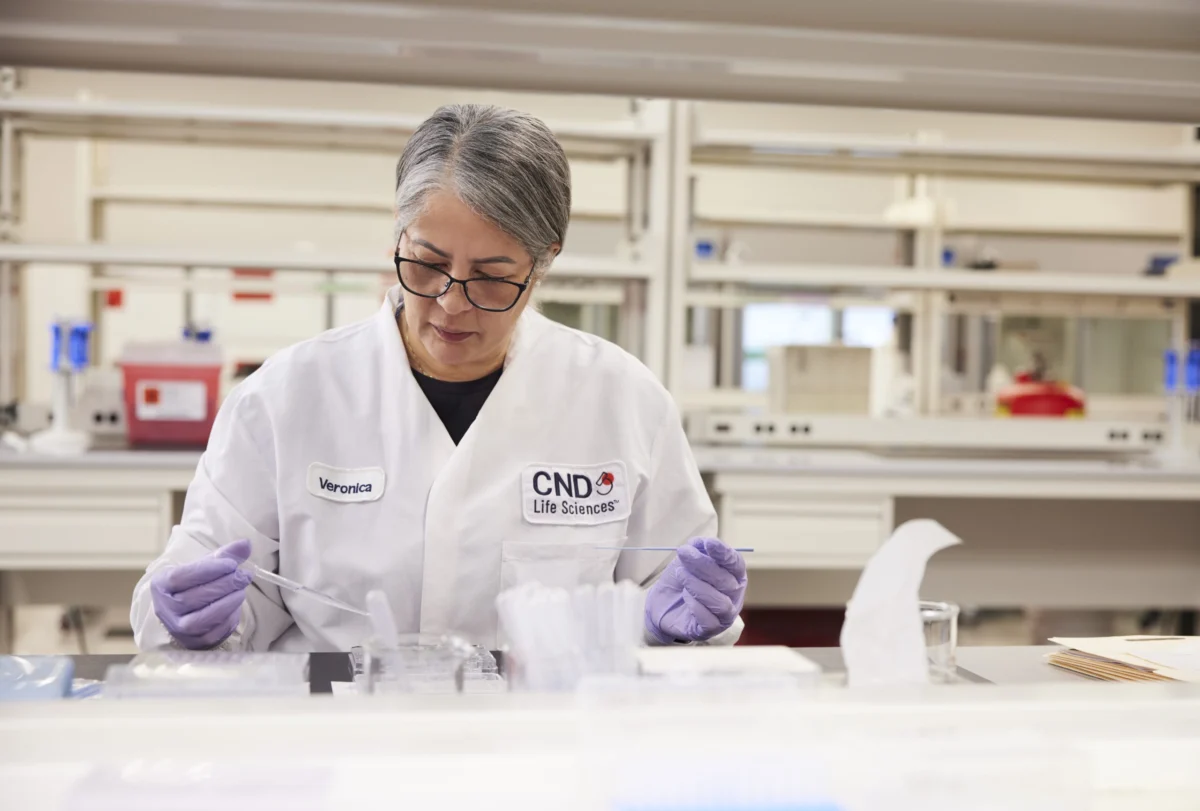
In an era where the diagnostic landscape for neurodegenerative diseases is shifting from subjective symptom-based assessment to objective biological evidence, CND Life Sciences has marked a significant milestone. The Arizona-based neurodiagnostics firm recently announced the successful completion of a growth financing round led by S-Curve Partners, a move that signals a pivotal expansion for the company’s signature skin biopsy-based diagnostic technology.
As the medical community grapples with the complexity of synucleinopathies—a group of disorders characterized by the abnormal accumulation of alpha-synuclein protein—CND Life Sciences is positioning itself at the forefront of the precision medicine movement. The infusion of capital is earmarked for the continued commercial scaling of the Syn-One Test, an innovation that has already begun to reshape how neurologists identify and manage conditions ranging from Parkinson’s disease to REM sleep behavior disorder (RBD).
The Core Innovation: The Syn-One Test
At the heart of the company’s success is the Syn-One Test, a proprietary, commercially available laboratory-developed test (LDT). Unlike traditional diagnostic methods that rely heavily on clinical observation—which can be prone to diagnostic delay or error—the Syn-One Test utilizes a minimally invasive skin biopsy.
By analyzing cutaneous nerve fibers for the presence of phosphorylated alpha-synuclein, the test provides clinicians with an objective biomarker. This allows for the identification of pathological markers associated with synucleinopathies, including:
- Parkinson’s disease
- Dementia with Lewy bodies (DLB)
- Multiple system atrophy (MSA)
- Pure autonomic failure
- Isolated REM sleep behavior disorder (RBD)
The ability to detect these markers via a simple skin biopsy represents a paradigm shift. For patients who have spent years navigating the “diagnostic odyssey” typical of neurodegenerative conditions, the Syn-One Test offers a concrete answer that can influence treatment pathways and clinical management.
Chronology of Clinical Impact
Since its inception, CND Life Sciences has focused on bridging the gap between cutting-edge research and routine clinical practice.
- Early Development: CND was founded with the mission to solve the “objective data void” in neurology. The company invested heavily in clinical trials to validate that phosphorylated alpha-synuclein in the skin correlates with central nervous system pathology.
- 2020 Commercial Launch: The Syn-One Test became commercially available to clinicians across the United States. This launch was met with immediate interest from neurologists who were previously limited by the lack of definitive biomarkers.
- Rapid Adoption (2020–2024): In just four years, the test has been integrated into the practice of more than 4,000 neurologists. The scale of this adoption is evidenced by the fact that over 60,000 patients have undergone testing to date.
- 2024 Financing Round: The recent funding round led by S-Curve Partners represents the next phase of maturity for the company, moving from an innovative startup to a cornerstone of the diagnostic ecosystem in neurodegeneration.
Supporting Data and Clinical Evidence
The clinical utility of CND’s platform is rooted in a robust body of peer-reviewed evidence. As neurology moves toward personalized care, the demand for biomarker validation has never been higher.
The Syn-One Test is not merely a diagnostic tool; it is a clinical decision-support platform. Research published in various neurology journals has demonstrated that skin biopsy is a highly reliable method for identifying synucleinopathy, even in the prodromal stages of disease. For example, in patients presenting with RBD—a condition where patients act out their dreams and which is highly predictive of future Parkinson’s or DLB—the presence of phosphorylated alpha-synuclein in the skin biopsy provides an early window into the neurodegenerative process.
This objective data is vital for pharmaceutical companies currently developing disease-modifying therapies (DMTs). As these therapies enter the market, the ability to accurately “bucket” patients based on their biological profile—rather than just symptom clusters—will be the difference between successful clinical trials and failed ones.
Official Responses and Strategic Vision
The investment from S-Curve Partners is more than a financial transaction; it is a vote of confidence in the scalability of CND’s business model.
Rick Morello, CEO of CND Life Sciences, emphasized the importance of the partnership in a recent statement: “We are pleased to deepen our relationship with S-Curve Partners and grateful for the continued support of existing investors and shareholders. S-Curve’s confidence in CND’s mission reflects the progress our team has made in expanding clinical adoption and advancing the science behind our scalable neurodiagnostics platform.”
The sentiment was echoed by Dr. Todd Levine, chief medical officer and co-founder of CND. A practicing neurologist himself, Dr. Levine understands the frustration of clinical uncertainty. “As a neurologist, I am encouraged to see the neuroscience field move toward multimodal biomarkers and earlier intervention,” Dr. Levine stated. “This financing gives us the flexibility to invest in innovation, expand access to the Syn-One platform, and strengthen our pharmaceutical and research relationships.”
From the investor perspective, the move is strategic. Daniel Livschutz, founding partner at S-Curve Partners, highlighted the broader potential for the technology: “Neurodegenerative diseases remain among the most underdiagnosed and misdiagnosed conditions in medicine. We believe CND has built one of the most differentiated platforms in neurodiagnostics, and this financing is intended to accelerate its evolution from a category-defining product to a broader platform supporting earlier diagnosis, disease differentiation, and more personalized care.”
Implications for the Future of Neurology
The infusion of capital into CND Life Sciences has several far-reaching implications for the medical community:
1. The Rise of Multimodal Biomarkers
While the Syn-One Test is the company’s current flagship, the funding will support the development of a broader “multimodal biomarker capability.” This suggests that CND is looking to integrate skin biopsy data with other diagnostic markers—potentially imaging, genetic, or fluid-based tests—to provide a comprehensive, 360-degree view of a patient’s neurological health.
2. Accelerating Precision Medicine
Precision medicine has long been the standard in oncology, but it has lagged in neurology due to the difficulty of accessing brain tissue. By providing a peripheral tissue source (the skin) that reflects central pathology, CND is helping to democratize precision neurology. Clinicians in community settings can now provide the same level of diagnostic rigor as those in elite academic research centers.
3. Impact on Pharmaceutical R&D
The pharmaceutical industry is currently racing to develop drugs that stop or slow the progression of Parkinson’s and other synucleinopathies. These drugs require patients to be diagnosed accurately and early. By providing a scalable, objective test, CND is essentially de-risking clinical trials and ensuring that the right patients receive the right experimental treatments, a process known as "patient stratification."
4. Improving Patient Quality of Life
For the patient, the implications are profound. Misdiagnosis leads to unnecessary tests, delayed access to appropriate therapies, and significant psychological burden. An objective diagnosis via Syn-One can provide clarity, allowing patients and families to plan for the future with the benefit of an accurate prognosis.
Conclusion
As CND Life Sciences moves forward with its expansion, the company stands as a primary example of how innovation in diagnostic technology can fundamentally change the trajectory of patient care. The growth financing led by S-Curve Partners provides the runway necessary to not only refine the Syn-One platform but to establish it as a standard of care in the global fight against neurodegenerative diseases.
By turning the skin—the body’s largest organ—into a window into the nervous system, CND is ensuring that the mystery of synucleinopathies is slowly replaced by the clarity of objective data. In the coming years, as the company explores new product innovations and strategic partnerships, it is likely that the Syn-One Test will become an indispensable tool in the neurologist’s arsenal, helping to bridge the gap between diagnosis and the era of truly effective, disease-modifying therapies.