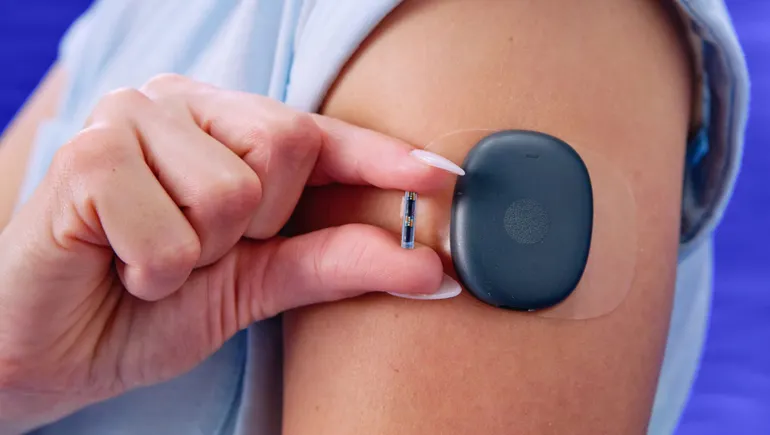
The continuous glucose monitoring (CGM) landscape is witnessing a structural transformation as Senseonics, the Maryland-based innovator behind the industry’s only long-term implantable sensor, shifts from a technology-focused developer to a vertically integrated commercial entity. By reclaiming full control over its sales, marketing, and distribution from long-time partner Ascensia Diabetes Care, the company is positioning itself to capture a larger share of the $14 billion global diabetes management market.
With a record-breaking second quarter and a strategic roadmap that promises a future of "invisible" diabetes management, Senseonics is betting that its unique proposition—a sensor that stays under the skin for a full year—will resonate with a patient base increasingly tired of the "hassle factor" associated with traditional, short-term adhesive sensors.
The Strategic Pivot: Reclaiming Control
For five years, Senseonics relied on a revenue-sharing partnership with Ascensia Diabetes Care, a subsidiary of PHC Holdings. Under that arrangement, Senseonics acted primarily as an R&D and manufacturing powerhouse, while Ascensia handled the global commercial heavy lifting.
However, the expiration of that agreement on December 31 marked a turning point. As of January 1, Senseonics brought its U.S. commercial operations in-house, absorbing approximately 150 employees from the Ascensia commercial team. The transition culminated in June with the internalization of its European operations, including the establishment of dedicated sales subsidiaries in Italy, Germany, Spain, and Sweden.
CFO Rick Sullivan describes this move as a necessity for "controlling our own destiny." By eliminating the distributor margin previously paid to Ascensia, Senseonics is seeing an immediate, positive impact on its gross profit margins, allowing for greater financial agility and a more direct line of communication between its R&D laboratories and the clinicians on the front lines.
Chronology of the Transition
- 2020: Senseonics enters an exclusive global distribution agreement with Ascensia Diabetes Care, allowing the company to focus on the technical engineering of the Eversense 365.
- December 31, 2025: The commercial partnership with Ascensia officially concludes, ending the era of third-party distribution.
- January 1, 2026: Senseonics formally assumes responsibility for U.S. sales, marketing, and commercialization, integrating 150 staff members into its internal workforce.
- April 2026: Onboarding of a dedicated European sales force begins in key markets.
- June 1, 2026: Full transition of European commercial business is completed, marking the company’s total independence in its core geographic regions.
- Q2 2026: Senseonics reports record-breaking financial results, with revenue more than doubling to $14.5 million, validating the efficiency of the new internal model.
The Tech Horizon: Toward the "Invisible" Device
CEO Tim Goodnow is clear about the company’s ultimate objective: the realization of a truly "invisible" diabetes device. While the current Eversense 365 provides the industry-leading benefit of a one-year lifespan, the current architecture still requires external powering and a Bluetooth-enabled transmitter worn on the skin.
"We’re now approaching the ultimate culmination of all our technologies," Goodnow stated. The next major milestone for the company is the development of a fully implantable, self-contained sensor that communicates directly with a patient’s smartphone without requiring external hardware.
This is a significant engineering hurdle. Unlike transcutaneous sensors—which, if they detach due to sweat or movement, can be replaced by the patient in seconds—an implantable device must be engineered for extreme reliability. If an alarm sounds at 3:00 AM regarding a hypoglycemic event, the data must be indisputably accurate. Goodnow emphasizes that the company’s focus remains on that "one big step": eliminating the external transmitter while maintaining the one-year battery and sensor longevity.
Supporting Data and Market Dynamics
The growth of the CGM market is undeniable, but Senseonics is carving out a niche that distinguishes it from the market leaders, Abbott and Dexcom.
User Demographics
Current data reveals that approximately 90% of Eversense 365 users are "switchers"—patients who have previous experience with other CGM systems and have actively sought out the Eversense for its long-term benefits.
- The Medicare/Type 2 Segment: A significant portion of the user base consists of older patients, particularly those with Type 2 diabetes who are weary of the 10-to-14-day cycle of changing sensors. For these users, the "hassle factor"—the physical and emotional burden of managing daily adhesive changes—is a primary motivator.
- The Active Lifestyle Segment: Conversely, the company has seen strong adoption among younger, highly active individuals. Athletes, swimmers, and those with physically demanding lives gravitate toward the implantable model because it removes the risk of the sensor being torn off by clothing or water.
Financial Performance
The transition has already yielded measurable financial benefits. By removing the distributor layer, Senseonics is capturing a higher percentage of revenue per unit sold. This was clearly evidenced in the second quarter of 2026, where the company saw a 100% increase in revenue to $14.5 million. These improved margins are critical as the firm continues to invest in R&D to maintain its competitive edge against larger, more established medtech conglomerates.
Official Perspectives: The Leadership View
When asked about the temptation to diversify into multi-analyte sensors—such as those tracking ketones or other biomarkers—Goodnow maintains a stance of disciplined focus. "We have architected the sensor to be a multi-analyte system," he noted, citing past successful experiments in oxygen sensing. "But in all honesty, the opportunity for glucose is just so much bigger."
In a market worth $14 billion, Goodnow believes that spreading resources too thin would be a tactical error for a company of Senseonics’ size. Instead, the strategy is to dominate the implantable glucose space while waiting for broader regulatory and reimbursement tailwinds.
On the subject of market expansion, the leadership team is closely monitoring potential changes to Medicare coverage. Currently, there is significant industry-wide anticipation that Medicare will eventually extend coverage for CGMs to patients with Type 2 diabetes who do not rely on insulin. "The clinical results are clear," Goodnow said. "A CGM will help anyone managing diabetes or even pre-diabetes. When [Medicare] happens, that opens up the market for all of us."
Implications for the Future
The implications of Senseonics’ new structure extend far beyond its own quarterly earnings. By bringing commercialization in-house, the company has created a tighter feedback loop between the doctor’s office and the R&D lab. This agility allows the firm to respond to clinical needs in real-time, refining the Eversense 365 based on direct patient data rather than through the filter of a third-party distributor.
For the diabetes community, the shift represents a maturing of the implantable technology sector. While Abbott and Dexcom dominate the short-term wearable market, Senseonics is positioning itself as the premium, "set-it-and-forget-it" alternative.
As the company moves toward its goal of a fully wireless, fully internal device, it faces the challenge of scaling its internal commercial operations while maintaining the high clinical standards required for a surgical-grade product. However, with the transition period officially behind them and the financial numbers trending in a positive direction, Senseonics appears to have successfully navigated the most dangerous phase of its corporate evolution.
The "invisible" future of diabetes care is no longer a distant R&D project; for Senseonics, it is the primary mission of a newly independent, streamlined, and increasingly powerful player in the medtech arena.