





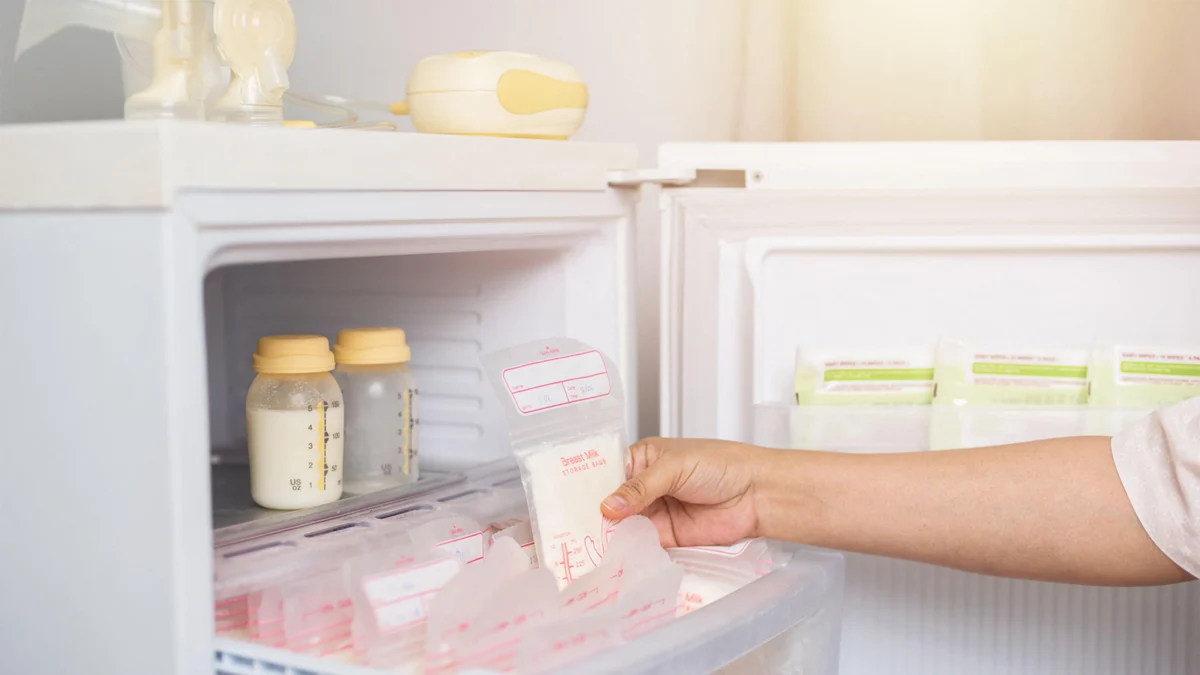
In an urgent warning to parents and healthcare providers, California public health officials have underscored the significant medical risks associated with sourcing human breast milk through unregulated, peer-to-peer social media networks. This call to action follows a harrowing investigation into a series of potential HIV exposures involving infants who were fed breast milk sourced from an infected donor found through online community groups.
The findings, published in the Morbidity and Mortality Weekly Report (MMWR) by the Centers for Disease Control and Prevention (CDC), detail a complex public health investigation that exposes the dark side of "informal milk sharing." While breast milk is universally recognized as the gold standard for infant nutrition, health experts are emphasizing that the safety protocols maintained by accredited milk banks are not mere bureaucratic hurdles—they are critical life-saving measures.
The Anatomy of an Investigation: Chronology of the Crisis
The crisis came to light in early October 2025, when the Santa Clara County Public Health Department received a notification that would trigger an intensive multi-week investigation. A woman, then pregnant, had tested positive for HIV during a routine prenatal screening.
The Timeline of Exposure
- 2023: The donor’s previous prenatal HIV test was negative.
- May 2025: The donor began actively distributing her breast milk to various families through social media groups, despite her unknown HIV status at the time.
- October 2025: The donor received a positive HIV test result during her current pregnancy. At this time, she was actively breastfeeding her own two-year-old daughter and distributing milk to others.
- Mid-October 2025: Public health officials were notified. The donor’s viral load was measured at a staggering 119,000 copies/mL. She was immediately counseled to cease breastfeeding.
- October 31, 2025: The donor’s daughter began a regimen of postexposure prophylaxis (PEP) to prevent potential HIV transmission.
- November 2025 – January 2026: Public health investigators initiated a "contact tracing" mission to identify recipients of the milk, leading to widespread testing and public health interventions.
Dr. Akanksha Vaidya and her team at the Santa Clara Public Health Department noted that while the donor’s own daughter tested negative for HIV in both October and January, the potential for wider transmission remained a primary concern. The investigation eventually identified five families who had received the donor’s milk, turning the spotlight on the unregulated digital marketplace for human milk.
The Risks of Unregulated Milk: Why "Natural" Isn’t Always Safe
The practice of sourcing breast milk through social media groups has grown in popularity, often fueled by personal testimonials and the desire for "natural" feeding options. However, medical professionals warn that this practice bypasses the rigorous safety nets inherent in the healthcare system.
The Contrast: Accredited Milk Banks vs. Social Media
Accredited milk banks, which are members of the Human Milk Banking Association of North America (HMBANA), operate under strict guidelines. These facilities perform:
- Comprehensive Donor Screening: Donors must undergo blood tests for infectious diseases, including HIV, Hepatitis B and C, syphilis, and HTLV.
- Medical History Review: Donors are screened for medication use, lifestyle habits, and health status.
- Pasteurization: Once collected, milk undergoes Holder pasteurization, a heat-treatment process designed to kill viruses and bacteria while preserving the majority of the milk’s nutritional and immunological benefits.
- Controlled Storage: From the moment of donation, the cold chain is strictly maintained to prevent bacterial overgrowth.
In contrast, milk obtained via social media is typically unpasteurized and unscreened. As highlighted in the MMWR report, this milk can be contaminated with pathogens if the donor is unaware of their health status, or if the milk is improperly handled, stored, or transported.
"The risk isn’t just HIV," explains one infectious disease specialist. "We are dealing with a medium that is highly susceptible to contamination. Without testing, you have no way of knowing if the donor has active infections, is taking contraindicated medications, or if the product has been contaminated by improper refrigeration."
Navigating the Digital Frontier: Challenges for Public Health
The investigation into this specific case revealed the evolving challenges public health departments face when dealing with private, closed-loop online communities.
Obstacles to Intervention
The Santa Clara Public Health team faced significant pushback during their investigation. As they attempted to track down the families who had received the infected milk, they encountered several hurdles:
- Digital Exclusion: Investigators were blocked from the very social media groups where the donor had advertised her milk, preventing them from posting public safety warnings.
- Parental Skepticism: Many recipients, wary of "outsiders" or government interference, were initially skeptical of the health department’s outreach efforts.
- Privacy Protections: Because the groups were private, investigators had to employ unconventional methods to make contact, including creating new profiles or relying on metadata from electronic health records and public databases.
Despite these barriers, the team successfully utilized digital footprints—including phone numbers, birth dates, and social media photos—to match potential contacts with public health records. This serves as a "proof of concept" for future investigations, demonstrating that public health departments must become more proficient in navigating social media to mitigate health crises.
Clinical Implications and Patient Education
The medical community is clear: HIV is a communicable virus that can be transmitted through breast milk. The American Academy of Pediatrics (AAP) and the CDC advise that for mothers living with HIV, the risk of transmission is too great to ignore.
Current Medical Guidelines
For mothers with an HIV viral load exceeding 50 copies/mL, breastfeeding is strictly contraindicated. When an infant is suspected of having been exposed to HIV through breast milk, a rigorous testing schedule is required:
- Immediate Testing: Upon discovery of the exposure.
- 14–21 Days: Post-exposure monitoring.
- 4–6 Weeks: Standard testing interval.
- 4–6 Months: Final testing to rule out seroconversion.
The report by Dr. Vaidya emphasizes that "patient education" is the most potent tool in the public health arsenal. Parents must be educated on the risks of peer-to-peer sharing and provided with resources for legitimate, safe milk sources if they are unable to breastfeed their own infants.
Looking Ahead: The Role of Social Media in Public Health
The MMWR report concludes with a nuanced perspective on the role of social media in modern public health. While these platforms facilitate the sharing of potentially contaminated biological material, they are also the most effective channels for identifying those at risk.
"Social media groups can be used to focus public health interventions," the authors noted. "Health officials might benefit from additional training on how to conduct investigations through verified profiles in such groups."
As the lines between private social networks and public health surveillance continue to blur, the medical community must prepare for a future where disease investigation requires as much digital literacy as it does clinical expertise.
Ultimately, this case serves as a sobering reminder: the internet may offer convenience, but it cannot replace the rigorous scientific standards that ensure the safety of our most vulnerable population—our infants. Parents are strongly encouraged to consult with their pediatricians or local health departments before considering milk from any source outside of an accredited bank. When it comes to infant health, there is no substitute for established safety, and there is no room for guesswork.