







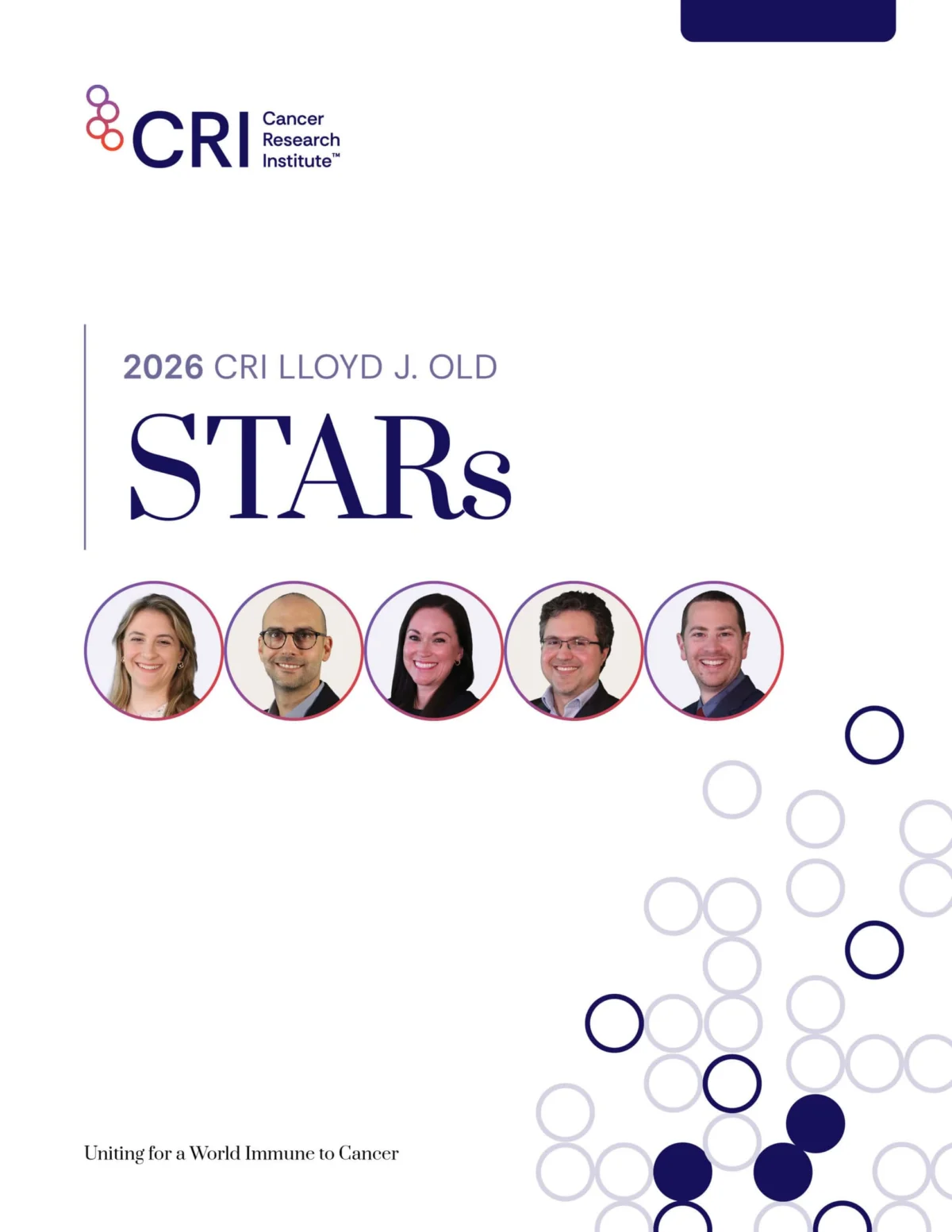
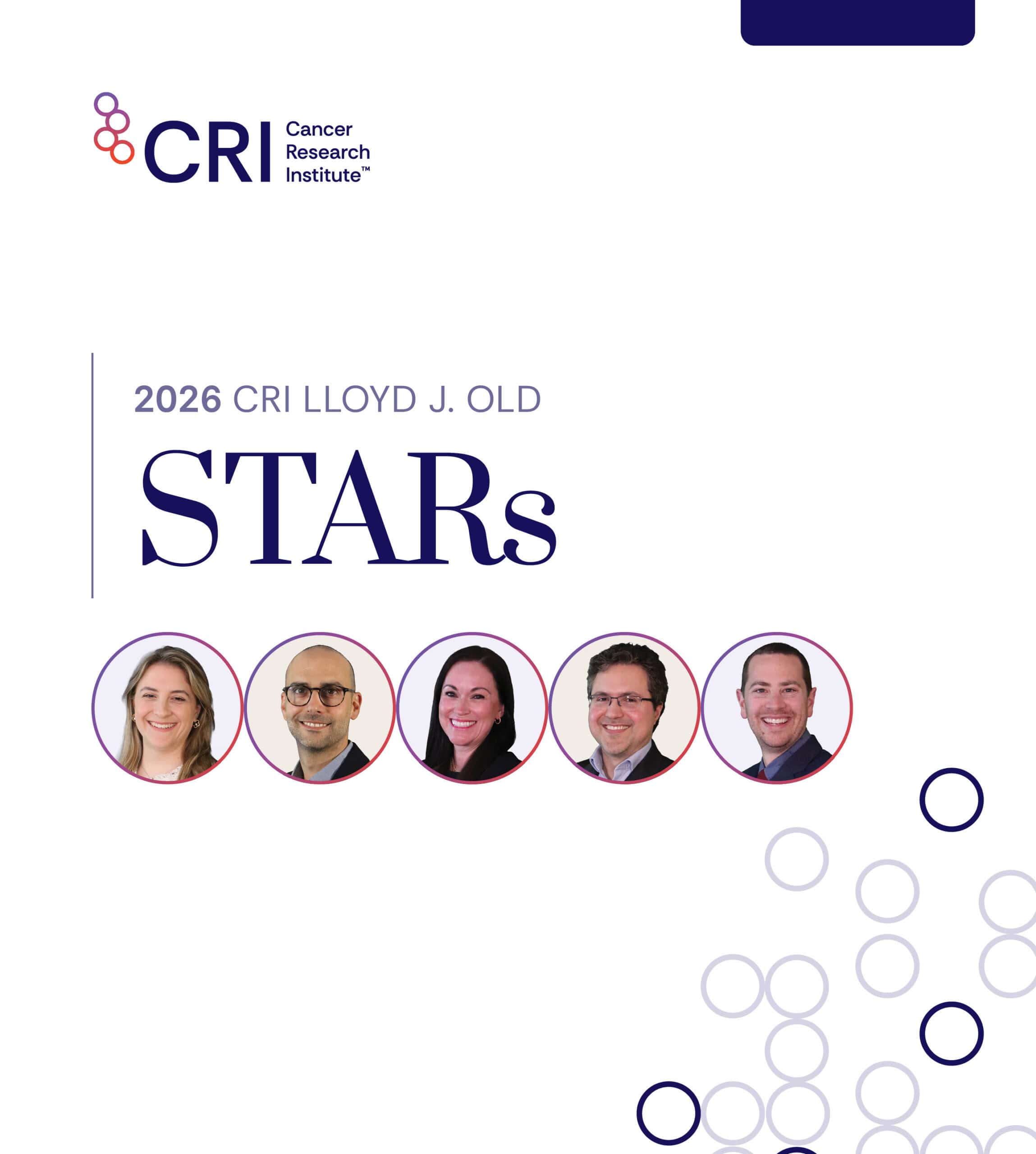
In the high-stakes world of oncology, where the margin between breakthrough and failure is often measured in millimeters of cellular signaling, the Cancer Research Institute (CRI) has made a definitive statement about the future of medicine. By announcing the 2026 class of Lloyd J. Old STARs (Scientists Taking Risks), the organization is not merely funding research; it is betting on the intellectual agility of five of the world’s most promising immunologists.
These five leaders have been selected to receive $1.25 million each in flexible, five-year grants. Unlike traditional research funding, which often mandates a rigid adherence to specific, pre-determined project milestones, the STAR program operates on a philosophy of "investing in the person, not just the project." This approach is designed to provide the "jet fuel" necessary for scientific pioneers to pivot, innovate, and pursue high-risk, high-reward ventures that traditional grant structures might overlook.
The Mandate of the STAR Program: Rethinking Risk
The Lloyd J. Old STAR program—named in honor of the late Lloyd J. Old, a visionary pioneer of cancer immunology—was built to address a persistent bottleneck in medical research: the "safety trap." In many academic and clinical environments, researchers are encouraged to pursue incremental, low-risk studies that guarantee publishable results. However, the most transformative advancements in cancer care, such as checkpoint inhibitors and CAR T-cell therapy, were born from unconventional, high-risk hypotheses.
The CRI’s STAR initiative serves as a counter-weight to this caution. By providing unconditional financial support, the institute allows researchers to follow the data wherever it leads, even if that path takes them into uncharted, unproven territory.
"These are people who are hitting their stride scientifically and career-wise, and this is where you really want to put some jet fuel in the tank," explains E. John Wherry, PhD, Associate Director of CRI’s Scientific Advisory Council. For Dr. Wherry and his colleagues, the goal is to identify the next generation of scientific "superstars" at the exact moment their professional trajectory is most likely to bend the curve of history.
A Chronology of Innovation: Building on a Legacy
The history of the Cancer Research Institute is inextricably linked to the history of immunotherapy itself. Since its inception, the CRI has functioned as a catalyst for the field, often supporting researchers long before their work was considered mainstream.
- The Foundational Years: Under the leadership of figures like Lloyd J. Old, the CRI pioneered the idea that the immune system could be harnessed to treat cancer—a concept that was once dismissed by the broader oncology community.
- The Breakthrough Era: Throughout the 1990s and 2000s, the CRI continued to fund the underlying biology that would eventually lead to the development of immune checkpoint inhibitors.
- The STAR Evolution: Recognizing that the next leap in immunotherapy would require a different kind of scientist—one who is willing to cross disciplinary lines—the CRI launched the STAR program.
- The 2026 Milestone: The latest cohort represents the culmination of this evolution. These scientists are not just specialists in immunology; they are experts in computational biology, metabolic engineering, and synthetic biology, reflecting the multidisciplinary nature of 21st-century cancer research.
Empowering the Next Generation: Why Flexibility Matters
The $1.25 million award per scientist is more than just a line item in a budget; it is an endorsement of professional autonomy. In the current academic climate, researchers spend a disproportionate amount of their time applying for grants and defending their methodology to conservative review boards. This administrative burden often stifles creativity.
The STAR grant removes these barriers. It allows the awardees to hire specialized staff, purchase cutting-edge equipment, or shift their research focus entirely if an unexpected discovery reveals a more promising pathway to a cure.
Elizabeth Jaffee, MD, also an Associate Director of the CRI’s Scientific Advisory Council, emphasizes the importance of this human-centric approach. "We’re picking people who are really our next leaders in the field of immunotherapy," she notes. "By backing the individual, we are ensuring that when they hit a roadblock, they have the resources to find a way around it, rather than being forced to abandon a potentially life-saving line of inquiry."
Implications: The Future of Cancer Immunotherapy
The impact of the 2026 class will likely be felt in three distinct arenas of oncology:
1. Decoding the Tumor Microenvironment (TME)
The tumor microenvironment remains one of the most stubborn challenges in cancer treatment. Tumors are not just masses of mutated cells; they are complex ecosystems that actively suppress the immune system. The 2026 STARs are focusing on how to "unlock" this environment, turning "cold" tumors (those that the immune system ignores) into "hot" tumors (those that the immune system actively attacks).
2. Precision Immunotherapy
One size does not fit all. The next frontier is personalized immunotherapy, where treatments are tailored to the specific genetic and metabolic profile of a patient’s tumor. The STARs are exploring how to leverage big data and artificial intelligence to predict which patients will respond to which therapies, thereby minimizing toxic side effects and maximizing efficacy.
3. Overcoming Resistance
Perhaps the most critical challenge is the development of resistance. Many patients initially respond to immunotherapy only to see their cancer return months or years later. The research supported by these grants aims to identify the biological mechanisms of this resistance, allowing for the development of combination therapies that "trap" the cancer, preventing it from evolving away from the immune response.
Official Perspectives from the CRI Leadership
The selection process for the Lloyd J. Old STARs is notoriously rigorous. Candidates are evaluated not just on their publication record, but on their ability to think abstractly and their commitment to collaborative research.
"The scientific leaders we support are the ones who are asking the questions everyone else is afraid to ask," says a representative from the CRI. "We aren’t looking for researchers who want to confirm existing theories. We are looking for those who want to challenge them. When we talk about ‘taking risks,’ we mean taking the kind of risks that, if successful, could change the standard of care for millions of people worldwide."
The funding structure reflects this confidence. By providing the capital up-front, the CRI removes the "fear of failure" that often plagues early- and mid-career researchers. If a project fails, the scientist is still supported, provided they have learned something new about the biology of cancer. In this light, even a failed experiment is a contribution to the global knowledge base.
The Path Forward: Beyond 2026
As we look toward the remainder of the decade, the work of the 2026 STARs will serve as a bellwether for the field. Their research will be closely watched by the pharmaceutical industry, academic institutions, and—most importantly—the patient advocacy community.
The implications of their success are profound. If they can successfully map the complex signaling pathways of immune exhaustion or find a way to safely modulate the immune system without inducing autoimmune reactions, we will see a shift in the survival rates of late-stage cancers that were previously considered terminal.
The CRI’s investment is, at its heart, an expression of optimism. It is an acknowledgement that while we have made incredible strides in the last twenty years, the most significant victories against cancer are still ahead of us. By betting on these five individuals, the Cancer Research Institute is ensuring that the brightest minds in the world have the freedom to follow their curiosity to the very edge of what is known, and perhaps, into the realm of what is possible.
Conclusion
The 2026 Lloyd J. Old STARs are more than just recipients of a prestigious grant; they are the architects of the future of medicine. Through their boldness, their intellect, and their refusal to accept the limitations of current treatment models, they are redefining the standard of what it means to be a scientist.
As they begin their five-year journey of discovery, they carry with them the hopes of a global community that has been touched by cancer. With the support of the Cancer Research Institute, they are well-positioned to turn the tide, proving that when we empower the right people with the right resources, there is no limit to what can be achieved in the fight for a cancer-free world. The "jet fuel" has been provided; now, the ignition begins.