











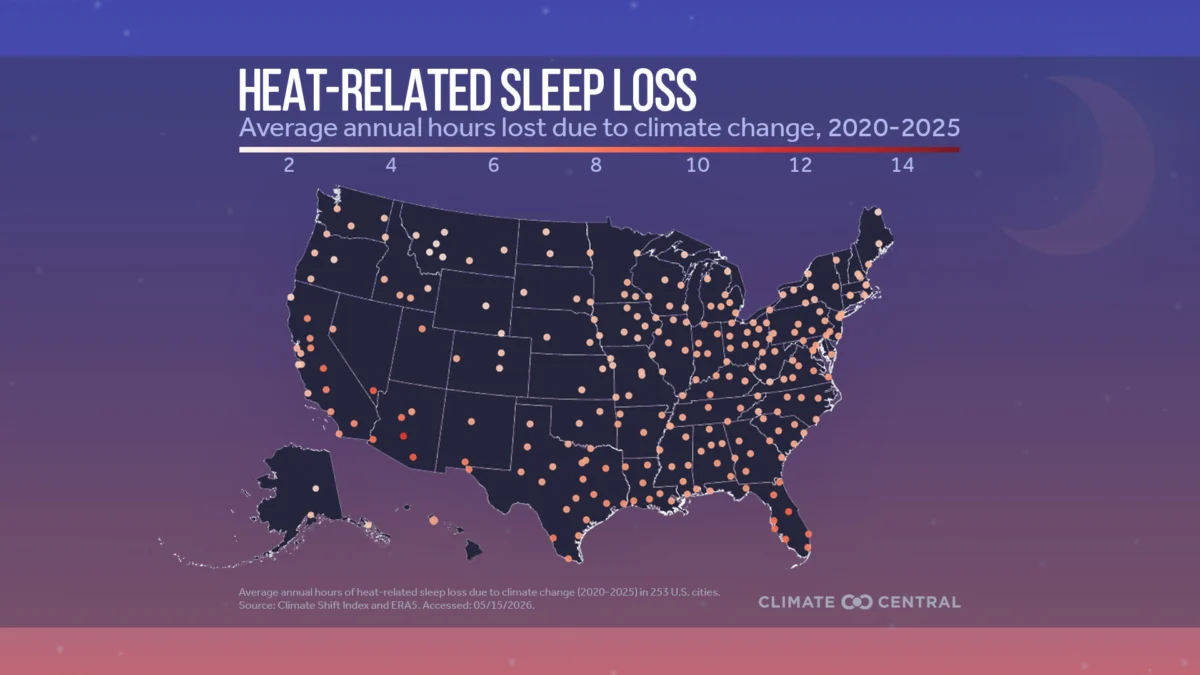
As the global climate shifts, the architecture of our nights is changing. For millions, the bedroom—traditionally a sanctuary of restoration—has become an arena of thermal discomfort. The impact of climate change on sleep is no longer a peripheral concern; it is a burgeoning public health crisis, as rising nighttime temperatures systematically strip away the restorative hours necessary for cognitive, physical, and emotional health.
The Science of Slumber: Why Heat Disrupts Rest
To understand why a warm bedroom is so detrimental to sleep, one must first understand the biology of the human circadian rhythm. Sleep is not a passive state that occurs when we close our eyes; it is a carefully orchestrated physiological process that relies on a significant drop in core body temperature.
As part of the body’s preparation for sleep, the internal thermostat is lowered, a process triggered by the dilation of blood vessels in the skin, which allows heat to escape the body. When the ambient temperature of a bedroom remains elevated, this natural cooling process is stifled. The body, unable to shed heat effectively, remains in a state of heightened arousal. This results in difficulty falling asleep, more frequent nocturnal awakenings, and a reduction in the time spent in deep, restorative sleep stages.
Chronology of a Worsening Trend
The correlation between warming nights and sleep loss is not a new phenomenon, but it is one that has accelerated significantly over the last half-century.
- The 1970s Baseline: Researchers tracking temperature data against sleep duration have noted that the "sleep debt" associated with climate change has effectively doubled since the early 1970s. As industrial carbon emissions increased throughout the late 20th century, the frequency of "warm nights" (defined as nights where temperatures remain high enough to impede thermoregulation) rose in tandem.
- The 2020–2025 Period: A comprehensive analysis by Climate Central identified this five-year window as a turning point in which the cumulative effect of heat became impossible to ignore. Globally, the average person lost an estimated 56 hours of sleep annually during this period due to climate-driven temperature increases.
- The Summer of 2026: Heat waves across the Northern Hemisphere during the summer of 2026 served as a real-world case study for the phenomenon. Polls conducted during these events, such as the YouGov survey in the United Kingdom, revealed that 65% of adults reported significant sleep disturbances, with nearly half of that group losing three or more hours of sleep per night.
Supporting Data: Quantifying the Loss
The evidence is supported by large-scale, data-driven research. A landmark study published in One Earth analyzed over 7 million sleep records alongside local weather data to establish a direct link between ambient temperature and sleep duration.
The findings were stark:
- The 86-Degree Threshold: When nighttime temperatures exceed 86°F (30°C), sleep duration drops by an average of 14 minutes per night.
- The 77-Degree Hurdle: Even at more moderate levels, temperatures above 77°F (25°C) significantly increase the likelihood that an individual will fail to achieve the recommended seven hours of sleep.
- Lack of Adaptation: Perhaps most concerning is the study’s finding regarding human adaptation. Researchers found little evidence that the human body "gets used to" warmer nights over time. Unlike other environmental stressors to which humans might physiologically acclimate, the need for a specific cooling range for sleep appears to be a rigid biological requirement.
In the United States alone, the impact is geographically pervasive. Climate Central’s analysis of 253 cities showed an average annual loss of 36 hours of sleep per person. Residents in states like Arizona, California, Florida, and Nevada are bearing the brunt of this, with some populations losing up to nine hours of sleep annually specifically due to climate-linked heat.
Implications: The Cognitive and Health Fallout
The consequences of losing 14 or 30 minutes of sleep each night are not merely about feeling "tired." The cumulative effect of chronic sleep deprivation is a broad-spectrum health risk.
Cognitive Performance
A pivotal study published in PLOS Medicine examined students living in un-air-conditioned dormitories during a Boston heat wave. The results were alarming: those subjected to higher indoor temperatures showed measurable deficits in attention, processing speed, and working memory. The heat did not just make them "cranky"; it physically hampered their brain’s ability to perform complex tasks.

Public Health and Vulnerability
While heat affects everyone, the impact is inequitable. Vulnerable populations—including the elderly, those with chronic illnesses, and residents of low-income housing—are disproportionately affected. The lack of reliable, affordable air conditioning turns the bedroom into a heat trap. Furthermore, even for those with access to cooling, the financial burden of running air conditioning throughout the night is becoming a significant source of economic stress, further exacerbating the "climate anxiety" that also contributes to insomnia.
Official Responses and Public Health Guidance
Health organizations, including the American Academy of Sleep Medicine (AASM), are increasingly treating climate-related sleep loss as a matter of public health policy rather than individual lifestyle choice.
Medical experts emphasize that because we cannot immediately alter the global climate, we must shift our focus to adaptive behaviors and structural improvements. The AASM and other health bodies suggest the following strategies for managing sleep in a warming world:
- Optimizing the Environment: Keeping the bedroom as close to 65–68°F (18–20°C) as possible is the gold standard. Using fans, blackout curtains to reduce daytime heat absorption, and breathable, natural-fiber bedding can aid in cooling.
- Strategic Cooling: If air conditioning is unavailable, localized cooling—such as cold compresses on pulse points or cool showers before bed—can help drop the core body temperature sufficiently to initiate sleep.
- Sleep Hygiene: Maintaining a consistent sleep schedule is even more critical when external conditions are volatile. Establishing a "wind-down" routine that avoids screens and stimulants can help the body reach the parasympathetic state required for sleep, even when the air is warm.
When to Seek Professional Help
It is vital to distinguish between a few bad nights due to a heat wave and chronic sleep disorders. When sleep deprivation begins to interfere with daily life, work performance, or safety (such as when driving), it is time to consult a medical professional.
An accredited sleep center can provide a polysomnography (sleep study) to determine if there are underlying conditions, such as sleep apnea or insomnia, that are being exacerbated by the heat. Medical review by experts, such as Dr. Dionne Morgan, underscores that sleep is a pillar of health equal to nutrition and exercise. It should not be sacrificed as an inevitable consequence of a warming planet.
The Bottom Line: Protecting Our Rest
The data is clear: the climate is changing, and our sleep is paying the price. As nighttime temperatures continue to climb, we are seeing a global erosion of the very time we need to recover from the stresses of the day.
While individual adjustments to our bedrooms are necessary, the broader solution requires a societal recognition that sleep is a critical resource under threat. As we look toward the future, the integration of heat-resilient urban planning, improved housing standards, and continued focus on healthy sleep habits will be essential.
We must protect our rest, not just for our own performance and well-being, but as a fundamental aspect of human health in an era of rapid climate change. If you find your sleep consistently compromised, do not dismiss it as a mere byproduct of the weather. Consult with a specialist, refine your sleep environment, and prioritize your rest—your health depends on it.