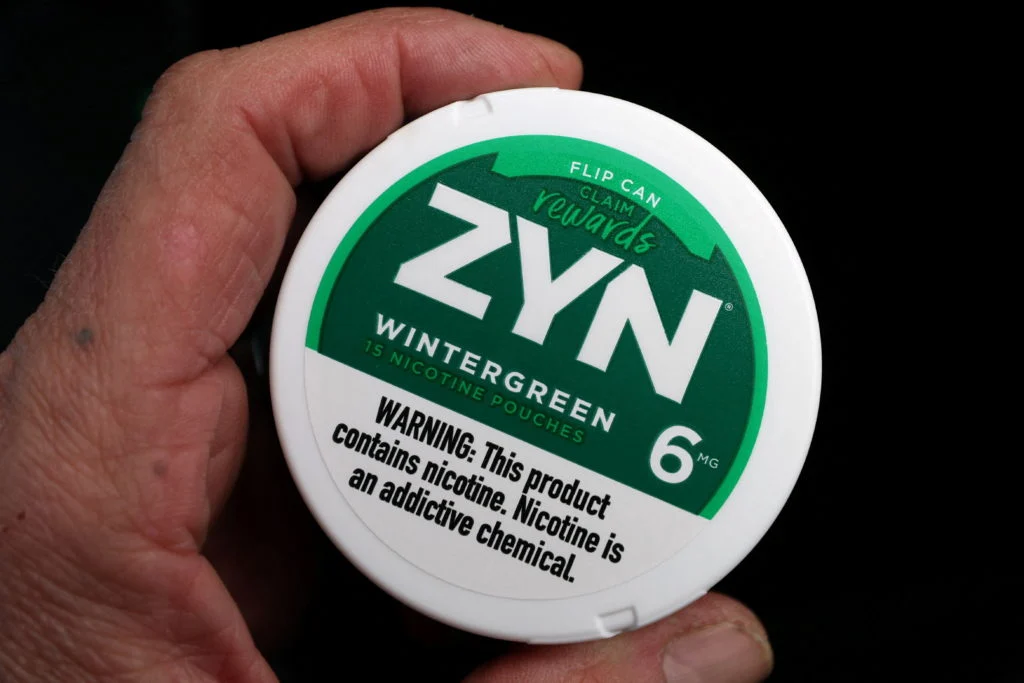
The landscape of nicotine consumption in the United States is undergoing a significant shift. Following an extensive scientific review, the Food and Drug Administration (FDA) has granted authorization for Zyn, a prominent manufacturer of nicotine pouches, to market 20 of its products with a specific health-related claim. This decision marks a pivotal moment in federal regulatory policy, acknowledging that while these products are not harmless, they carry a reduced risk profile compared to traditional combustible cigarettes.
However, the regulatory green light has ignited a firestorm of debate among public health experts, educators, and advocates. While the agency’s move is framed within the context of "harm reduction," critics argue that the messaging risks normalizing nicotine use among populations that never smoked, potentially fueling a new generation of addiction.
The FDA Decision: A Nuanced Regulatory Shift
On June 30, the FDA concluded its review of Zyn’s product portfolio. The agency determined that the manufacturer could officially advertise that "Using ZYN instead of cigarettes puts you at a lower risk of mouth cancer, heart disease, lung cancer, stroke, emphysema, and chronic bronchitis."
This authorization does not grant Zyn "FDA-approved" status as a smoking cessation device, nor does it classify the pouches as safe. Rather, it is a comparative claim based on the well-documented, catastrophic health consequences of inhaling combustible tobacco smoke. By removing the combustion process, Zyn pouches eliminate the tar and thousands of toxic chemicals associated with burning tobacco, thereby reducing—though not eliminating—the primary pathways for diseases like lung cancer and emphysema.
A Chronology of the Nicotine Pouch Surge
The rise of nicotine pouches is a relatively recent phenomenon in the American market, characterized by rapid growth and shifting consumer behavior:
- 2014: Nicotine pouches first enter the U.S. market. Unlike traditional "snus" or chewing tobacco, these products contain synthetic or tobacco-derived nicotine powder without the organic leaf matter, marketed as a cleaner, "spit-free" experience.
- 2019–2022: Zyn and its competitors see an explosion in popularity. Strategic marketing—often leveraging social media influencers and brightly colored, flavored branding—expands the demographic reach beyond former smokers to include younger adults and non-smokers.
- 2022: Data from the National Youth Tobacco Survey indicates that 1.1% of middle and high school students are using nicotine pouches.
- April 2025: Discussions on public health podcasts highlight the "harm reduction" potential for adult smokers, while simultaneously noting the lack of clinical trials for cessation.
- June 30, 2026: The FDA issues its formal authorization for the comparative risk advertising language, setting the current precedent.
- August 2026: Public health officials and academic researchers express mounting concern over the long-term, unknown health impacts of the pouches, particularly regarding cardiovascular strain and oral tissue health.
The Mechanism of Addiction and Unknown Long-Term Risks
At the heart of the controversy is the substance itself: nicotine. Whether derived from tobacco plants or synthesized in a laboratory, nicotine is a potent stimulant that alters the central nervous system and cardiovascular function.
The Biology of Dependence
Dr. Pamela Ling, director of the University of California San Francisco’s Center for Tobacco Control Research and Education, emphasizes that the primary danger is the speed at which dependence develops. "Nicotine exposure increases the number of nicotine receptors in the brain," Dr. Ling explains. "Over time, the brain rewires itself, and users begin to need nicotine just to feel ‘normal’—a baseline state that is constantly being disrupted by withdrawal symptoms."
These symptoms are not merely physical; they include irritability, anxiety, difficulty concentrating, insomnia, and mood swings. According to data from the National Institute on Drug Abuse, approximately 8.5% of Americans aged 12 and older reported nicotine dependence in the previous 30 days as of 2020.
The "Thin" Evidence Base
While the reduction of cancer-causing combustion is a clinical fact, the long-term impact of chronic, localized nicotine absorption in the gums remains an area of scientific uncertainty. Carter Bruett, a professor of dentistry at the University of Utah, notes that while there is insufficient evidence to definitively link pouches to oral cancer, clinicians have observed consistent inflammation and damage to soft mouth tissues among regular users.
Furthermore, cardiovascular risks persist. While lower than those of cigarette smoking, the physiological stress placed on the heart by consistent nicotine intake is not negligible. Aaron Hunt, a health and wellness extension specialist at Utah State University, describes the evidence base as "thin," noting that the medical community is currently in a wait-and-see period while more longitudinal studies are conducted.
The Youth Vulnerability Crisis
Perhaps the most significant criticism of the FDA’s decision is the potential impact on young people. Adolescent brains are uniquely susceptible to the effects of nicotine. During the developmental years, the brain is actively "pruning" neurons; the introduction of nicotine tricks the brain into reinforcing those pathways, effectively accelerating the cycle of addiction.
Marketing and Perception
The allure of flavors like cinnamon, citrus, and mint, combined with a "cleaner" aesthetic, has effectively lowered the barrier to entry for young people. Research indicates that when consumers—particularly youth—see claims that a product "reduces risk," they often interpret that as "safe," ignoring the relative nature of the claim.
"Kids who were never smoking cigarettes in the first place are a growing share of pouch users," says Hunt. The 2025 National Youth Tobacco Survey confirms this trend, with 1.7% of middle and high school students reporting use, and 90% of those users opting for flavored varieties. This data suggests that the product is acting as a gateway to nicotine addiction for a demographic that would otherwise have remained nicotine-free.
The Failure of "Cessation" Labeling
A critical distinction must be made between "harm reduction" and "cessation." The FDA has not cleared Zyn for use as a smoking cessation therapy. For a product to be labeled as a tool to quit smoking, it must undergo rigorous clinical trials and be regulated as a drug, providing evidence that it helps users eventually taper off nicotine entirely.
Currently, many users utilize pouches as a supplement rather than a replacement. They may use pouches in smoke-free environments (like offices or airplanes) and cigarettes in others, leading to a "dual-use" scenario that maintains or even increases their total nicotine intake.
"To be effective, it’s very important to use nicotine replacement with counseling to support plans to quit," Dr. Ling states. "Most smoking cessation plans include reducing nicotine exposure over time, not just switching the delivery mechanism."
Implications for Public Health Policy
The FDA’s decision places the onus of responsibility on the consumer and the parents of minors, rather than the manufacturer. By allowing the comparative health claim, the agency is attempting to steer current smokers toward less toxic alternatives, but it is also creating a complex landscape for educators and public health advocates.
The Policy Challenges Ahead:
- Consumer Education: Public health campaigns must now work twice as hard to communicate that "less harmful" is not synonymous with "harmless."
- Regulatory Gaps: There is a clear need for more stringent regulations on the marketing of flavored nicotine products, which are disproportionately appealing to younger users.
- Clinical Research: The scientific community faces an urgent need to fund and complete long-term studies on the oral and cardiovascular impacts of synthetic nicotine pouches to fill the current knowledge gap.
In conclusion, while the shift in Zyn’s advertising represents a pragmatic acknowledgment of harm reduction for the adult smoking population, it carries significant social risks. As the market for nicotine pouches continues to evolve, the challenge for regulators will be to balance the needs of current smokers seeking safer alternatives with the imperative to protect the developing brains of the next generation from a lifetime of nicotine dependence.