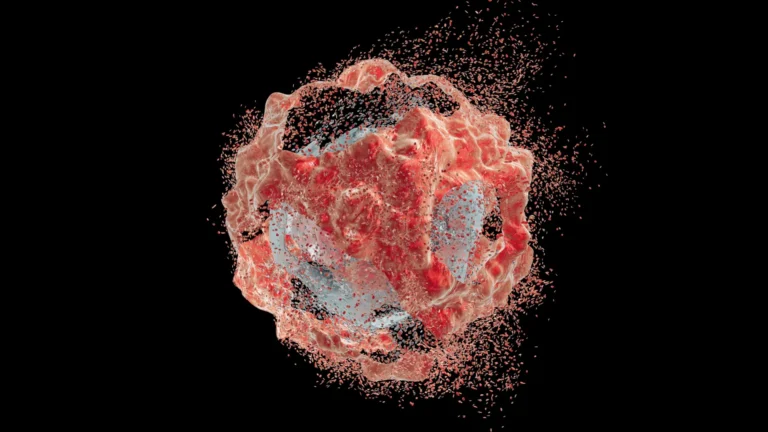
In the high-stakes landscape of oncology, few diagnoses carry the weight of Diffuse Large B-cell Lymphoma (DLBCL). As the most common subtype of non-Hodgkin lymphoma, DLBCL is characterized by its rapid progression and its uncanny ability to evade standard therapeutic interventions. While modern medicine has made strides in treating many cancers, the "aggressive" label attached to DLBCL reflects a clinical reality: when the disease becomes treatment-resistant or metastasizes to difficult-to-reach areas like the central nervous system, patient outcomes often plummet.
Standing at the vanguard of this challenge is Dr. Yulai Zhou, an MD, PhD researcher based at Yale University. Through his dedicated investigation into the cellular architecture of lymphoma, Dr. Zhou is peeling back the layers of biological deception that allow cancer cells to mimic, hijack, and exploit the body’s own immune defenses. His work does not merely observe the cancer; it seeks to dismantle the internal signaling networks that keep it alive.
The Core Challenge: Why DLBCL Remains a Formidable Foe
At its biological foundation, DLBCL is a malignancy of B cells—the very white blood cells responsible for producing antibodies and patrolling the body for pathogens. In a healthy system, B cell development is a tightly regulated, highly competitive "survival of the fittest" process. Only the most effective cells are permitted to mature and protect the host.
However, Dr. Zhou’s research posits that DLBCL cells have learned to "hack" this system. By co-opting the signals meant for healthy immune maturation, these malignant cells achieve a level of resilience that baffles conventional chemotherapy and immunotherapy.
"The fundamental problem," Dr. Zhou notes, "is that we are fighting a disease that uses our own biology as a shield. These lymphoma cells take advantage of normal immune processes to survive treatment and establish new, lethal colonies in hard-to-reach locations."
His research focuses on identifying the specific "maladaptive signals" that allow these cells to escape regulatory checkpoints. By mapping these pathways, Dr. Zhou hopes to move beyond broad-spectrum treatments—which often carry toxic side effects—toward precision therapies that exploit the specific weaknesses of the malignant cell.
A Scientific Chronology: From San Antonio to Yale
Dr. Zhou’s journey into the heart of immunology began long before his current tenure at Yale. His trajectory reflects a deliberate, evidence-based progression from academic curiosity to targeted clinical research.
The Formative Years (University of Texas Health San Antonio)
During his time as a visiting student at the University of Texas Health San Antonio, Dr. Zhou was first exposed to the complex mechanics of B cell development. It was here that he began to study the competitive environment of the germinal center, where B cells undergo rapid mutation and selection.
"What fascinated me," Dr. Zhou recalls, "was the realization that this same process—designed to protect us—can sometimes go catastrophically wrong. When the regulatory safeguards fail, the very cells meant to defend us become the architects of our destruction." This foundational period provided the framework for his current research; he began to ask not just how B cells mature, but what happens when they lose their way.
The Transition to Advanced Oncology
After his time in Texas, Dr. Zhou sought to bridge the gap between basic immunology and clinical oncology. His transition into full-time cancer research was driven by the urgent, unmet needs of patients with aggressive lymphoma. He shifted his focus to the "malignant escape"—the specific moment when a B cell ignores the body’s signals to stop dividing and instead begins its aggressive, metastatic lifecycle.
Current Research at Yale University
Today, at Yale University, Dr. Zhou is leading a multi-faceted project that examines how lymphoma cells navigate the body to reach protected sites, such as the brain. By studying the "molecular breadcrumbs" these cells follow, he is working to identify new druggable targets that could prevent relapse and stop the disease from spreading to the central nervous system, a development that historically signifies a poor prognosis for patients.
Supporting Data and Biological Mechanisms
To understand the scope of Dr. Zhou’s work, one must look at the "elegance and complexity" of the immune system he describes. His research relies on several key pillars of modern oncology:
- Competitive Selection Models: Dr. Zhou utilizes advanced models to mimic the competitive environment of lymphoid tissue. By observing how malignant cells outcompete healthy cells, his team can isolate the specific proteins or receptors that provide the lymphoma with a survival advantage.
- Metastatic Signaling Pathways: One of the most dangerous aspects of DLBCL is its ability to migrate. Dr. Zhou’s team is analyzing the chemotactic signals—the chemical "scent" trails—that guide lymphoma cells to the brain. Data from his lab suggests that by blocking these specific receptors, researchers might be able to "blind" the cancer cells, trapping them in the peripheral blood where they are easier to target.
- Resistance Profiling: Through genomic and proteomic profiling, the team is documenting how DLBCL cells adapt to standard treatments like R-CHOP (the current gold standard). The goal is to identify "secondary drivers"—mutations that arise specifically in response to treatment, providing the cell with a roadmap for survival.
Official Perspectives: The Path Toward Clinical Application
While Dr. Zhou’s work is currently centered in the laboratory, the implications for clinical practice are significant. His approach is aligned with the broader shift in oncology toward "synthetic lethality"—the concept of targeting a cancer cell’s dependency on a specific gene or pathway, which is often a result of its own mutations.
The "New Weakness" Strategy
Dr. Zhou is explicit about his ultimate goal: "By identifying the signals that allow lymphoma to spread and persist, my research seeks to uncover new weaknesses. We are not just looking for a way to kill the cell; we are looking for the structural flaw in its armor."
Collaboration and Future Outlook
The research environment at Yale has provided the interdisciplinary support necessary to scale these findings. By working alongside clinical oncologists, Dr. Zhou ensures that his laboratory findings are "clinically informed." He emphasizes that the "complexity" of the immune system is not a barrier, but an opportunity. If the system is complex enough to be subverted by cancer, it is also complex enough to be re-engineered to defeat it.
Implications for Patients: A Shift in the Paradigm
For the patient population, the implications of Dr. Zhou’s research are profound. Current standard-of-care treatments for DLBCL are highly effective for many, but for the 30% to 40% of patients who do not achieve a durable remission, the future remains uncertain.
Reducing Metastatic Potential
If Dr. Zhou can successfully map the signaling pathways that allow lymphoma to cross the blood-brain barrier, it would represent a monumental shift in how clinicians manage high-risk patients. Currently, such patients are often treated with prophylactic measures that are systemic and taxing. A targeted therapy could offer a more effective, less invasive alternative.
Personalized Medicine
By understanding the specific "escapes" used by an individual patient’s cancer, future protocols may allow for "precision dosing" or "molecularly tailored therapy." This moves away from the "one-size-fits-all" chemotherapy model and toward a personalized approach where the treatment is chosen based on the unique biological "personality" of the lymphoma.
Conclusion: Driven by the Elegance of the Immune System
Dr. Yulai Zhou’s research is defined by a deep respect for the biological machinery of the human body. He views the immune system not as a static defense, but as a dynamic, evolving landscape. The fact that this landscape can be turned against the host is a tragedy of biology, but to Dr. Zhou, it is a puzzle waiting to be solved.
"Understanding how to prevent this from happening and how to target these errors in patients is what drives my research every day," he says. As he continues his work at Yale, the oncology community watches with anticipation. By focusing on the fundamental signals that grant lymphoma its aggressive nature, Dr. Zhou is not merely chasing a cure; he is working to rewrite the rules of engagement between the patient’s immune system and the disease that seeks to destroy it.
For those facing the diagnosis of aggressive lymphoma, the work of researchers like Dr. Zhou represents the most important element of all: hope grounded in rigorous, evidence-based science. As the mechanisms of malignancy continue to be unmasked, the prospect of turning an aggressive, treatment-resistant disease into a manageable, or even curable, condition moves closer to reality.