











Executive Summary: A Continent at a Crossroads
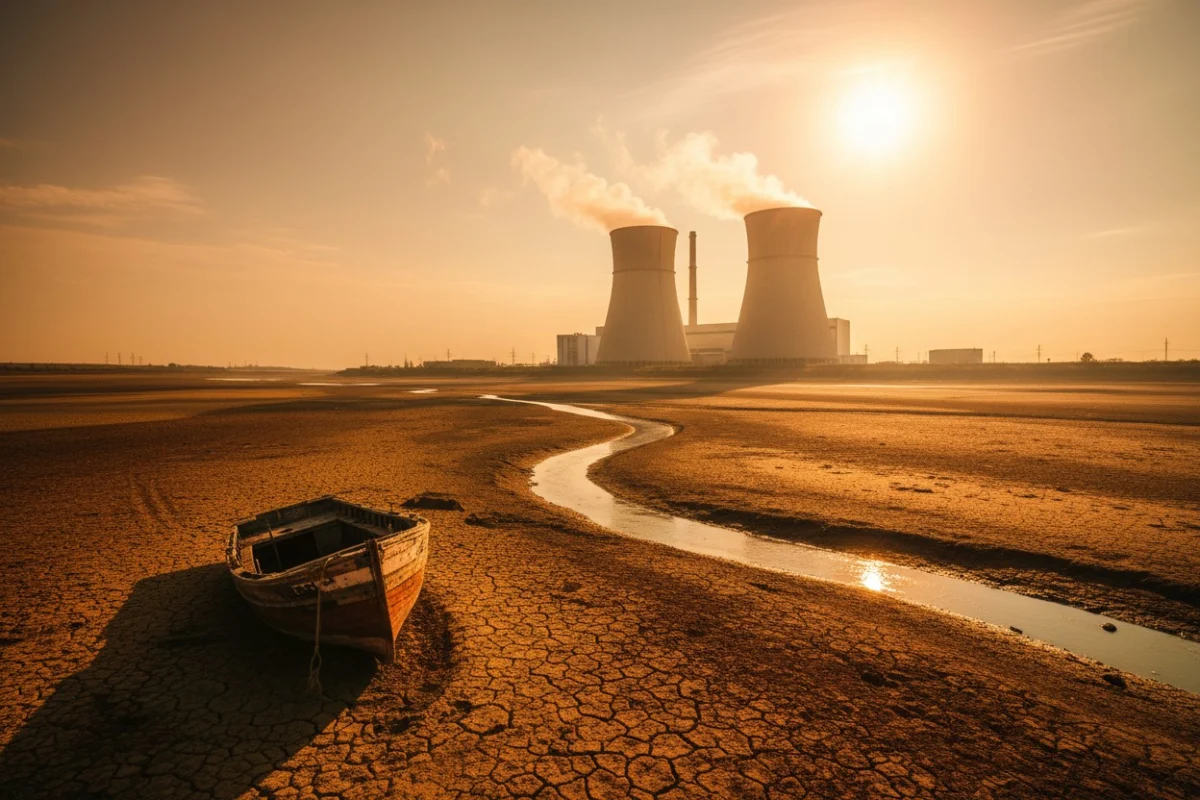
Romania’s energy landscape has been plunged into a state of acute crisis following the total suspension of operations at the Cernavoda Nuclear Power Plant. As the Danube River—a vital artery for both commerce and industrial cooling—receded to historic, record-low levels, the state-owned operator Nuclearelectrica was forced to disconnect its reactors from the national grid.
The Cernavoda facility, which serves as the bedrock of Romania’s energy independence by providing approximately 20% of the nation’s electricity, now stands silent. This shutdown is not an isolated incident but rather a bellwether for a broader, continent-wide struggle. As climate-induced drought conditions persist across Europe, the reliance on river water for the thermal cooling of nuclear reactors has transitioned from a standard engineering practice to a strategic vulnerability. With the facility expected to remain offline for at least ten days, Bucharest has moved to implement emergency measures to stave off blackouts, underscoring the precarious nature of European energy security in an era of extreme weather and geopolitical volatility.
Chronology: The Slow Descent to Zero
The crisis at Cernavoda did not occur overnight; it was the culmination of a summer marked by relentless, scorching heatwaves that drained the lifeblood from Central and Eastern Europe’s major waterways.
- Late July: As the Danube’s flow began to decelerate, Nuclearelectrica took the precautionary measure of shutting down the first of the plant’s two 706-megawatt reactors. At this stage, officials hoped that water conservation efforts and shifting consumption patterns would suffice to keep the second reactor operational.
- Early August: Despite ongoing attempts to mitigate the water shortage, the Danube’s levels continued to plummet, dropping below the critical threshold required to safely cool the second reactor.
- Mid-August (Current): Nuclearelectrica confirmed the total disconnection of the plant. The Romanian government subsequently declared a state of energy emergency for the remainder of the month, signaling that the situation has moved beyond routine operational management into the realm of national security.
The Engineering Failure: When Geography Fails Technology
Nuclear power plants require massive, consistent volumes of water to act as a heat sink for the steam-driven turbines that generate electricity. When water levels fall, the intake systems—designed to operate within specific physical parameters—risk cavitation or the intake of debris, which can lead to catastrophic damage to the turbines or the reactor core itself.
Failed Mitigation Efforts
In a desperate bid to keep the plant online, Romanian authorities engaged in unprecedented engineering interventions. The military was deployed to the Bala Canal, where they utilized nearly 400 pounds of explosives to blast a deeper channel through the riverbed. Simultaneously, workers sunk four massive, rock-filled barges into the river, attempting to create a hydrodynamic diversion that would force more water toward the Cernavoda intake structures.
Despite these Herculean efforts—which cost millions of dollars and required significant logistical coordination—the laws of physics proved insurmountable. The Danube, historically a massive, flowing highway of power, simply lacked the volume necessary to sustain the plant’s cooling requirements.
Regional Energy Strain: A Domino Effect
The implications of the Cernavoda shutdown extend far beyond the Romanian border. In an interconnected European grid, the loss of over 1.4 gigawatts of base-load power creates a ripple effect that threatens the stability of neighboring states.
The Moldovan Vulnerability
Moldova, which relies on Romania for up to 60% of its electricity supply, is particularly exposed. With the Romanian grid now struggling to cover its own domestic needs, Chisinau faces an immediate risk of rolling blackouts. The energy shortfall in Moldova highlights the "energy interdependence" of the region, where a climate event in one nation becomes a potential humanitarian and economic crisis in another.
A Pan-European Pattern
The struggle at Cernavoda is merely one chapter in a larger, darker story.
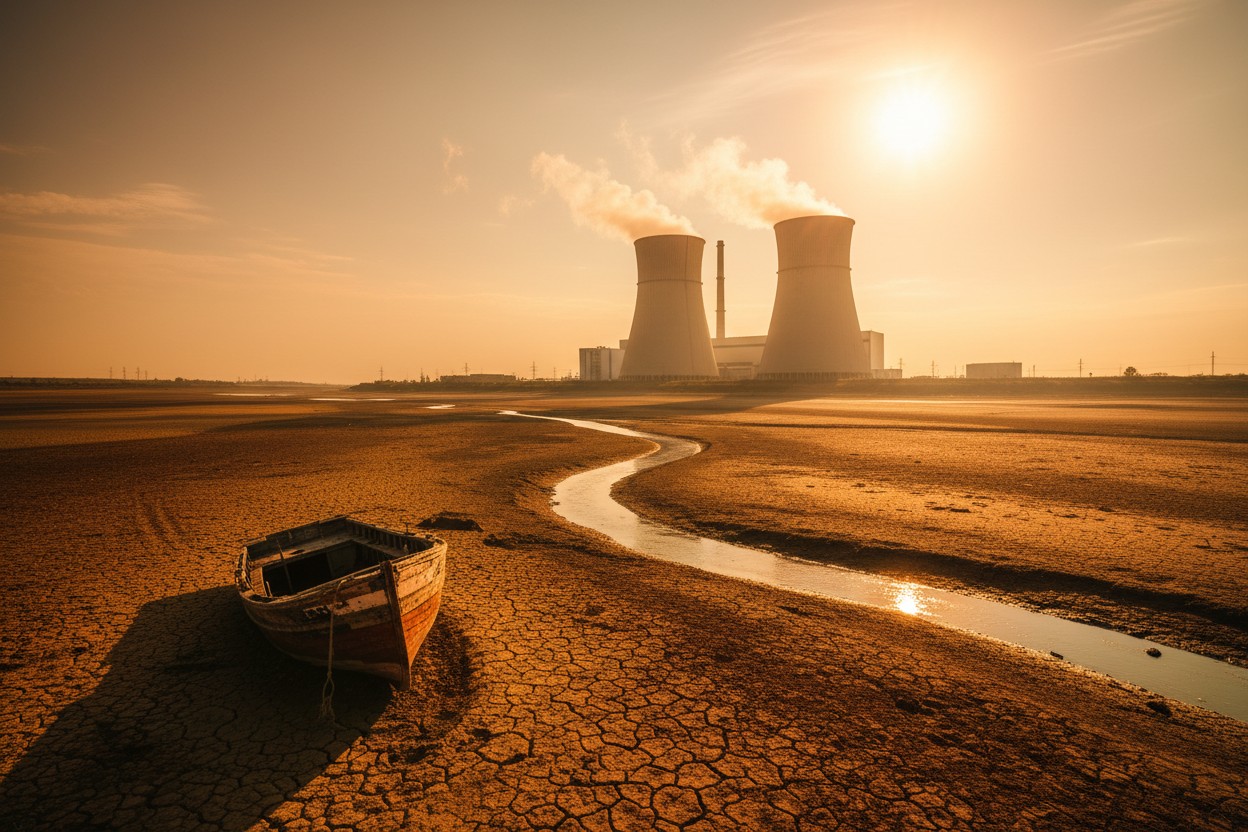
- Hungary: The Paks nuclear plant, which is equally dependent on the Danube, has been forced to scale back output for the first time in its history. Prime Minister Péter Magyar has warned that the national energy supply is approaching a "critical" state.
- France: The French nuclear fleet, historically the gold standard for European reliability, has faced repeated, forced deratings due to record-high river temperatures. When river water becomes too warm, it cannot effectively cool the reactors, forcing operators to power down even when water volume is sufficient.
- Hydroelectric Woes: The drought is not confined to nuclear energy. Italy has seen its hydroelectric output crater, while Norwegian reservoirs—a key source of flexible power for Northern Europe—have reached three-decade lows.
Energy Security and Market Volatility
The closure of Cernavoda exacerbates an energy market that was already reeling from a multi-year "perfect storm." The loss of cheap Russian natural gas following the Ukraine conflict, combined with the geopolitical instability surrounding the Strait of Hormuz and the subsequent spikes in global fuel prices, has left Europe in a defensive crouch.
The Risk of Deindustrialization
Economists and industry analysts warn that the current supply shock is more than a temporary inconvenience; it is a catalyst for industrial flight. European heavy industry—particularly the steel, chemical, and fertilizer sectors—is heavily reliant on stable, affordable base-load electricity. When supply becomes intermittent and prices fluctuate wildly due to drought-induced outages, companies are forced to choose between massive financial losses or shuttering operations entirely. This "creeping deindustrialization" threatens to hollow out the European economy, leaving the bloc more reliant on imports from external powers that may not share its strategic interests.
Geopolitical Fragility
Glenn Diesen and other security analysts have noted that these vulnerabilities are not merely technical; they are political. External actors have historically used energy dependency as a lever of influence. By creating a supply-constrained environment, the drought effectively lowers the barrier for foreign influence campaigns aimed at sowing discord within the European Union. As the bloc struggles to balance its ambitious "Green Transition" with the immediate necessity of keeping the lights on, the vulnerability of traditional base-load power becomes a central pillar of the security debate.
Official Responses and Path Forward
The Romanian government has adopted a two-pronged strategy: immediate demand management and long-term strategic review.
Domestic Conservation
Under the current emergency declaration, businesses and households have been urged to reduce consumption during the evening peak hours (typically 6:00 PM to 10:00 PM). The government has also prepared a phased disconnection plan for industrial consumers, ensuring that if a grid collapse occurs, it will be managed systematically rather than through uncontrolled blackouts.
Infrastructure Adaptation
The question facing policymakers is: How do you "climate-proof" a nuclear power plant? Future infrastructure projects in the region are now likely to focus on:
- Closed-loop cooling systems: Moving away from direct-river cooling to systems that utilize cooling towers, though this requires massive capital investment and can reduce thermal efficiency.
- Diversification of supply: Increasing investment in offshore wind and solar, coupled with advanced grid-scale battery storage, to compensate for the volatility of thermal plants.
- Dredging and Flow Regulation: Negotiating regional agreements to manage the Danube’s flow more effectively, treating the river not just as a natural resource, but as critical energy infrastructure that requires international maintenance.
Conclusion: A New Reality
The silence at the Cernavoda plant is a profound signal that the environmental, economic, and security spheres have fully converged. The "Danube drought" is no longer just a meteorological headline; it is a structural challenge that threatens to redefine European prosperity.
As authorities wait for the river to rise, the people of Romania—and indeed all of Europe—are forced to confront an uncomfortable reality: the infrastructure built for the climate of the 20th century is struggling to survive the volatility of the 21st. Whether through technological retrofitting or a fundamental restructuring of the energy grid, the path forward requires a level of regional cooperation and industrial resilience that Europe has yet to fully demonstrate. For now, the focus remains on the next ten days—and the hope that the rain, or at least a seasonal rise in water levels, will return before the grid reaches its breaking point.