For decades, the standard prescription for a strong core was the humble plank. While the static hold remains a staple of fitness literature, a growing consensus among physical therapists and strength coaches suggests that for adults over 55, the "plank-only" approach often yields diminishing returns. When the shoulders fatigue before the abdominals are sufficiently engaged, or when the lower back begins to compensate for a lack of deep-tissue recruitment, the exercise becomes counterproductive.
Modern core training for the over-55 demographic prioritizes functional movement, spinal health, and the ability to stabilize the torso while the limbs are in motion. By shifting the focus from "holding still" to "maintaining control through movement," individuals can build a more resilient, functional, and injury-resistant midsection.
The Core Philosophy: Why Movement Beats Statics
The primary function of the core is not to provide a "six-pack" appearance, but to act as a bridge between the upper and lower body. As we age, the integrity of our spine and the stability of our pelvis become paramount to maintaining mobility and preventing common ailments like chronic lower back pain.
Research indicates that effective core training in mid-to-late life should focus on "anti-rotation" and "anti-extension"—the ability to resist forces that pull the spine out of alignment. Unlike a standard plank, which provides limited feedback to the nervous system, dynamic bodyweight movements require the brain to constantly adjust and stabilize. This creates a superior neuromuscular response, translating directly into better balance, improved gait, and reduced risk of falls.
Chronology of a Sustainable Core Routine
Consistency is the cornerstone of fitness after 55. A high-intensity, once-a-week session is significantly less effective than a moderate, three-to-five-day-a-week routine. The following protocol is designed to be performed as a circuit, allowing for gradual adaptation.
Phase 1: The Warm-up (Weeks 1–2)
Begin with two rounds of each exercise. Focus exclusively on the quality of the movement. If you feel your lower back arching, decrease your range of motion immediately.
Phase 2: Building Endurance (Weeks 3–6)
Introduce a third round. Begin to focus on the "time under tension"—slowing down the eccentric (lowering) phase of each repetition to force deeper muscle recruitment.
Phase 3: Advanced Stabilization (Week 7 and beyond)
Increase the duration of holds and the number of repetitions. Introduce the advanced variations listed below to keep the stimulus challenging as your body adapts.
5 Essential Bodyweight Exercises for Lifelong Stability
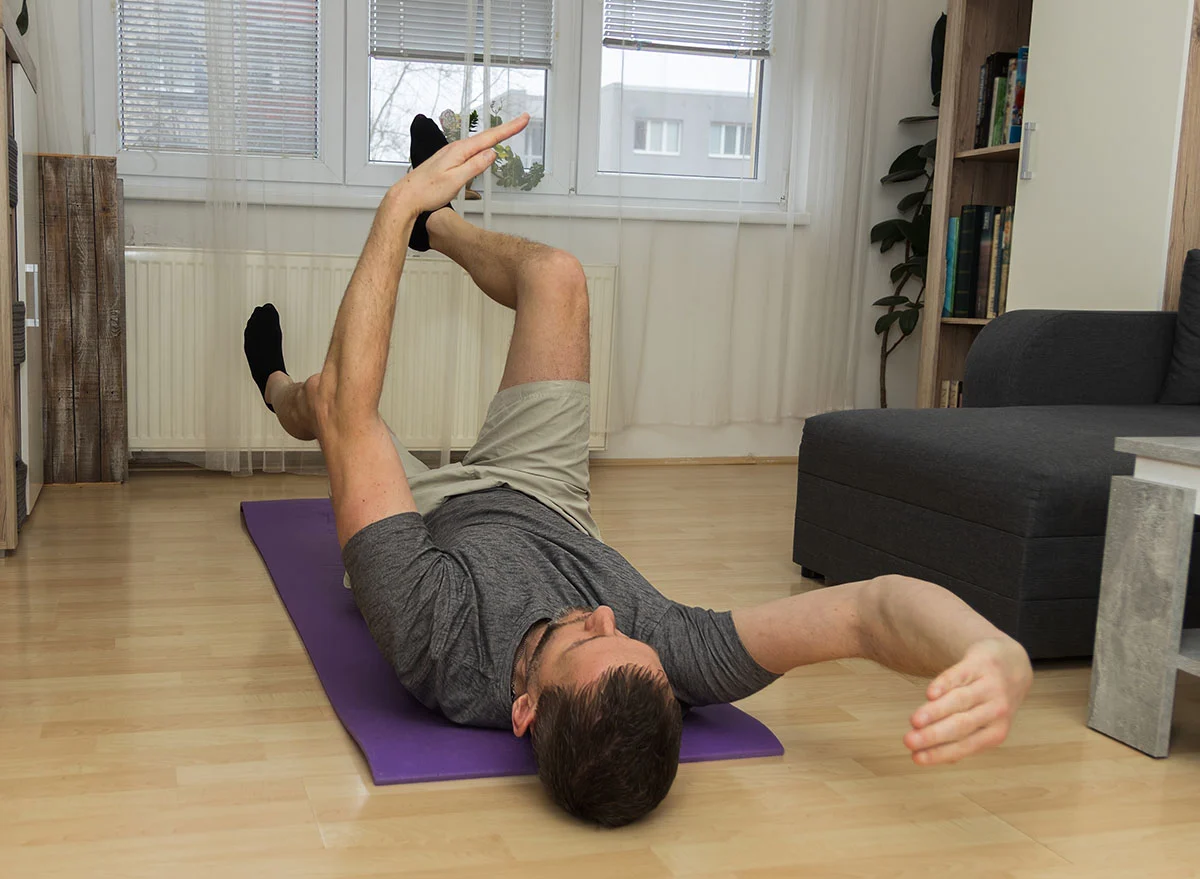
1. The Alternating Dead Bug
The Dead Bug is widely considered the gold standard for spinal health. By pressing the lower back firmly into the floor, you eliminate the possibility of cheating with the lumbar spine.
- Execution: Lie on your back, arms extended toward the ceiling and legs in a tabletop position. Slowly lower your right arm behind your head while extending your left leg straight out. Return to center and repeat on the opposite side.
- Why it works: It forces the deep core (transverse abdominis) to fire in response to the weight of your limbs moving away from your center.
- Pro Tip: If your back loses contact with the floor, do not extend your leg as far. A shorter, controlled range is always superior to a long, sloppy one.
2. The Reverse Crunch
While traditional crunches can put unnecessary strain on the cervical spine (the neck), the reverse crunch targets the lower abs—the area most responsible for pelvic stability.
- Execution: Lie on your back with hands at your sides. Use your core to curl your knees toward your chest, lifting your hips slightly off the floor. Lower your hips back down with total control.
- Why it works: It trains the rectus abdominis to perform its primary function: flexing the spine against gravity, rather than relying on momentum.
3. Flutter Kicks
Endurance is key for core longevity. Flutter kicks mimic the demands of walking and cycling, requiring the core to remain "locked in" while the legs move at a steady cadence.
- Execution: Place your hands under your glutes for support. Extend your legs and lift them six to ten inches off the floor. Perform small, rapid, alternating kicks.
- Why it works: This builds the "stamina" of the abdominal wall, preventing the common "hunching" that occurs during long periods of standing or walking.
4. Bear Hold with Shoulder Taps
This exercise moves the challenge to the "quadruped" (hands and knees) position, which mimics the real-world demands of picking up objects or navigating uneven terrain.
- Execution: Get into a tabletop position, then lift your knees one inch off the ground. While maintaining a perfectly flat back, lift one hand to touch the opposite shoulder.
- Why it works: It challenges "anti-rotation." Your body will want to twist as you lift your hand; your core must fight to keep you square to the floor.
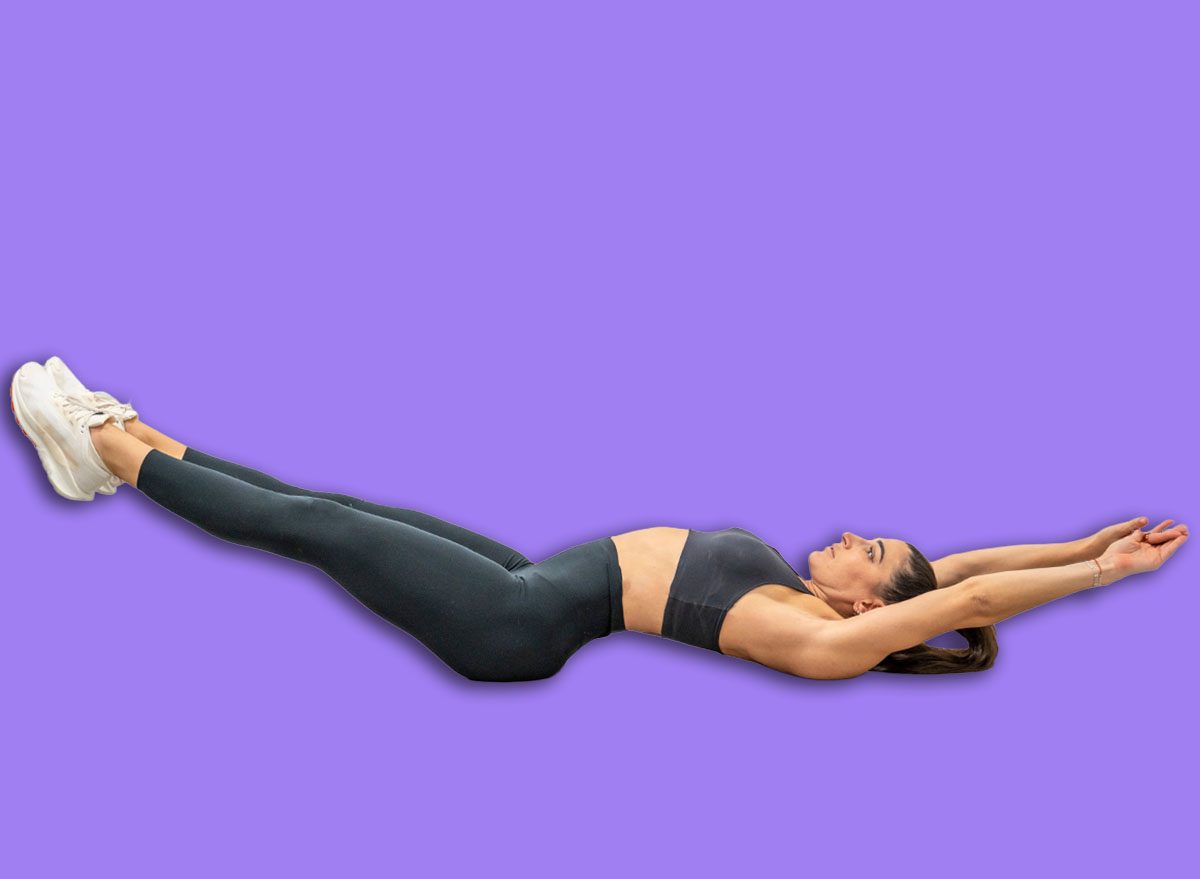
5. The Hollow Hold
This is the ultimate test of full-body tension. It integrates the entire core, from the chest down to the hips.
- Execution: Lie on your back. Simultaneously lift your shoulders and legs a few inches off the ground. Your body should resemble a "hollowed-out" boat.
- Why it works: It teaches the body how to be rigid under pressure. This is a foundational skill for maintaining posture during daily activities like gardening or carrying groceries.
Supporting Data: The Science of Midsection Health
According to studies published in journals such as the International Journal of Environmental Research and Public Health, core stability is directly correlated with a reduction in falls among older adults. A study involving 12 weeks of targeted core training showed a 22% increase in dynamic balance scores in participants aged 55 to 70.
Furthermore, the integration of "hollow-body tension" exercises has been shown to improve oxygen efficiency during movement. By stabilizing the core, the body wastes less energy on unnecessary trunk movement, allowing the limbs to move more efficiently.
Official Perspectives: The Medical Consensus
Medical professionals increasingly emphasize that "simple and repeatable" is the key to patient compliance. Dr. Sarah Jenkins, a physical therapist specializing in geriatrics, notes: "The goal is not to exhaust the muscle to failure, but to teach the brain to recruit the muscles automatically. When you engage in these movements, you are essentially ‘reprogramming’ your posture. After 55, the objective is longevity, not aesthetics. If you can perform these moves with perfect form, you are significantly lowering your risk of chronic disc issues and sciatica."
Implications for Daily Living
The benefits of these five exercises extend far beyond the gym. By mastering these movements, you are building a "natural corset."
- Back Pain Mitigation: By learning to keep the spine neutral during a Dead Bug, you are training your body to maintain that same neutral spine when you bend over to tie your shoes or pick up a grandchild.
- Improved Balance: The Bear Hold reinforces the connection between the shoulders and the hips, which is vital for catching yourself if you stumble.
- Metabolic Efficiency: Because these exercises engage the largest muscle groups in the trunk, they encourage a higher caloric burn than passive exercise, helping to manage body composition as metabolism naturally shifts with age.
Conclusion: Starting Your Journey
The transition from "plank-dependent" to "movement-focused" training is one of the most beneficial changes you can make for your physical health after 55. Start slowly, respect your body’s signals, and prioritize the "Form Tips" provided for each movement.
Remember, the goal is not to win a race or hold a position for an arbitrary amount of time. The goal is to cultivate a body that is responsive, strong, and pain-free. By committing to just two rounds of these five exercises, three days a week, you are investing in the most important asset you possess: your ability to move through the world with confidence and independence.
Always consult with your primary care physician or a physical therapist before beginning any new exercise program, especially if you have a history of spinal surgery or chronic joint pain.