











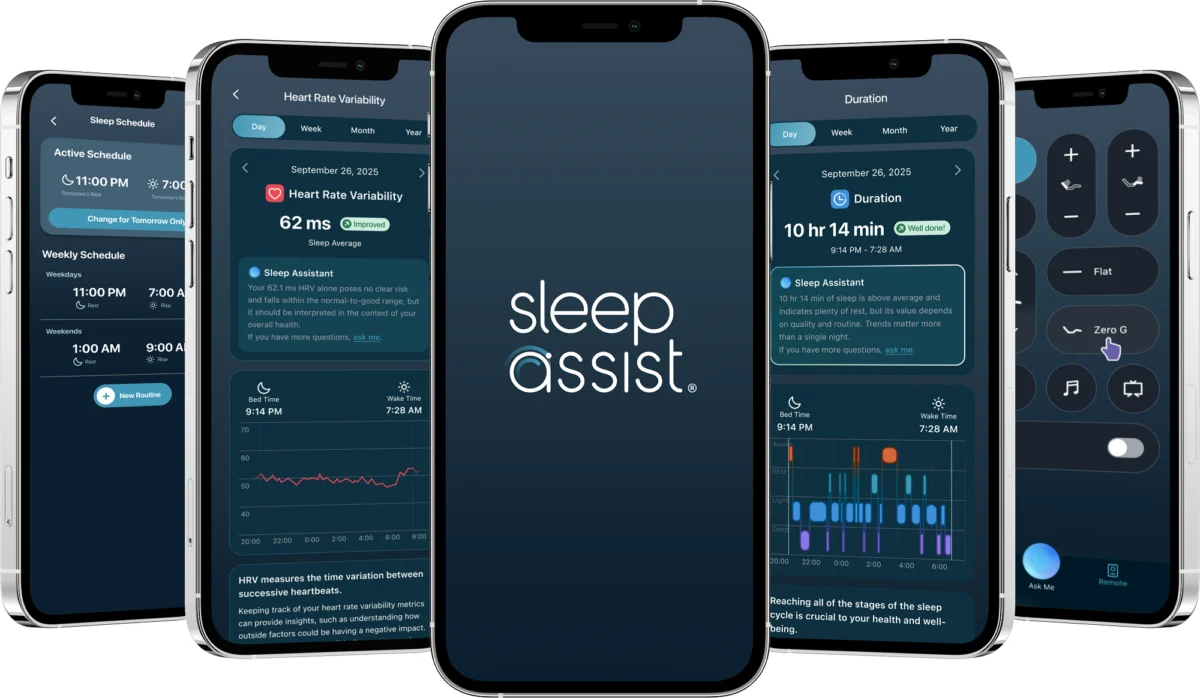
The intersection of artificial intelligence and home wellness is poised for a significant transformation this August. Ergomotion, a global leader in adjustable bed technology, has officially announced the launch of "Sleep Assist," a comprehensive, subscription-free mobile application powered by the company’s proprietary Ergomotion Intelligence (EI) platform.
Designed to move beyond simple sleep tracking, Sleep Assist represents a paradigm shift in how consumers interact with their sleep environment. By bridging the gap between biometric data collection and mechanical bed adjustment, the platform aims to create a "closed-loop" system that not only monitors sleep quality but actively intervenes to improve it.
The application is set to debut on iOS devices on August 1, with an Android rollout scheduled for mid-August, marking the culmination of a development cycle that began with a high-profile preview at CES 2026.
The Core Innovation: Biometrics Without the Wearables
One of the most significant barriers to consistent sleep tracking has historically been the "wearable fatigue" experienced by users. Requiring individuals to sleep with smartwatches, rings, or chest straps can, for many, introduce a secondary stressor that undermines the very rest they are trying to measure.
Sleep Assist bypasses this entirely. By utilizing advanced sensors embedded directly into the base of Ergomotion’s adjustable bed frames, the system captures granular health data through the mattress itself. This "non-contact" approach allows for continuous, passive monitoring.
The platform aggregates a comprehensive suite of metrics, including:
- Sleep Efficiency and Timing: Analyzing the ratio of time spent asleep versus time spent in bed.
- Restfulness and Nighttime Awakenings: Identifying disruptions that prevent deep, restorative cycles.
- Respiratory Insights: Monitoring snoring patterns to provide data that can often serve as an early warning for sleep apnea or other airway obstructions.
- Cardiovascular Markers: Tracking Heart Rate Variability (HRV) and the lowest resting heart rate, which are critical indicators of physiological stress and recovery.
By providing these metrics in daily, weekly, and monthly views, Sleep Assist empowers users to visualize their health trends over time, moving from anecdotal assumptions about sleep quality to data-backed understanding.
Chronology: From Concept to Consumer Launch
The journey toward Sleep Assist has been a multi-year strategic initiative for Ergomotion.
- Early Development (2024–2025): Ergomotion focused on refining the Ergomotion Intelligence (EI) platform, ensuring that the sensor arrays in their bed bases could provide medical-grade accuracy without the need for peripheral devices.
- The CES 2026 Reveal: The platform was first unveiled to the public at the Consumer Electronics Show in early 2026. The preview generated significant industry buzz, specifically for its emphasis on a subscription-free model—a rarity in a market increasingly dominated by monthly paywalls.
- The Pilot Phase (Spring 2026): Following the trade show circuit, the system underwent rigorous testing with select user groups to calibrate the AI’s recommendation engine.
- August 2026 Launch: The official rollout marks the integration of the software with the RIO Eco platform and prepares the ecosystem for the upcoming fall release of the Ergomotion Legacy Venti bed.
The AI Advantage: A Conversational Approach to Sleep Health
Data is only as valuable as the insights derived from it. The hallmark of the Sleep Assist app is its integrated AI Sleep Assistant. Unlike traditional health apps that present users with a dashboard of cold, confusing numbers, Sleep Assist features a natural language processing interface.
Users can query the app in plain English—asking questions such as, "Why did I feel tired yesterday despite sleeping eight hours?" or "How does my snoring correlate with my sleeping position?" The AI interprets the user’s specific biometric data to provide personalized, actionable context.
This functionality effectively turns the app into a digital sleep coach. By identifying patterns—such as a dip in HRV following late-night exercise or increased snoring when the head is not properly elevated—the AI suggests specific adjustments to the user’s routine and their smart bed settings.
Mechanical Synergy: When Data Meets Hardware
The true power of the Sleep Assist platform lies in its ability to execute changes in the physical environment. When paired with compatible Ergomotion smart beds, the app transitions from a diagnostic tool to an active participant in the user’s sleep health.
Automated Anti-Snore Intervention
The system detects the frequency and amplitude of snoring and can automatically adjust the head of the bed to a slightly elevated position. This gentle mechanical intervention is designed to open airways and reduce obstruction without the user ever needing to wake up or manually adjust their controls.

Smart Routines and Presets
The app introduces "Smart Routines," which automate the user’s sleep journey. From a "Zero-G" weightless position that promotes spinal alignment to relaxation presets that use gentle articulation to soothe muscles, the bed learns the user’s preferences. Over time, the system suggests optimizations based on the user’s nightly patterns, ensuring that the bed is always configured for maximum restorative potential.
Compatibility
At launch, the app is compatible with the RIO Eco platform—a sophisticated hardware suite that includes head and foot articulation, active pillow tilt, and lumbar support. Furthermore, the platform is future-proofed for the upcoming Ergomotion Legacy Venti smart bed, which is slated to hit the market in the fall of 2026, promising even higher levels of sensor sensitivity and ergonomic support.
Official Perspective: Leadership and Vision
For Ergomotion, the launch of Sleep Assist is not merely a software update; it is a fundamental shift in the company’s identity.
"Sleep Assist represents the next step in Ergomotion’s evolution as a connected sleep technology leader," says Gui Peres, CEO of Ergomotion. "We are moving away from being a bed manufacturer and toward becoming a holistic sleep health partner. By linking personal wellness data with individualized comfort, we are giving consumers a clearer, more empowering understanding of how they sleep."
Peres and the Ergomotion leadership team have emphasized that their commitment to a subscription-free model is a direct response to consumer sentiment. In an era of "app fatigue," where every smart device demands a monthly fee, Ergomotion is positioning Sleep Assist as a value-added service included with the purchase of their hardware, prioritizing long-term customer loyalty over short-term recurring revenue.
Implications for the Future of Smart Bedrooms
The introduction of this platform carries significant implications for the broader wellness industry.
1. The Death of the Wearable?
While wearables remain popular for daytime fitness tracking, their necessity for nighttime monitoring is being challenged. If a bed can provide equal or superior data without the discomfort of a wristband or ring, the "bed-as-a-sensor" model may soon become the industry standard.
2. The Rise of "Proactive" Sleep Environments
We are moving from a reactive model of sleep (where we notice we are tired and try to change our habits) to a proactive model. The smart bed of the future does not just wait for the user to climb in; it prepares the environment based on the user’s physiological readiness, stress levels, and historical data.
3. Integration with Healthcare
As the accuracy of these sensor arrays improves, there is a clear pathway for these devices to provide data that could be shared with medical professionals. While Ergomotion is currently positioning Sleep Assist as a wellness and lifestyle tool, the ability to monitor heart rate, respiratory patterns, and movement over long periods provides a treasure trove of data that could eventually assist in the diagnosis of chronic sleep conditions.
4. Consumer Autonomy and Data Privacy
By keeping the platform subscription-free and focusing on local, personalized insights, Ergomotion is signaling a focus on consumer autonomy. The data remains in the ecosystem of the user’s smart home, fostering a sense of trust that is often missing from cloud-heavy, subscription-based competitors.
Conclusion
As Ergomotion prepares to roll out Sleep Assist, the company is effectively raising the bar for the bedroom of the future. By combining the physical comfort of high-end adjustable furniture with the analytical power of AI, they have created a product that addresses the fundamental human need for quality rest with technological sophistication.
Whether through the subtle adjustment of an anti-snore feature or the deeper insights provided by the AI Sleep Assistant, the platform offers a compelling vision of what happens when we stop treating sleep as a passive activity and start managing it as a vital pillar of health. As the launch date approaches, industry observers will be watching closely to see how consumers respond to this new, data-driven approach to one of our most basic human needs.