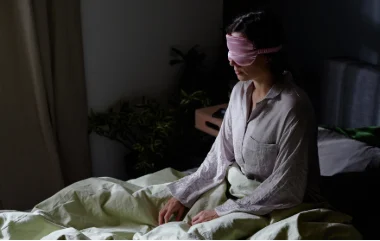











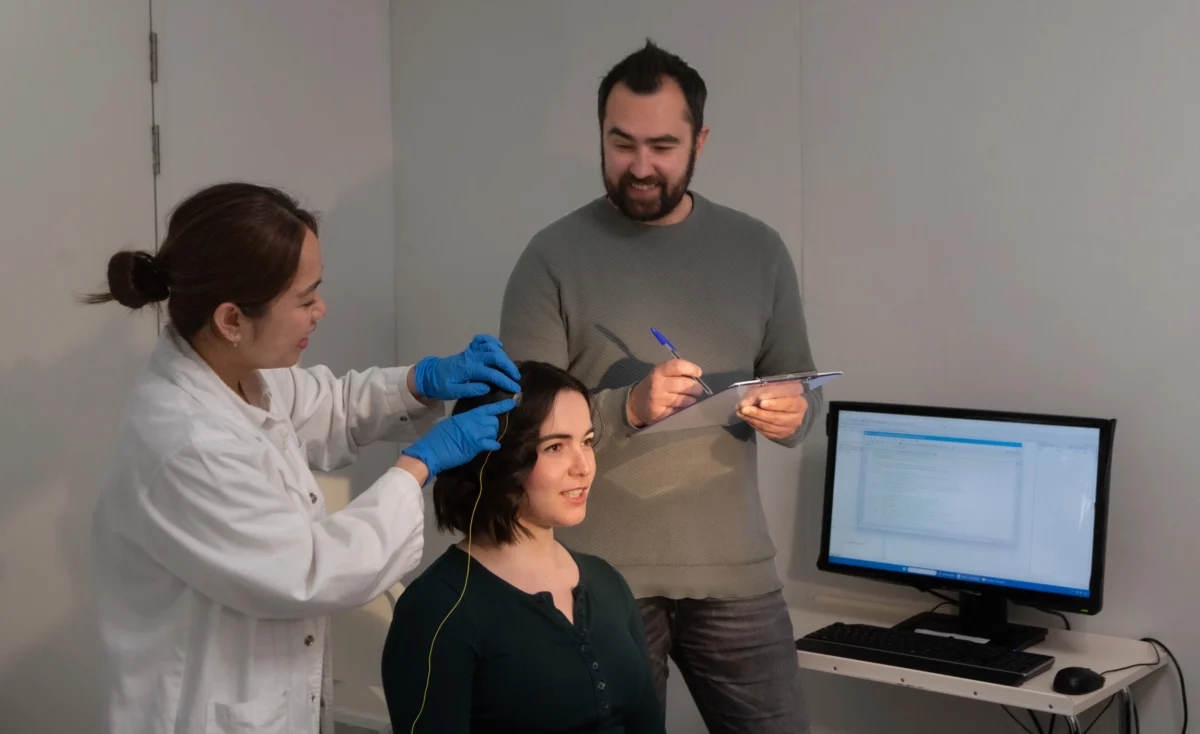
For decades, the gold standard of sleep science was a claustrophobic, high-stakes affair: an overnight stay in a specialized clinic, hooked up to a web of polysomnography (PSG) sensors. While clinically rigorous, these "snapshots" provided only a fragmented view of human biology, ignoring the chaotic, variable reality of night-to-night sleep patterns and their integration into our daily lives.
Today, a paradigm shift is underway. Driven by a 17-year collaborative powerhouse between Monash University in Australia and Brigham and Women’s Hospital in Boston, the field of sleep medicine is moving away from the isolated laboratory and toward a holistic, 24-hour understanding of circadian health. By leveraging the continuous, objective data provided by wearable technology, researchers are unlocking new pathways to prevent chronic diseases, proving that the secret to long-term health may lie in the small, manageable adjustments we make to our daily routines.
Main Facts: The New Era of Continuous Monitoring
The traditional reliance on retrospective self-report questionnaires and single-night lab studies often failed to account for the "noise" of human behavior—the subtle fluctuations in sleep duration, timing, and quality that accumulate over months and years. Wearable devices, from high-end research accelerometers to consumer-grade smartwatches, have changed this by allowing scientists to observe sleep as a dynamic process rather than a static event.
"Wearables allowed us to recognize that sleep is not something that happens during night hours and then that’s it," says Emmanuel Stamatakis, PhD, director of Brain Park at Monash University’s Turner Institute for Brain and Mental Health. "Rather, sleep is acknowledged as part of a 24-hour day."
This perspective is central to the mission of the Monash-Brigham collaboration. By capturing data on posture, physical activity, and sleep parameters, these devices offer a "whole-lifestyle" picture that researchers can use to identify how minor behavioral changes influence major health outcomes.
Chronology: A 17-Year International Synergy
The collaboration between Monash University and Brigham and Women’s Hospital is a testament to the power of sustained international research. What began nearly two decades ago as a modest faculty exchange program has evolved into a global, bi-institutional force in sleep and circadian research.
- Phase 1 (The Early Years): The partnership initially focused on foundational circadian physiology, establishing the groundwork for how light and timing impact the human internal clock.
- Phase 2 (The Rise of Data): As mobile health technology matured, the collaboration pivoted to incorporate digital tools. Researchers began moving beyond controlled lab environments to analyze real-world data.
- Phase 3 (The Digital Transformation): The partnership hit a major milestone with the development of the Sleep Regularity Index (SRI), a metric that revolutionized how scientists interpret sleep consistency.
- Phase 4 (Global Scale): Supported by a recent five-year Wellcome Trust grant, the program has expanded its reach into low- and middle-income countries, ensuring that sleep health research is not limited to Western populations.
To date, this synergy has produced more than 250 peer-reviewed publications and facilitated a fluid exchange of doctoral students and senior researchers between Melbourne and Boston.
Supporting Data: The Synergy of Small Changes
One of the most compelling revelations from the Monash-Brigham collaboration is that the cumulative effect of small, healthy behaviors is greater than the sum of its parts. Epidemiological evidence suggests that major health gains do not necessarily require massive lifestyle overhauls.
According to research supported by this collaboration, individuals who make modest improvements—adding just 5 to 10 minutes of sleep per night, incorporating 2 to 4 minutes of vigorous physical activity daily, and consuming half a cup of fresh vegetables—can see an approximately 10% reduction in the risk of major adverse cardiovascular events over seven to eight years.
"There seems to be a synergy," says Stamatakis. To achieve the same 10% reduction in cardiovascular risk through sleep alone, a person would need to add roughly 30 minutes of sleep per night—a much more difficult behavioral hurdle. By tracking these small increments, wearables provide the tangible data points needed to coach patients effectively, turning abstract health goals into achievable daily habits.
The Sleep Regularity Index: A New Gold Standard
Perhaps the most significant contribution to come out of the collaboration is the Sleep Regularity Index (SRI), spearheaded by Dr. Andrew Phillips. While duration has historically been the primary metric for sleep health, the SRI shifts the focus to consistency—how reliably a person sleeps and wakes at the same time every day.

In a landmark study using 10 million hours of accelerometer data from nearly 61,000 UK Biobank participants, researchers found that sleep regularity is a stronger predictor of all-cause mortality than sleep duration. The findings were stark: participants with the most regular sleep schedules enjoyed a substantially lower risk of cancer, cardiometabolic disease, and death from all causes compared to those with irregular patterns, regardless of their total sleep time.
"This comes purely from the capabilities that wearable devices permit," says Stamatakis. "It wouldn’t have been possible to develop the Sleep Regularity Index without the UK Biobank and the richness of data that wearable devices provide."
Official Responses and Technological Challenges
Despite the excitement surrounding wearable data, the research community remains cautious about the "black box" nature of some consumer-grade devices.
"By not making the data processing algorithms transparent, it is very hard to use them in scientific research," Stamatakis notes. While consumer smartwatches offer advanced sensors—such as photoplethysmography for heart rate and blood oxygen levels—the proprietary, hidden algorithms used to interpret that data create barriers for academic rigor.
To bridge this divide, initiatives like The Wearables Landscape and Open Wearables are working to standardize validation protocols. The goal is to encourage manufacturers to open their raw data streams, allowing scientists to apply transparent, validated algorithms to these high-tech sensor suites.
Charles Czeisler, MD, PhD, chief of the division of sleep and circadian medicine at Mass General Brigham and co-leader of the collaboration, views this transition as an essential evolution. "It’s been exciting to see how the initiative has grown from just a few scholars in the exchange to now a steady drumbeat," Czeisler says. He emphasizes that the ultimate goal is to translate these digital signals into scalable, public health-ready solutions that can impact global populations.
Implications for Public Health and the Future
The implications for public health policy are profound. Currently, guidelines from organizations like the World Health Organization and the US government focus heavily on physical activity and sedentary behavior. However, the data generated by the Monash-Brigham partnership suggests that future guidelines must be updated to incorporate a more integrated, 24-hour framework.
"A wearable is able to quantify multiple dimensions of sleep health, as well as getting to what a person’s current sleep debt is," says Shantha M.W. Rajaratnam, PhD, head of the Monash School of Psychological Sciences. "That’s why I think these wearables offer us a really significant opportunity in public health policy implementation."
As the collaboration looks to the future, it is addressing the "Western bias" in current sleep research. Through the Prospective Physical Activity, Sitting and Sleep (ProPASS) consortium, the team is providing research teams in nations like Malaysia, Chile, and Mexico with the tools and training to gather localized data. By understanding how climate, culture, and socioeconomic conditions affect sleep, the team hopes to create a truly global map of circadian health.
Ultimately, the work being done between Monash and Brigham is changing the narrative of preventive medicine. We are no longer waiting for illness to manifest in the clinic; we are using the continuous, 24-hour data from our wrists to monitor our biology in real-time. By identifying the smallest, most impactful behavioral changes, this collaboration is building a blueprint for a healthier, more regular, and more resilient future.