






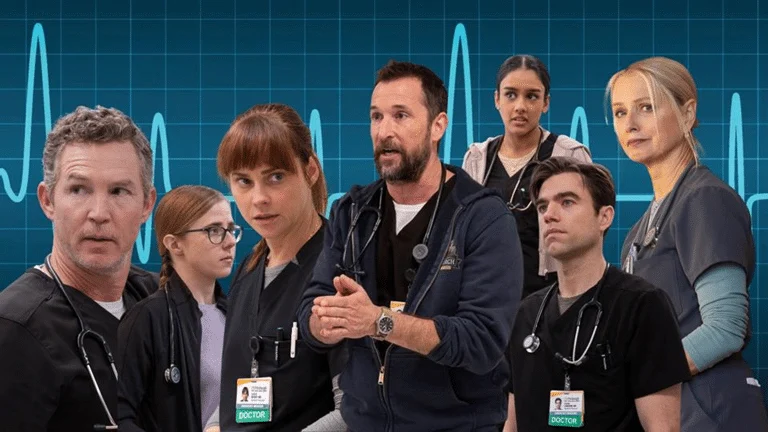
If you have not yet immersed yourself in the high-stakes, adrenaline-fueled world of HBO Max’s The Pitt, you are missing one of the most poignant cultural critiques of the modern medical era. While medical dramas are a staple of television—ranging from the soap-opera theatrics of Grey’s Anatomy to the clinical precision of ER—The Pitt occupies a distinct lane. It does not simply use medicine as a backdrop for romance or interpersonal drama; it uses the emergency department as a pressure cooker to examine the systemic failures currently plaguing the American healthcare landscape.
Through the eyes of the staff at a bustling Pittsburgh trauma center, the show offers a gritty, unflinching look at the challenges facing older adults, their caregivers, and the exhausted professionals tasked with their survival. By juxtaposing the narrative arc of the show with the sobering statistics of the real-world healthcare system, we find that the "fiction" of The Pitt is, in many ways, a mirror reflecting our own mounting crisis.
The Anatomy of a Crisis: Main Facts and Narrative Themes
The Pitt distinguishes itself through a commitment to procedural authenticity. Whether the team is performing a "clamshell" thoracotomy—a life-saving but brutal emergency chest procedure—or navigating the agonizing ethics of end-of-life care, the show refuses to sanitize the reality of medicine.
However, its most profound contribution is its exploration of the "Silver Tsunami"—the demographic shift as the Baby Boomer generation enters their later years. The show consistently highlights several critical failures: the unsustainable burden placed on family caregivers, the alarming shortage of geriatric specialists, the systemic burnout of emergency department physicians, and the intersection of poverty and health access.
Caregiver Burden: The Invisible Workforce
One of the show’s most consistent themes is the psychological and physical toll on family caregivers. We witness an adult daughter pushed to the brink of collapse, eventually found sleeping in her car simply to escape the overwhelming demands of her aging mother’s care. These moments are not mere narrative fillers; they represent the lives of 63 million Americans currently acting as unpaid caregivers for spouses, parents, or relatives.
The Geriatrician Deficit
In a particularly biting scene, a character is steered toward a geriatrics fellowship as a "slight," implying that the field is slow-paced or less intellectually rigorous than trauma medicine. This moment serves as a stinging critique of the medical hierarchy, highlighting a dangerous societal bias: that treating the elderly is less important than treating the young or the acutely injured.
Chronology of a Systemic Collapse
The narrative trajectory of The Pitt mirrors the actual timeline of the American healthcare crisis.
- The Pre-Pandemic Baseline: The early episodes set the stage, showing a system already operating at capacity. This reflects the reality of the last decade, where emergency departments became the "catch-all" for a society with an aging population and a fragmented primary care network.
- The Breaking Point: As the series progresses into the second season, the accumulation of "small" crises—a patient without transportation, a family choosing between medicine and rent, an overwhelmed doctor missing a diagnosis—begins to resemble the current state of U.S. healthcare.
- The Current Reality: The show’s climax reflects a reality where patients are increasingly forced to rely on crowdfunding platforms like GoFundMe to cover basic life-saving procedures, highlighting the transition from institutional support to individual survivalism.
Supporting Data: When Fiction Meets Reality
To understand why The Pitt resonates so deeply with healthcare professionals, one must look at the data that underpins its plotlines.
The Caregiving Epidemic
According to the Caregiver Action Network, the scope of the issue is staggering. More than one in five Americans are providing unpaid care to a loved one while simultaneously balancing full-time employment. This "double shift" often results in the caregiver suffering from severe depression, anxiety, and their own chronic health issues, as their personal wellness is sacrificed to manage the needs of others.
The Geriatrician Shortage
The numbers regarding geriatric care are arguably the most alarming in the medical field. With every Baby Boomer expected to be 65 or older by 2030, the demand for specialized care is skyrocketing. Yet, the U.S. currently possesses only about 7,000 board-certified geriatricians. To put this in perspective, there are over 60,000 pediatricians.
Despite this, only one in ten medical schools requires a clinical rotation in geriatrics. We are training doctors for a world that existed thirty years ago, rather than the one we are entering today.
The Emergency Department Paradox
The American Medical Association (AMA) has identified emergency medicine as the specialty with the highest rate of physician burnout. In The Pitt, when a doctor sees 16 patients in one morning and fails to recognize a return patient, it is not a sign of incompetence, but of a broken system. When doctors are forced to prioritize speed over continuity of care, older adults—who often require longer consultations and more complex coordination—are the first to fall through the cracks.
Transportation and Access
The story of the patient, Vera, who is cleared for discharge but has no way to get home, is not a dramatic embellishment. Transportation is one of the most underreported barriers to health equity. An estimated 3.6 million Americans report missing medical appointments specifically due to a lack of transportation, a factor that leads directly to higher rates of hospital readmission and worse health outcomes.
Official Responses and Industry Perspectives
Public health officials and organizations like the Alliance for Aging Research have long warned that the current healthcare model is ill-equipped for the aging population. The common consensus among experts is that the "wait and see" approach to geriatric infrastructure is no longer viable.
Medical associations are currently lobbying for:
- Increased Reimbursement for Geriatric Care: To make the field financially competitive and attractive to medical students.
- Expanded Medical School Requirements: Implementing mandatory geriatric training across all medical disciplines, recognizing that every physician will eventually treat aging patients.
- Integrated Care Networks: Bridging the gap between hospital discharge and home health services to ensure that patients like "Vera" have a sustainable path back to independence.
Implications: The Future of Aging in America
The implications of the themes presented in The Pitt are profound. If we continue to treat geriatrics as a secondary concern and leave family caregivers without structural support, the economic and human costs will be catastrophic.
The "financial dread" portrayed in the show—where patients leave the hospital early to avoid debt, only to return in worse condition—is a direct indictment of a system that favors short-term cost-cutting over long-term health. When we allow patients to fall into bankruptcy because of necessary medical care, we are not just failing the individual; we are failing the basic tenets of public health.
As the largest generation in American history continues to age, the choices made today in Congress, in medical boardrooms, and in academic institutions will define the next fifty years. Are we building a healthcare system that values life at all stages, or are we content to let the "Pitt" of our emergency rooms become the final destination for those who have spent their lives contributing to our society?
The Pitt is more than a television show; it is a wake-up call. It forces us to confront the reality that our medical systems are currently built for an idealized, younger patient population. As we move forward, we must ensure that our policies reflect the reality of our demographics. We need to invest in the geriatric workforce, provide tax and social support for caregivers, and restructure the emergency environment to prioritize continuity of care over simple volume.
The drama of the screen is fading; the reality of the future is here. It is time to ensure that our decisions for the aging population are not just reactive, but transformative.
Katrin Werner-Perez is the Director of Health Programs at the Alliance for Aging Research.