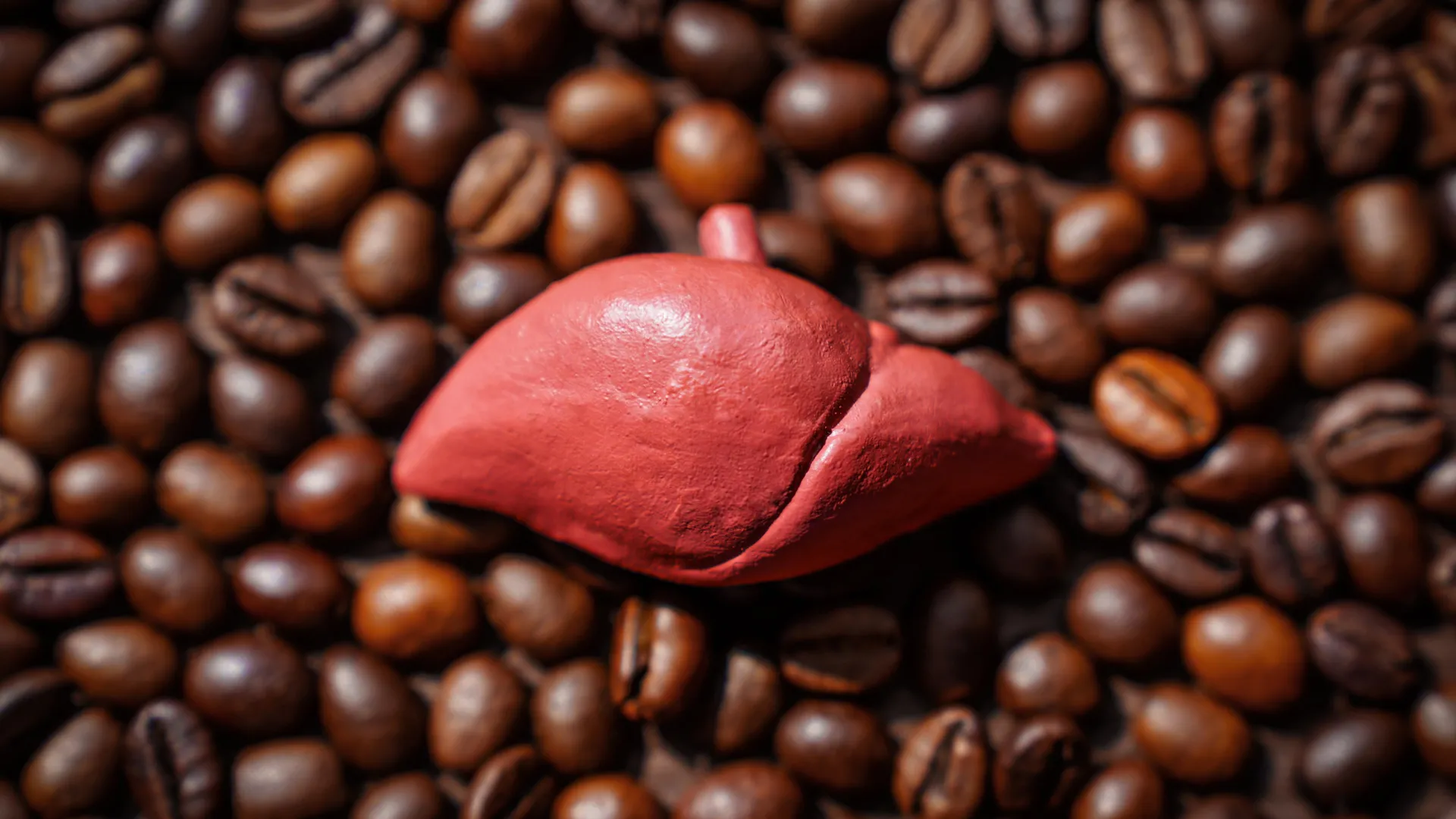
For centuries, coffee has been the world’s most beloved morning ritual, a dark, aromatic fuel that powers global productivity. While its role as a stimulant is well-documented, a groundbreaking new investigation from Cedars-Sinai Health Sciences University suggests that our favorite brew may offer far more than just a temporary cognitive boost. According to one of the most comprehensive studies to date, regular coffee consumption is strongly linked to a significantly lower risk of cirrhosis, liver cancer, and death related to liver disease.
Published in the journal Clinical Gastroenterology and Hepatology, the study moves beyond mere observation, identifying specific biological pathways that offer a compelling explanation for why coffee appears to act as a guardian for the liver. By tracking nearly 355,000 individuals over more than a decade, researchers have provided the most rigorous evidence yet that the path to a healthier liver might be found at the bottom of a coffee mug.
The Magnitude of the Research: A Decade of Data
To understand the true impact of coffee on liver pathology, a team of researchers at Cedars-Sinai undertook a massive data-driven endeavor. They analyzed information from 354,957 participants in the UK Biobank, a large-scale biomedical database. Crucially, the researchers excluded any participants who had a pre-existing history of cirrhosis or liver cancer at the onset of the study, ensuring that they were observing the development of disease rather than pre-existing conditions.
The study employed a longitudinal approach, tracking these individuals over a median period of 13 years. By linking participant data to medical records, the team was able to monitor new diagnoses of liver-related illnesses and mortality. This scope is what distinguishes the Cedars-Sinai research from its predecessors; while previous studies have hinted at a "coffee effect," they were often limited by smaller sample sizes or isolated data points.
"We followed hundreds of thousands of people for more than a decade and looked at their health outcomes along with liver MRI scans and blood protein analyses," explained Dr. Hyunseok Kim, a hepatologist and assistant professor of Medicine at Cedars-Sinai and the study’s corresponding author. "Together, those findings help explain the biological mechanisms behind coffee’s association with better liver health."
Quantifying the Benefits: The Protective Power of the Bean
The results of the analysis were striking. When comparing coffee drinkers to those who abstained from the beverage entirely, the data revealed a consistent, dose-dependent improvement in liver health outcomes.
For those consuming five or more cups of coffee per day, the statistics were particularly noteworthy:
- Cirrhosis: A 32% lower risk of developing the condition compared to non-drinkers.
- Liver Cancer: A 47% lower risk of diagnosis.
- Liver-Related Mortality: A 42% lower risk of death linked to liver disease.
While the most profound benefits were observed in the heaviest coffee drinkers, the research team noted that positive outcomes were detectable even among those who drank only one or two cups daily. The "sweet spot" for maximum protection, according to the data, appeared to be in the range of three to four cups per day. However, researchers cautioned that these findings should not be interpreted as a medical mandate to increase caffeine intake.
Beyond the Symptoms: Molecular Evidence of Liver Health
One of the most innovative aspects of this study was its reliance on objective, physical markers of health. Rather than relying solely on patient reports or clinical diagnosis, the team utilized advanced liver MRI scans and comprehensive blood protein analyses.
The MRI results provided visual evidence of reduced liver damage in regular coffee drinkers. Specifically, those with higher coffee intake exhibited lower levels of:
- Liver Fat: A primary driver of non-alcoholic fatty liver disease.
- Excess Liver Iron: A sign of metabolic dysfunction.
- Fibrosis: The scarring of liver tissue that often precedes cirrhosis.
- Liver Inflammation: The underlying process that leads to permanent tissue damage.
These physical findings were corroborated by blood analysis. Coffee drinkers consistently showed higher levels of proteins associated with robust liver function and lower levels of proteins known to trigger inflammation and tissue scarring. This molecular evidence provides a biological "why" to support the long-observed statistical association, suggesting that coffee interacts with the liver at a cellular level to mitigate damage.
The Mystery of the Brew: Decaf and the Chemical Puzzle
A significant revelation of the study was that the benefits of coffee were not confined to caffeinated versions. The researchers found that decaffeinated coffee was linked to similarly positive liver outcomes. This indicates that the protective mechanism is likely not the result of caffeine itself, but rather the result of the complex chemical makeup of the coffee bean.
Coffee contains a vast array of naturally occurring compounds, including polyphenols, antioxidants, and various phytonutrients. These substances are known to influence pathways related to inflammation, oxidative stress, and fibrosis. The fact that decaf provides similar benefits suggests that one or more of these secondary compounds are responsible for the liver-protective effects observed in the study.
"The next step in our research is to identify the specific compounds in coffee that are responsible for these liver-protective associations," said Dr. Shelly Lu, director of the Karsh Division of Gastroenterology and Hepatology at Cedars-Sinai. "Our findings point to biological pathways involving inflammation and scarring and highlight molecular targets that future research can explore to better understand how coffee may influence liver health."
Clinical Context and Official Guidance
Despite the positive findings, the researchers emphasized that the study was observational in nature. This means that while they have identified a strong correlation, they cannot definitively prove that coffee is the direct cause of improved liver health. Other lifestyle factors—such as diet, physical activity, and socioeconomic status—could potentially influence these outcomes, although the study accounted for many of these variables.
Furthermore, medical professionals are wary of suggesting coffee as a "miracle cure." Dr. Ju Dong Yang, medical director of the Liver Cancer Program at Cedars-Sinai and senior author of the study, stressed that coffee consumption should be viewed as a complementary habit, not a replacement for traditional medical advice or established lifestyle changes.
"Our findings support moderate coffee consumption for people who already enjoy and tolerate it well," said Dr. Yang. "However, we would not recommend that someone begin drinking coffee solely for liver protection based on this study alone. Prevention should continue to focus on maintaining a healthy weight, limiting alcohol, exercising regularly, and managing blood sugar, blood pressure, and cholesterol."
When Coffee Is Not the Answer
It is equally vital to recognize that coffee is not suitable for every constitution. The stimulants in coffee can exacerbate specific health conditions. Individuals suffering from uncontrolled hypertension, heart rhythm disorders, severe anxiety, or chronic insomnia should consult with their physician before altering their caffeine intake. For these individuals, the cardiovascular or neurological risks of caffeine consumption may outweigh the potential hepatological benefits.
Future Implications: From Bean to Biology
The Cedars-Sinai study serves as a critical bridge between public health observation and clinical research. By narrowing the focus to specific blood proteins and inflammatory pathways, the researchers have opened the door for future pharmaceutical and nutritional interventions. If scientists can isolate the exact compounds responsible for the liver-protective effects, it could lead to the development of new, targeted therapies for liver disease that capture the benefits of coffee without the side effects of caffeine.
For now, the study offers a reassuring message to the billions of people who enjoy a daily cup of coffee: your habit may be doing more than keeping you alert—it may be actively shielding one of your body’s most vital organs. As the scientific community looks toward the next phase of research, the humble coffee bean remains a fascinating subject of study, serving as a reminder that the most effective health interventions are sometimes found in the most common of places.
Study Authors and Acknowledgments:
The study was led by researchers at Cedars-Sinai, including Hyunseok Kim, MD, MPH, PhD; Ju Dong Yang, MD; and Shelly Lu, MD. The research team included Yufeng Wang, Abdelrahman M. Attia, Minsun Kwak, Seungwon Burm, Derin Celtik, Daniel Legaspi, Osama Khattab, Naomy Kim, Beza M. Mengistu, Kelsey N. Larios, Walid Ayoub, Alexandar Kuo, Paul Martin, Aarshi Vipani, Yun Wang, Debiao Li, and Stephen Pandol. Additional contributors included Mohammad Saeid Rezaee-Zavareh, David Sooik Kim, and Suthat Liangpunsakul.
Conflict of Interest Disclosure: Dr. Ju Dong Yang reports consulting services for AstraZeneca, Eisai, Exact Sciences, and Fujifilm Medical Sciences.