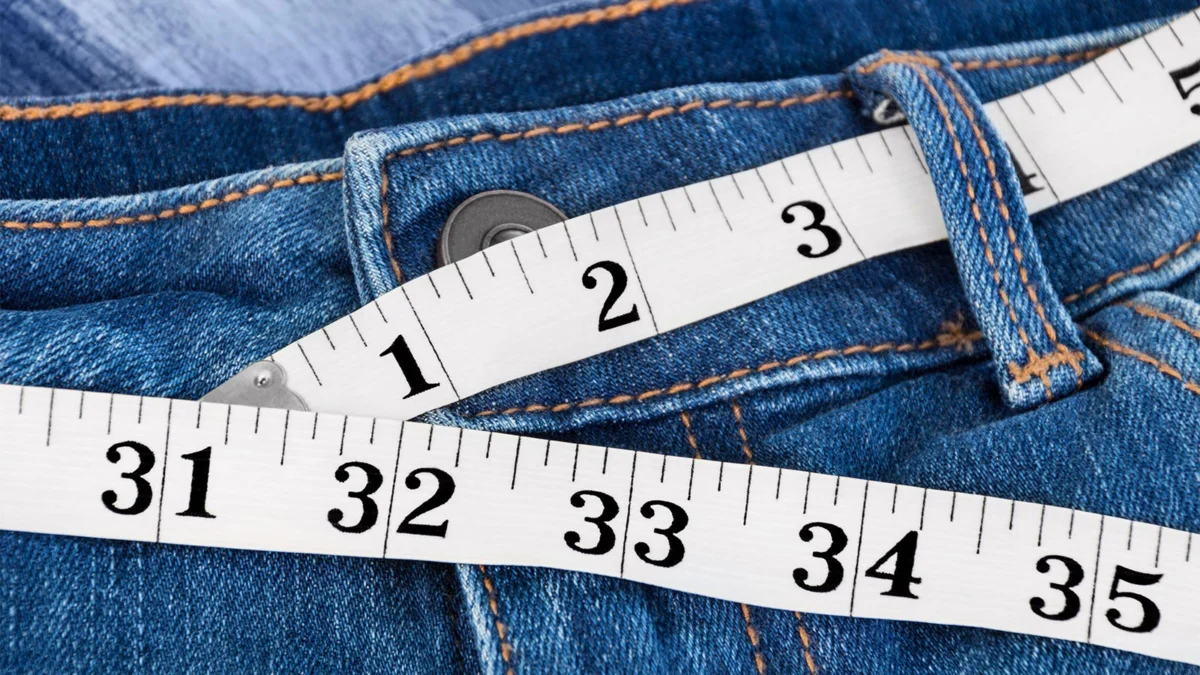
For decades, the Body Mass Index (BMI) has served as the medical community’s primary shorthand for assessing health risk. It is simple, inexpensive, and universally applied. However, a landmark longitudinal study recently published in the Journal of the American Geriatrics Society suggests that for the aging population, relying on BMI alone may be dangerously misleading.
The research, led by Dr. Furong Xu of the University of Rhode Island, indicates that "central adiposity"—the accumulation of fat around the midsection—is a far more accurate predictor of mortality risk in older adults than the total weight-to-height ratio represented by BMI. The findings suggest that the medical community must pivot toward a more nuanced approach to geriatric health, one that prioritizes where fat is stored rather than simply how much a patient weighs.
Main Facts: The Central Adiposity Crisis
The core of the study lies in its challenge to the so-called "obesity paradox." This phenomenon, frequently observed in clinical settings, suggests that older adults with higher BMIs often exhibit lower mortality rates than their "normal-weight" counterparts. For years, this has puzzled researchers and clinicians alike, leading to debates over whether carrying extra weight in old age might actually be protective.
Dr. Xu and his colleagues analyzed 14 years of longitudinal data (2011–2024) from the National Health and Aging Trends Study, tracking 6,905 Medicare beneficiaries aged 65 and older. The findings were stark: once the researchers adjusted for waist circumference, the protective narrative of high BMI began to crumble.
Older men with waist circumferences exceeding 40 inches and women exceeding 35 inches faced a 24% higher risk of mortality, regardless of their BMI category. Every five-inch increase in waist circumference was tied to a statistically significant rise in the mortality hazard for both genders. These data points provide a compelling argument that abdominal fat—often metabolically active and inflammatory—is a distinct and potent threat to longevity that BMI simply cannot detect.
Chronology of the Research
The study draws upon the National Health and Aging Trends Study (NHATS), a representative survey of the U.S. Medicare population that has provided a goldmine of data for public health researchers.
- 2011: The baseline data collection began, capturing initial measurements of height, weight, and waist circumference among a diverse group of 6,905 Medicare beneficiaries.
- 2011–2024: Over this 14-year period, researchers tracked survival outcomes, allowing for a comprehensive longitudinal view of how body composition changes over time and its subsequent impact on lifespan.
- 2024: The analysis was finalized and submitted to the Journal of the American Geriatrics Society, coinciding with a broader scientific shift—highlighted by a recent Lancet Commission—that has formally advocated against using BMI as a standalone diagnostic tool.
The timeline of this research reflects a growing global recognition that the metrics developed in the 19th century may no longer be sufficient for the complex physiological landscape of 21st-century geriatric medicine.
Supporting Data: The BMI Paradox Explained
The study revealed a paradoxical pattern that highlights the limitations of the BMI metric. When the researchers looked at BMI in isolation, the results seemed counterintuitive:
- Overweight men (BMI 25.0–29.9) had a 46% lower mortality risk compared to normal-weight peers.
- Men with Class I/II obesity (BMI 30.0–39.9) showed a 51% lower mortality risk.
- Overweight women showed a 27% lower risk compared to normal-weight counterparts.
However, when these categories were cross-referenced with waist circumference, the "paradox" became clear. BMI is a blunt instrument. It cannot distinguish between muscle mass and fat mass, nor does it account for the distribution of adipose tissue.
In older adults, a low BMI can often signal frailty, muscle wasting (sarcopenia), or the presence of chronic underlying illnesses that lead to unintentional weight loss. Consequently, a higher BMI might look "protective" on paper because it masks the presence of sufficient muscle mass, whereas a normal BMI in a frail elderly person may actually indicate an advanced state of health decline. By factoring in waist circumference, the researchers were able to peel back this layer, revealing that while a higher BMI might be associated with survival, high abdominal fat remains an independent, constant threat to health.
Official Responses and Expert Perspective
Dr. Bryan Blissmer, a co-author of the study and a researcher at the University of Rhode Island, emphasized that these findings should not be misinterpreted as an endorsement of obesity.
"The results suggest that this pattern should not be interpreted to mean that excess body fat is necessarily protective," Dr. Blissmer told MedPage Today. "BMI does not distinguish fat mass from muscle mass or indicate where fat is stored. By examining BMI and waist circumference together, we found that higher BMI was associated with lower mortality while greater abdominal size remained associated with higher mortality. The apparent paradox may therefore reflect, at least partly, the limitations of BMI when used by itself."
The researchers stress that their work is not a call for weight gain in the elderly. Rather, it is a call for a more sophisticated clinical toolkit. The study aligns with recent international health guidelines suggesting that clinicians should stop relying on BMI as a sole diagnostic criterion. Instead, doctors should integrate waist-to-hip ratios, waist-to-height ratios, or, where available, advanced imaging like DEXA scans or bioimpedance analysis to get a true picture of a patient’s metabolic health.
Clinical Implications: A Path Forward
The implications for primary care providers are immediate and practical. The study suggests that treating an older patient based on their BMI category alone is a potential medical oversight.
1. The Necessity of Multi-Measure Screening
Clinicians should routinely measure waist circumference alongside BMI. A patient who falls into the "normal" BMI range but has a high waist circumference may be at higher risk than previously assumed—a condition sometimes referred to as "normal-weight obesity."
2. Monitoring for Frailty
The study confirmed that underweight status (BMI <18.5) is a significant mortality risk factor, with hazard ratios nearly double those of normal-weight individuals. This reinforces the importance of monitoring for unintentional weight loss, which is often an early warning sign of frailty, nutritional deficiency, or undiagnosed systemic disease.
3. Nuanced Health Conversations
Doctors must be careful not to encourage weight loss indiscriminately in older patients who have high BMIs but maintain healthy muscle mass. The goal in geriatrics should shift from "weight loss" to "body composition improvement"—preserving muscle mass while reducing visceral, abdominal fat.
4. Limitations and Future Research
While the study is robust, it does have limitations, notably the reliance on self-reported height and weight, which can introduce classification errors. Furthermore, as an observational study, it cannot definitively prove causality. Future research must incorporate direct, objective measures of muscle mass and body fat distribution to clarify how these variables interact with the aging process.
Conclusion
The findings from Dr. Xu and his team represent a vital step toward modernizing how we define "health" in the later stages of life. By moving away from the simplistic, one-size-fits-all metric of BMI and toward a more granular assessment of body composition, the medical community can better identify those at the highest risk. As our population ages, the focus must be on maintaining functional health and longevity—a goal that requires looking beyond the number on the scale and into the specific distribution of body fat that defines an individual’s true metabolic risk.