Published August 19, 2026 | Updated 6 hours ago
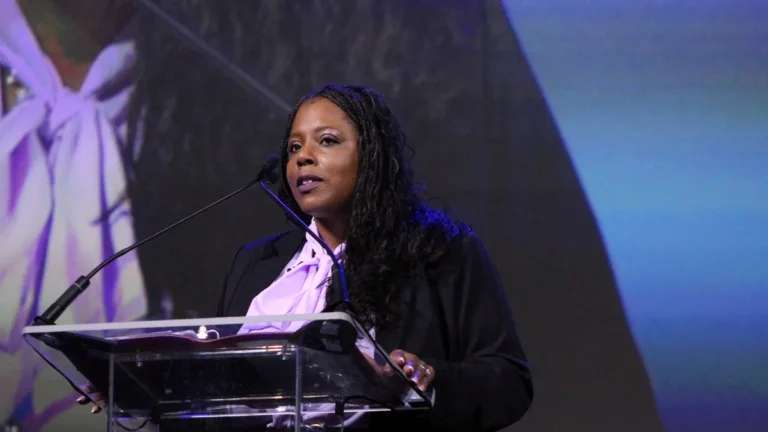
In a move that has sent ripples of uncertainty through the pharmaceutical and biotech sectors, the Trump administration has officially announced the nomination of Dr. Heidi Overton to lead the U.S. Food and Drug Administration (FDA). Currently serving as the deputy director of the White House Domestic Policy Council, Overton’s appointment comes at a critical juncture for an agency that has been defined by internal upheaval, policy instability, and a series of high-profile departures over the last several years.
The nomination, confirmed by Health and Human Services (HHS) Secretary Robert F. Kennedy Jr., seeks to install a loyalist at the helm of the nation’s top public health regulator. However, for investors and industry leaders, the transition represents a departure from traditional regulatory leadership, leaving the future of drug approval processes and agency culture hanging in the balance.
The Landscape: A Period of Unprecedented Agency Instability
The FDA has spent the last several years in a state of operational crisis. Under the tenure of previous leadership—most notably Dr. Marty Makary—the agency faced severe criticism from both internal staff and external stakeholders. The agency has been plagued by mass layoffs, the resignation of veteran officials, and what observers describe as "unusual turnover" at the highest executive levels.
Beyond personnel issues, the FDA has been characterized by unpredictable shifts in policy and a series of controversial regulatory rulings. Industry analysts have frequently cited a climate of "erratic decision-making," which has left drugmakers in a precarious position, unable to gauge the agency’s long-term direction or adhere to consistent regulatory standards. As the industry looks toward a new era under Overton, the primary objective of stakeholders remains the same: the restoration of a "steady hand" and a return to institutional predictability.
Chronology: From Medical Training to the West Wing
Dr. Heidi Overton’s trajectory to the top of the federal health apparatus is unconventional. Born into a family dedicated to service—her father a minister and her mother an OB-GYN at a Christian hospital—Overton’s early career path was rooted in clinical medicine.
- 2015: Graduated from the University of New Mexico School of Medicine. At this stage, her trajectory appeared headed toward a career as an oncology surgeon. Her academic promise was noted locally, with the Albuquerque Journal highlighting her leadership as a student regent.
- 2019: Following her surgical residency, Overton pivoted away from clinical practice and entered the sphere of federal policy, joining the White House.
- Post-2019: Overton became a prominent voice within the America First Policy Institute (AFPI), a conservative think tank. During this time, she established a reputation as a fierce advocate for conservative health policies, writing extensively on issues ranging from hospital price transparency to the opioid epidemic.
- 2024–2026: Served as deputy director of the White House Domestic Policy Council, where she became a central figure in advancing the "Make America Healthy Again" (MAHA) agenda championed by Secretary Robert F. Kennedy Jr.
- August 2026: Nominated by the White House to lead the FDA, following a period of intense organizational restructuring within the Department of Health and Human Services.
Supporting Data: Academic and Policy Credentials
While Overton lacks traditional experience in the complex machinery of drug regulation, her academic credentials are substantial. She is board-certified in public health and general preventive medicine and holds a Ph.D. in clinical investigation from Johns Hopkins University.
However, her time at the America First Policy Institute has been marked by strong political stances that have polarized observers. Her public writing has often veered into aggressive partisan rhetoric, including a notable op-ed co-authored with former Louisiana Governor Bobby Jindal, which attacked Minnesota Governor Tim Walz. This public record has raised questions among some in the scientific community about whether her leadership at the FDA will prioritize clinical rigor or political alignment.
Furthermore, her role in the White House Domestic Policy Council has been complex. While Kennedy has publicly praised her for "forwarding" his agenda, reports from outlets like The Atlantic suggest a more nuanced reality. Some factions within the MAHA movement have expressed frustration, believing that Overton has, at times, acted as a bureaucratic brake, slowing the implementation of radical policy changes to ensure they are executed with legal and procedural caution.
Industry Implications: The "Uncertainty" Factor
The pharmaceutical sector’s reaction to the nomination has been one of cautious observation. RBC Capital Markets analyst Brian Abrahams noted that while the current interim leadership, such as that provided by officials like Diamantas, has served as a "stabilizing force" in recent months, the introduction of Dr. Overton introduces a new set of variables.

"Her impact to biopharma and new drug review flexibility is uncertain," Abrahams wrote in a recent note to clients. "Given her lack of drug regulatory experience and limited commentary on industry-specific issues, she will likely depend heavily on direction from the White House and Secretary Kennedy."
This dependence is the crux of the industry’s concern. If the FDA becomes an extension of the White House’s political agenda, the "flexibility" often required for accelerated drug approvals may become politicized. Investors are worried that the agency could move away from the data-driven consensus models that have historically defined FDA approvals, potentially leading to longer review timelines or, conversely, to a volatile environment where approvals are granted or rescinded based on political pressure rather than clinical evidence.
Official Responses and Future Outlook
The nomination of Dr. Overton is seen as a clear signal that the Trump administration intends to maintain a firm grip on the regulatory environment. By selecting a candidate who has been deeply embedded in the administration’s inner policy circles, Secretary Kennedy is signaling a commitment to his "Make America Healthy Again" platform, which seeks to reorganize the FDA’s priorities away from what the administration views as "regulatory capture" by Big Pharma.
However, the path to confirmation and effective leadership will be arduous. The FDA is currently a demoralized institution, with veteran staff feeling sidelined by years of administrative instability. To succeed, Overton will need to do more than satisfy the political requirements of the White House; she will need to convince a skeptical workforce and a nervous industry that she can protect the integrity of the agency’s scientific review process.
The Challenge Ahead
As Dr. Overton prepares for her confirmation hearings, she faces a multi-front challenge:
- Restoring Morale: Addressing the deep-seated grievances of FDA staff who have witnessed years of internal restructuring and staff attrition.
- Maintaining Scientific Integrity: Demonstrating that she can navigate the demands of the White House while upholding the FDA’s gold standard for safety and efficacy.
- Providing Predictability: Establishing clear, transparent pathways for drug approvals that reassure investors and biotech firms that the agency is not governed by "erratic" decision-making.
For now, the pharmaceutical world is in a "wait-and-see" mode. The appointment of Dr. Overton marks the end of one era of turbulence and the beginning of another, defined by the administration’s desire for systemic change. Whether that change will result in a more efficient agency or one that is further mired in political controversy remains the defining question of the coming months.
Editor’s Note: This story has been updated to reflect the official announcement of the nomination by Health and Human Services Secretary Robert F. Kennedy Jr. and to incorporate the latest market reactions regarding the transition of leadership at the FDA.