




For many individuals over the age of 60, the knees often become the primary "limiting factor" in physical activity. Whether it is the stiffness of arthritis, a loss of muscular support, or a psychological hesitation stemming from past discomfort, knee pain frequently leads to a sedentary cycle. However, modern physical therapy trends are shifting away from high-impact machinery and toward functional, movement-based rehabilitation.
One of the most accessible, yet highly effective, environments for this recovery is the humble kitchen counter. By utilizing a standard countertop as a stabilizer, individuals can retrain their bodies to bend, step, and load joints in ways that mimic the demands of daily life, effectively rebuilding structural integrity without the intimidation of a traditional gym environment.
Main Facts: Why Knee Stability Matters After 60
The knee is a complex hinge joint that relies heavily on the strength of the surrounding musculature—specifically the quadriceps, hamstrings, and glutes—to absorb impact and maintain alignment. As we age, a process known as sarcopenia (the loss of muscle mass) can lead to joint instability. When the muscles around the knee weaken, the joint itself is forced to bear a disproportionate amount of stress, leading to the "guarded" movement patterns common in older adults.
The use of a kitchen counter provides a "controlled path" for movement. It functions as a safety net, allowing the user to focus on proper biomechanics—such as knee tracking and weight distribution—without the immediate fear of losing balance. By practicing these movements in a familiar setting, the brain and muscles form new, confident patterns that translate directly to navigating stairs, rising from chairs, and walking on uneven surfaces.
Chronology of Recovery: A Systematic Approach
Building knee strength is not a sprint; it is a cumulative process of neurological and muscular adaptation.
- The Phase of Familiarity (Weeks 1-2): Focus on small-range movements. The goal here is not depth, but rhythm. By using the counter for support, the body learns that these movements are safe.
- The Phase of Activation (Weeks 3-6): As confidence grows, the reliance on the counter should decrease. The user begins to use the counter only for balance, placing more weight into the working leg.
- The Phase of Integration (Weeks 7+): The movements become fluid. The strength gained in the kitchen is now being utilized during daily activities like gardening, walking to the store, or playing with grandchildren.
The 5 Essential Counter-Supported Moves
1. The Counter-Supported Squat
The squat is the fundamental movement pattern of human life. It engages the quadriceps, glutes, and core simultaneously.
- The Technique: Stand facing the counter with feet shoulder-width apart. Lightly hold the edge. Lower your hips back and down as if sitting into an invisible chair. Keep your chest up and weight balanced through your heels.
- The Benefit: It trains the knees to track correctly over the toes, reducing "shearing" forces on the joint.
2. The Counter-Supported Reverse Lunge
Lunges are superior to many other leg exercises because they train the legs independently, correcting imbalances between the left and right sides.
- The Technique: Facing the counter, step one foot backward into a controlled lunge. Use the counter to maintain an upright torso. Return to the starting position by pushing through the front heel.
- The Benefit: This builds unilateral strength, ensuring that one "strong" leg isn’t compensating for a "weaker" one.
3. The Counter-Supported Split Squat
Also known as a stationary lunge, this exercise keeps the tension on the muscles for the duration of the set.
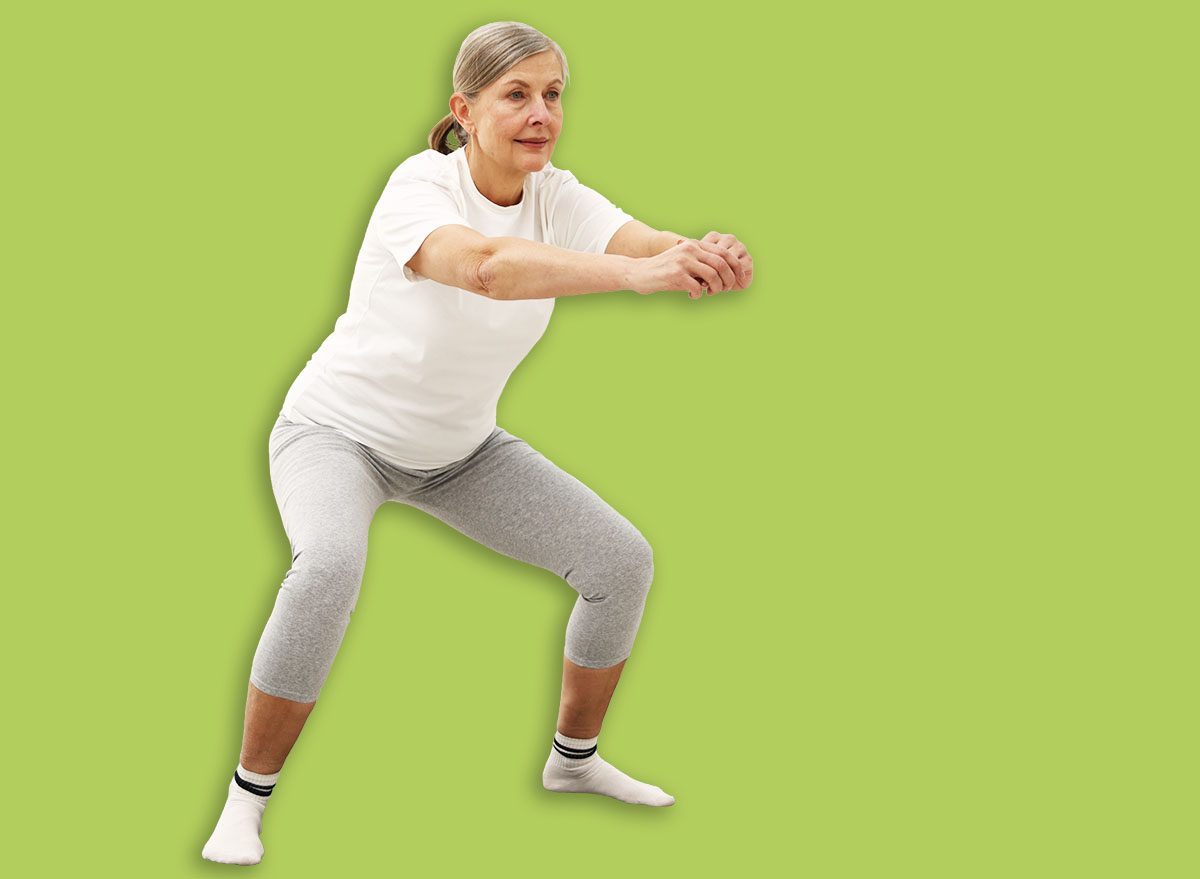
- The Technique: Place one foot forward and one back. Use the counter for stability as you lower your back knee toward the floor. Keep the front heel glued to the ground.
- The Benefit: It places sustained tension on the quadriceps and helps stabilize the hip joint, which directly protects the knee from wobbling during motion.
4. The Counter-Supported Standing Leg Extension
This is a targeted isolation move that mimics the function of a gym leg-extension machine but with much lower joint load.
- The Technique: While standing tall, lift one knee slightly and straighten the lower leg, squeezing the thigh muscle at the top of the movement. Keep the movement slow and controlled.
- The Benefit: Direct quadriceps work is vital. Strong quads act as a suspension system for the knee, absorbing shock during walking.
5. The Incline Counter Plank
Core strength is the silent partner of knee health. If the core is weak, the pelvis tilts, which changes the angle of the knees.
- The Technique: Place your forearms on the counter and walk your feet back until your body forms a straight line. Hold this position, engaging your glutes and abs.
- The Benefit: It teaches the body to "brace." When you brace your core, you provide a stable platform for your legs to move from, reducing the strain on your lower extremities.
Supporting Data and Clinical Perspective
Research published in the National Library of Medicine suggests that high-repetition, low-load training is highly effective for adults over 60. Unlike heavy powerlifting, which can exacerbate existing joint issues, functional training—such as the exercises listed above—promotes synovial fluid circulation within the knee joint. This fluid acts as a lubricant, reducing friction and stiffness.
Furthermore, studies on "confidence-based training" indicate that when patients feel secure in their environment (the "counter-support" factor), they are 40% more likely to maintain their exercise regimen long-term. The psychological barrier to exercise is often higher than the physical one; removing the fear of falling allows the nervous system to "unlock" muscle engagement that might otherwise be inhibited by pain signals.
Official Recommendations and Expert Guidance
Physical therapists and exercise physiologists generally agree that the "form first" rule is paramount.
- Consistency over Intensity: It is better to perform these moves 5 days a week for 10 minutes than to attempt a 60-minute "hard" workout once a week.
- The "Pain Rule": Discomfort in the muscle is acceptable; sharp, shooting pain in the joint is a signal to stop and adjust.
- Listen to the Body: If the knees feel particularly stiff on a given day, use the counter more heavily for support rather than skipping the workout entirely.
Implications for Longevity
The implications of adopting these kitchen-counter routines extend far beyond the kitchen. For the aging population, the ability to maintain independent movement is the greatest predictor of longevity and quality of life. By focusing on knee strength, you are not just preventing injury; you are investing in your ability to remain mobile, independent, and active for years to come.
When you treat your daily environment as your training ground, the distinction between "working out" and "living life" begins to blur. You are no longer preparing to move; you are moving to prepare. As your knees gain strength and your confidence builds, you will find that the world outside your kitchen becomes much more accessible, one step at a time.
References:
- National Center for Biotechnology Information (NCBI): Studies on functional movement patterns and joint longevity in the elderly.
- Journal of Geriatric Physical Therapy: Research on the efficacy of counter-assisted resistance training for muscle atrophy prevention.