By STAT Reporting Staff
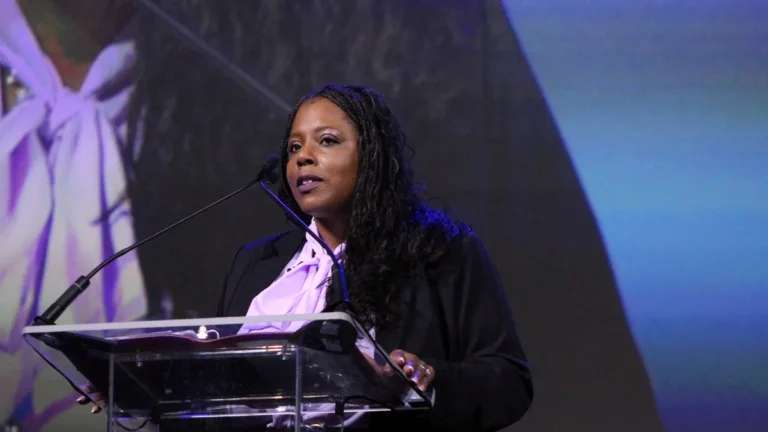
WASHINGTON — In a high-stakes debut that signals the beginning of a new era for the nation’s premier public health agency, newly minted Centers for Disease Control and Prevention (CDC) Director Erica Schwartz addressed agency staff on Wednesday with a singular, forceful message: the CDC’s scientific integrity is not for sale.
During her first all-hands meeting, a recording of which was obtained by STAT, Schwartz sought to preemptively address mounting anxieties regarding the agency’s autonomy under the current administration. Standing before a workforce that has endured years of political turbulence, policy shifts, and public scrutiny, Schwartz struck a defiant tone, explicitly stating that she is prepared to dissent from leadership within the Department of Health and Human Services (HHS)—including Health Secretary Robert F. Kennedy Jr.—if political pressures threaten to override scientific consensus.
The Mandate: A New Strategic Vision
Schwartz’s address was not merely a declaration of independence; it was a roadmap for an agency currently navigating a precarious transition. She outlined three primary pillars that will define her tenure: the restoration of public trust through "radical transparency" and uncompromising scientific rigor; the modernization of the CDC’s rapid-response capabilities for emerging infectious diseases; and the reconstruction of frayed relationships with state and local health departments.
For a career official stepping into the most visible role in American public health, the stakes could not be higher. The CDC has been buffeted by the fallout of the COVID-19 pandemic, internal restructuring efforts, and shifting political winds that have often cast doubt on the agency’s objectivity. By centering her platform on "radical transparency," Schwartz is acknowledging that the currency of the CDC is credibility, and that its current reserves are dangerously low.

A Chronology of the Transition
The path to Wednesday’s all-hands meeting began last month during a tense confirmation hearing in Washington. During that session, Schwartz faced pointed questions from lawmakers regarding her relationship with incoming political leadership and her willingness to resist executive overreach.
- Last Month: During her confirmation hearings, Schwartz faced intense scrutiny regarding the independence of the CDC. She signaled to the Senate that she would prioritize data-driven decision-making over partisan considerations.
- Early This Week: Speculation mounted within the CDC headquarters regarding the influence of Secretary Robert F. Kennedy Jr. on the agency’s internal protocols and public-facing health guidance.
- Wednesday Morning: In her inaugural address to the staff, Schwartz solidified her stance, effectively drawing a "red line" regarding the agency’s operational autonomy.
- Post-Meeting: Internal reactions among senior scientists have been largely positive, though tempered by the recognition that the true test of her resolve will only come when a major crisis forces a direct confrontation with the political establishment.
The Political Context: The Kennedy Factor
The elephant in the room—and the primary driver of staff anxiety—is the role of Health Secretary Robert F. Kennedy Jr. Known for his unorthodox views on public health, vaccines, and the pharmaceutical industry, Kennedy’s appointment has caused significant concern within the scientific community.
Schwartz’s willingness to name-check the Secretary during her address was seen by many observers as a calculated move to stabilize the morale of the CDC’s scientific workforce. By stating publicly that she would stand up to Kennedy if his directives conflicted with the agency’s evidence-based mandate, she provided a buffer for her staff, shielding them from the immediate fear that their research would be buried or censored by political appointees.
However, the political reality is complex. As a cabinet secretary, Kennedy holds significant power over the budgetary and administrative levers of the HHS. A direct clash between the CDC Director and the Secretary would not just be a battle of personalities; it would represent a constitutional-level conflict between scientific expertise and political executive authority.
Supporting Data and Organizational Challenges
The challenges facing Director Schwartz are granular and systemic. According to recent internal climate surveys, CDC employees have reported increasing frustration with "guidance churn," where public health recommendations are issued and retracted with such frequency that they lose their impact.

- Scientific Independence: A 2024 internal review found that over 40% of CDC scientists felt that political influence had hampered the development of official guidance during the previous two fiscal years.
- Staff Turnover: The agency has seen a record number of senior departures in the last 24 months, with many citing a "brain drain" due to the perceived politicization of the mission.
- Resource Constraints: Despite the CDC’s critical role, its relationship with state and local health departments—the "boots on the ground"—has been strained by inconsistent federal funding and conflicting communication strategies during outbreaks.
Schwartz’s commitment to "strengthening the relationship with state and local partners" is an acknowledgment of these data points. She noted that the CDC cannot effectively manage a pandemic from the top down; it requires a decentralized, collaborative network that trusts the federal government to provide actionable, reliable intelligence rather than political talking points.
Official Responses and Internal Climate
Reaction to the address has been swift. While the White House has remained tight-lipped regarding the specific comments made by Schwartz, sources within the administration suggest that the Secretary’s office is prioritizing a "collaborative approach."
Within the CDC, the reception has been one of cautious optimism. "We’ve heard pledges of independence before," one senior epidemiologist, who requested anonymity to speak freely, told STAT. "But this felt different. It wasn’t just a promise to protect science; it was a promise to protect the scientists themselves."
However, not all corners of the federal government are convinced. Skeptics point to the immense power of the executive branch to bypass the CDC Director’s office. If the Secretary chooses to go around the CDC, or if the administration implements policies that undermine the agency’s scientific rigor, Schwartz may find her "preparedness to disagree" insufficient to prevent the damage.
The Implications for Public Health
The long-term implications of this confrontation are profound. If Schwartz succeeds in maintaining the CDC’s independence, she will likely be remembered as the director who saved the agency’s reputation at a time when public trust was at an all-time low. If she fails, the CDC risks becoming a shell organization—a political arm of the HHS that loses its standing as a world-class scientific institution.

Furthermore, the world is watching. The CDC’s global influence is predicated on the idea that its data is untainted by political interests. If the international community perceives that the U.S. government is manipulating public health data for political gain, the U.S. may lose its leadership position in global health security, potentially emboldening other nations to adopt similar, less transparent standards.
Looking Ahead: The Test of Time
Schwartz’s address to the staff was the opening act, not the final word. The true test of her leadership will come during the next public health emergency—a novel pathogen, a vaccine controversy, or a data-reporting dispute.
In her remarks, she emphasized that she expects her staff to be "fearless" in their pursuit of truth. Whether that fearlessness will be met with support from the higher echelons of the federal government remains the central question. As the agency moves forward, the scientific community will be looking for actions that match the rhetoric: concrete policy changes, the protection of agency whistleblowers, and the consistent release of data, even—and especially—when it is inconvenient for the administration.
For now, the CDC has a director who has staked her professional legacy on a promise of independence. Whether that is enough to navigate the treacherous political waters of modern Washington remains to be seen. What is clear is that the walls of the CDC are listening, and for the first time in a long time, they heard their leader speak the language of the laboratory rather than the language of the lobby.