









For decades, the field of gerontology has operated under a relatively straightforward assumption: as we age, our biological systems simply wear out, accumulating damage like a machine with frayed wires and rusted gears. Muscle tissue, which becomes notoriously difficult to repair as we enter our senior years, has long been viewed as a primary victim of this inevitable "decline."
However, a groundbreaking study from the University of California, Los Angeles (UCLA), published in the journal Science, is challenging this conventional wisdom. Researchers have discovered that the sluggish muscle repair seen in aging is not necessarily a sign of cellular incompetence, but rather a deliberate—and perhaps necessary—evolutionary trade-off. By prioritizing longevity over performance, our stem cells may be intentionally "braking" themselves to survive in a hostile aging environment.
The Mystery of the Aging Stem Cell
The research, led by senior author Dr. Thomas Rando, director of the Eli and Edythe Broad Center of Regenerative Medicine and Stem Cell Research at UCLA, focused on the muscle stem cells responsible for regenerating tissue after injury. In youth, these cells are high-octane machines, ready to divide and repair at a moment’s notice. In old age, they become lethargic.
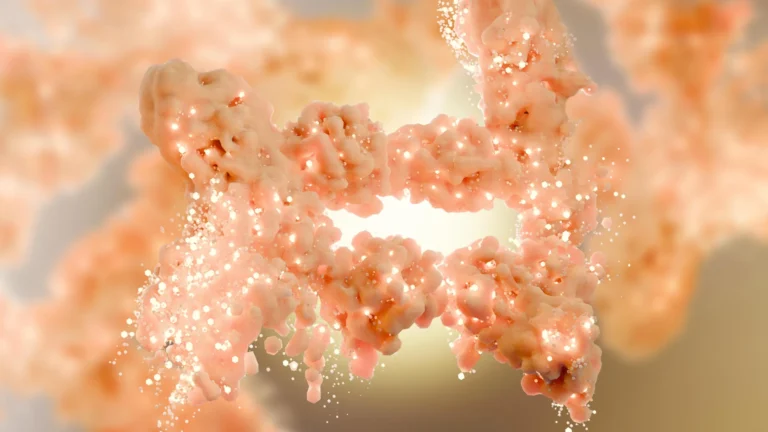
For years, scientists assumed these cells were failing because they had lost the "instructions" to function. The UCLA team, however, discovered a specific protein, NDRG1, which acts as a molecular handbrake. When levels of this protein are high, the cells refuse to enter the active, proliferative state required to mend torn muscle.
Chronology of a Biological Trade-off
The path to this discovery began with a comparative analysis of muscle stem cells taken from young and old mice. The researchers, spearheaded by postdoctoral scholars Jengmin Kang and Daniel Benjamin, observed a stark contrast in protein expression.
- The Observation Phase: Upon analyzing the cellular makeup, the team found that NDRG1 levels were 3.5 times higher in the aged stem cells compared to their younger counterparts.
- The Functional Test: To understand what this protein was doing, the researchers inhibited NDRG1 activity in mice that were biologically equivalent to 75-year-old humans. The results were immediate: the aged stem cells regained youthful levels of activity. They were once again capable of rapid, efficient muscle repair.
- The "Gotcha" Moment: While the cells performed like "youthful" cells, they did not survive like them. Without the protective presence of NDRG1, the population of stem cells began to dwindle rapidly.
The researchers realized they had stumbled upon a fundamental biological compromise. By forcing the cells to "sprint," they had effectively burned them out. The older, slower cells were not "broken"—they were "marathon runners" that had opted for steady, long-term survival over the high-risk, high-reward activity of their youth.
Supporting Data: The Marathon vs. The Sprinter
To articulate this phenomenon, Dr. Rando uses the analogy of athletic performance. Young stem cells are like sprinters; they possess an immense, explosive capacity to act quickly, which is essential for rapid healing. However, they lack the resilience to withstand the harsh metabolic environment of an aging body.
Conversely, aged stem cells have adapted to become marathon runners. They are slow to respond to injury, but they are expertly equipped for the "long haul." The rise in NDRG1 is not a random error; it is a programmed survival mechanism that suppresses a signaling pathway known as mTOR. By downregulating mTOR—which normally drives cell growth and division—the cell avoids the stresses of rapid replication that would otherwise lead to cellular death in a frail, older environment.
Across multiple experimental models, including lab cultures and living tissue, the pattern held firm. When NDRG1 was present, cells were resilient but slow; when NDRG1 was removed, cells were fast but fragile. This "cellular survivorship bias" suggests that the stem cells we see in aging tissue are the survivors of a long process of elimination. The cells that were too "fast" or too "reckless" simply died off long ago, leaving behind a population of highly cautious, slow-reacting cells that are better at staying alive.
The Evolutionary Perspective: A Strategic Retreat
The implications of this study extend far beyond muscle biology; they touch upon the very nature of how complex organisms manage resources. Dr. Rando notes that this behavior mirrors strategies seen throughout the natural world.
During times of famine, drought, or extreme cold, animals will often sacrifice reproductive functions to prioritize individual survival. Hibernation is a prime example of this: an animal slows its metabolism, stops reproducing, and shuts down non-essential systems to endure a period of scarcity. The UCLA study suggests that muscle stem cells in aging mammals are performing a microscopic version of hibernation.
"Species survive because they reproduce, but in times of deprivation, animals turn on their own resilience programs," says Dr. Rando. As the internal environment of an organism degrades with age, the stem cells interpret this as a "time of deprivation." They shift their resources away from the "reproductive" role—making more muscle cells—and toward the "survival" role—staying alive long enough to maintain a basic level of tissue integrity.
Official Responses and Scientific Context
The scientific community has reacted to the study as a significant paradigm shift. By framing age-related decline as a "protective adaptation," the researchers are forcing a re-evaluation of how we treat aging. For decades, the goal of regenerative medicine has been to "restore" youthful function to aged cells. This research suggests that such a goal might be fundamentally flawed if it does not account for the protective role of the very mechanisms we are trying to "fix."
"There’s no free lunch," Dr. Rando cautions. "We can improve the function of aged cells for a period of time, for certain tissues, but every time we do this, there’s going to be a potential cost and a potential downside."
If clinicians successfully "unlock" the brakes on aged stem cells to accelerate healing, they may inadvertently trigger a massive wave of cellular death, potentially leaving the patient with no stem cells at all in the long term. This creates a difficult balancing act for future therapeutics: how do we achieve the benefits of youth without the catastrophic costs of rapid depletion?
Future Implications: The Path to Balanced Therapies
The discovery of the NDRG1 protein pathway acts as a "doorway" into a new era of aging research. The team plans to continue investigating how these molecular trade-offs are managed. The objective is no longer simply to make cells "faster" or "younger," but to find ways to tune the balance between survival and performance.
Potential future therapies might include:
- Dynamic Modulation: Treatments that transiently inhibit NDRG1 to allow for a burst of repair after a specific injury, followed by a restoration of the "protective" state to preserve the stem cell pool.
- Signaling Pathway Tweaking: Finding ways to support the mTOR pathway without overwhelming the cell, potentially allowing for moderate performance gains without the high-risk, high-burnout outcome.
- Biomarker Identification: Developing diagnostics that can measure the "resilience" of an individual’s stem cell pool to determine how aggressively a patient can safely recover from injury.
Ultimately, the study serves as a humbling reminder that the human body is an incredibly sophisticated, albeit aging, machine. It has spent millions of years refining survival strategies that we are only just beginning to understand. As Dr. Rando points out, what we once categorized as "deterioration" may actually be a highly sophisticated, evolved strategy for persistence.
The challenge for the next generation of medicine will be to respect these biological trade-offs, even while striving to improve the quality of life for an aging population. In the delicate interplay between the sprinter and the marathon runner, the key to longevity may not be to choose one over the other, but to master the art of being both.
Funding for this study was provided by the National Institutes of Health, the NOMIS Foundation, the Milky Way Research Foundation, the Hevolution Foundation, and the National Research Foundation of Korea.