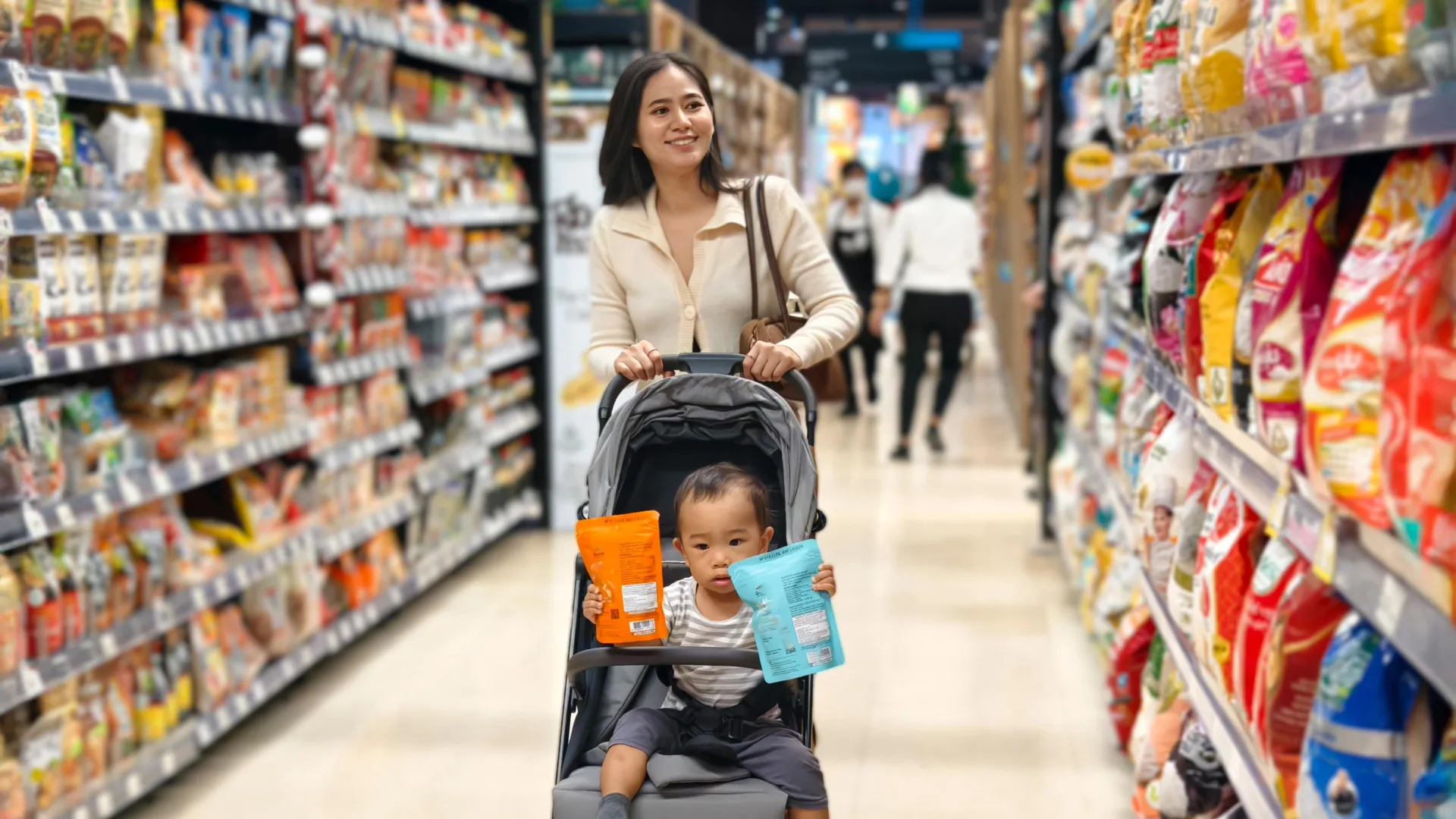
For millions of parents, the grocery store toddler aisle is a sanctuary of convenience. Amid the frantic pace of modern parenting, pouches, bars, and pre-packaged snacks offer a reliable way to provide quick nutrition to developing children. However, a new, large-scale investigation suggests that these aisles may be selling something far less wholesome than they appear.
A comprehensive review of 2,783 toddler food products across 21 Texas grocery stores has revealed that the landscape of early childhood nutrition is dominated by ultra-processed goods. The findings, presented at the American Society for Nutrition’s flagship conference, NUTRITION 2026, suggest that the "toddler food" market is largely disconnected from the nutritional standards set by global health authorities, placing an unintended burden of vigilance on parents.
The Scope of the Problem: A Study in 2,783 Items
The study, led by Erin A. Hudson, a PhD candidate and ASN Science Policy Fellow at The University of Texas at Austin, in collaboration with Dr. Marissa Burgermaster, sought to quantify exactly what is being offered to children between the ages of 6 and 36 months.
By meticulously photographing and cataloging the inventory of toddler-marketed foods in 21 Austin-area grocery stores, the team created a representative snapshot of the American toddler diet. The study purposefully excluded infant formula, beverages, and standard fruit or vegetable purees, focusing instead on the snack-heavy, "grab-and-go" products that occupy prime shelf space.
Using the Nova classification system—the gold standard for identifying the level of processing in food—the researchers reached a sobering conclusion: 81% of the items analyzed were classified as ultra-processed. Furthermore, when measured against the World Health Organization’s (WHO) Nutrition and Promotion Profile Model (NPPM), nearly half (49%) failed to meet at least one critical nutrient benchmark for young children.
Chronology of the Research and Presentation
The research journey was a multi-stage process that culminated in late July 2026. The data collection involved onsite visits to local retailers, where the researchers compiled a massive dataset of nutritional labels, ingredient lists, and marketing claims.
- Data Collection Phase: Researchers visited 21 grocery stores in the Austin, Texas, area to capture a real-world look at available inventory.
- Analysis Phase: The team evaluated 2,783 unique products, cross-referencing them against the WHO NPPM guidelines and the Nova classification system.
- The Findings: The study identified that the majority of products were not only ultra-processed but also nutritionally deficient in specific areas, including excessive sugar, sodium, and energy density.
- Public Disclosure: On July 26, 2026, the findings were officially shared at the NUTRITION 2026 conference in National Harbor, Maryland, during a session dedicated to the methodological advancements in studying ultra-processed foods.
Supporting Data: Where the Labels Fall Short
The nutritional failure of these products was not uniform; rather, it manifested in specific, concerning ways. According to the data, 17% of products failed to meet WHO-recommended sugar thresholds, 25% exceeded recommended sodium limits, 11% fell short on necessary fat content, and 12% failed to meet energy density standards.
The researchers identified a "culprit list" of popular categories that frequently breached these health guidelines:
- Fruit Pouches: Often found to be excessively high in concentrated sugars.
- Oat Bars: Frequently contained both high sugar levels and caloric counts inconsistent with a toddler’s daily needs.
- Mac and Cheese/Turkey Sticks: Common culprits for high sodium and fat content.
- Cheese and Peanut Butter Puffs: Often flagged for poor energy density and excessive sodium.
The study highlights a critical nuance: not all fat and calories are inherently "bad." For example, a less-processed product containing peanuts or beef may have a higher fat or caloric density, but it also provides high-quality, nutrient-dense fuel. In contrast, the ultra-processed items identified by the study provided those same caloric loads through refined ingredients, sugar, and fillers, offering little nutritional "return on investment" for the child’s development.
The Regulatory Gap: Why Labels Are Not Enough
The U.S. regulatory environment stands in stark contrast to other developed nations. While the U.S. Food and Drug Administration (FDA) is currently debating updated rules regarding front-of-package nutrition labeling and marketing claims directed at children, the U.S. currently lacks a federal mandate for warning labels on foods high in sugar, sodium, or calories.
"Many parents may assume that products sold on the baby/toddler food aisles of their grocery stores have to meet certain nutrient standards," says Hudson. "Our findings highlight that half of the toddler foods available in local grocery stores do not."
For the average consumer, this means that the "toddler" label on a box is not a guarantee of nutritional safety. It is a marketing tool. Without government-mandated warnings, parents are forced to act as amateur nutritionists, spending valuable time deciphering complex ingredient lists and percent-daily-value tables while trying to navigate the store with a toddler in tow.
Implications for Long-Term Health
The importance of the first three years of life cannot be overstated. This is the period when taste preferences are formed, metabolic pathways are established, and eating patterns are cemented. The researchers warn that the high consumption of ultra-processed foods during this window has implications that ripple far into childhood and adolescence.
The link between ultra-processed foods and negative health outcomes is well-documented, even when basic nutrient profiles seem adequate. Scientists are still working to isolate exactly what it is about the "ultra-processed" nature of these foods—whether it be the chemical additives, the texture, or the way they are absorbed by the body—that drives these health issues. However, the correlation is strong enough that health experts are increasingly advocating for a "whole-foods-first" approach to early childhood nutrition.
The Case for Change: A Call to Action
The research team behind this study is not merely presenting a critique; they are proposing a path forward. The primary recommendation is the implementation of mandatory, clear, front-of-package warning labels for any product that exceeds established nutrient thresholds.
Such a system would serve a dual purpose:
- Consumer Empowerment: It would provide parents with an immediate, visual indicator of a product’s nutritional profile, allowing them to make informed decisions in seconds.
- Industry Reformulation: If manufacturers are forced to place "high sugar" or "high sodium" labels on their products, they may be incentivized to reformulate their recipes to avoid these stigmatizing labels, ultimately leading to a healthier marketplace.
"Warning labels on products exceeding nutrient thresholds could help parents navigate the toddler food environment and might encourage manufacturers to reformulate these products," Hudson noted.
A Note on Limitations and Future Research
While this study offers a powerful indictment of the current state of toddler food, it is important to contextualize its findings. As a study based on shelf-stable, packaged goods, it does not account for the entirety of a child’s diet. Many parents supplement these items with fresh fruits, vegetables, and home-cooked meals, which are not reflected in this data.
Furthermore, as the study was presented as an abstract at the NUTRITION 2026 conference, it is currently in the preliminary stages of the scientific process. It has not yet undergone the rigorous, multi-blind peer-review process required for publication in a major scientific journal. However, the scale of the dataset—nearly 3,000 products—provides a compelling foundation for future research and ongoing policy debates.
Conclusion: The Responsibility of Choice
As the FDA continues to deliberate on the future of food labeling and marketing, the burden of ensuring a healthy start for children currently rests on the shoulders of parents. The takeaway from the Texas study is clear: the toddler food aisle is not a health food store. It is a commercial space where convenience is the primary commodity, often at the expense of nutritional integrity.
For parents, the message is one of necessary skepticism. In the absence of clear government warnings, the safest path is to return to the basics: whole ingredients, fresh produce, and a healthy dose of caution when interpreting the brightly colored packaging that promises "healthy" development. As science continues to uncover the long-term impacts of our earliest dietary choices, the call for transparency in the toddler food aisle becomes not just a matter of policy, but a matter of public health.