Executive Summary: The Persistence of an Ancient Foe
Tuberculosis (TB) remains one of the world’s most formidable infectious disease threats, claiming over a million lives annually. For nearly a century, the Bacillus Calmette-Guérin (BCG) vaccine has served as the only licensed prophylactic measure. While BCG is highly effective at preventing severe, disseminated forms of TB in infants, it provides notoriously inconsistent and waning protection against pulmonary TB in adolescents and adults—the demographic most responsible for transmission.
In an effort to improve upon this legacy, researchers developed VPM1002, a recombinant BCG strain designed to offer superior efficacy and a cleaner safety profile. However, a major multicenter, phase III clinical trial involving nearly 6,900 newborns in sub-Saharan Africa has delivered a sobering result: VPM1002 failed to outperform the standard BCG vaccine. The study, published in The Lancet Infectious Diseases, highlights not only the challenges of vaccine development but also the critical methodological pitfalls in how we measure "success" in TB prevention trials.
Chronology of a Failed Efficacy Bid
The journey of VPM1002 toward clinical validation was built on promising early-phase data. Preclinical and early-stage human trials suggested that the recombinant vaccine could trigger similar immunogenicity to BCG while producing fewer adverse injection-site reactions.
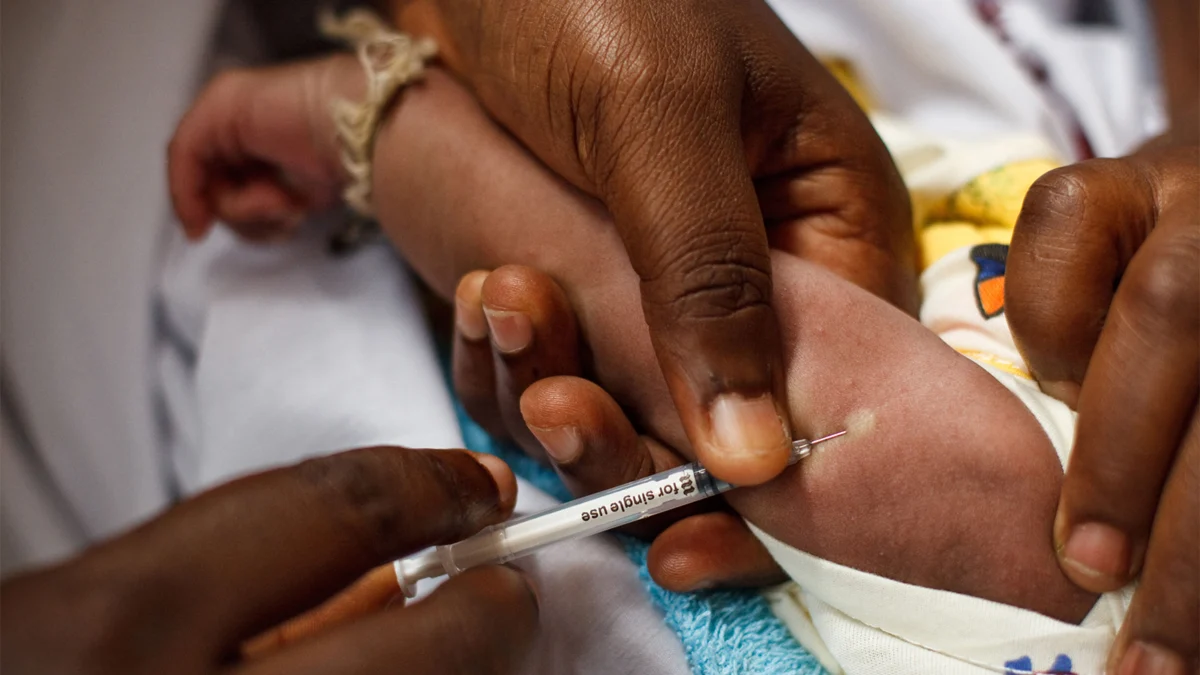
The phase III trial, which commenced in November 2020, was designed as a double-blind, active-controlled study to definitively prove the superiority—or at least the noninferiority—of VPM1002 against the current standard of care.
Key Timeline:
- November 2020: Enrollment begins. The study recruits 6,940 newborns (ages 0 to 14 days) across multiple sites in sub-Saharan Africa.
- June 2022: The primary recruitment phase concludes, with 6,897 infants successfully vaccinated.
- October 2024: Following an interim analysis that revealed fewer QuantiFERON-TB Gold Plus (QFT) conversions than originally projected (344 observed versus 632 predicted), investigators made the difficult decision to terminate the trial early.
- Post-Study Analysis: The final follow-up, spanning a median of 35 months, allowed researchers to compile the data that would ultimately show VPM1002 falling short of its noninferiority benchmarks.
Supporting Data: Why VPM1002 Missed the Mark
The trial’s primary efficacy endpoint was QFT conversion, a surrogate marker for Mycobacterium tuberculosis infection or exposure. The results, led by Sina Brückner, PhD, of Serum Life Science Europe, revealed that 5.3% of infants in the VPM1002 group experienced QFT conversion, compared to 4.3% in the BCG group.
The Statistical Gap
To establish noninferiority, the upper bound of the confidence interval for the Hazard Ratio (HR) needed to be less than 1.25. The trial reported an HR of 1.23 (95% CI 0.99-1.53), narrowly missing the statistical threshold required to claim that VPM1002 was as effective as BCG. The P-value for the primary comparison stood at 0.057, indicating that the failure to meet the endpoint was not merely a statistical fluke but a reflection of a genuine lack of comparative efficacy.
Disease Development and Safety Profiles
The concern extended beyond infection markers to actual disease manifestation. Among 588 participants who required evaluation for suspected TB, 3.2% of the VPM1002 cohort developed either microbiologically confirmed or unconfirmed TB, compared to 1.7% in the BCG group.
On a more positive note, the safety profiles were largely comparable. Approximately 75% of the VPM1002 group and 67% of the BCG group reported at least one solicited adverse event, the vast majority of which were classified as mild. Serious adverse events occurred at similar rates (10.7% for VPM1002 vs. 9.4% for BCG), suggesting that while VPM1002 may not be more effective, it does not pose a significantly greater safety risk to the infant population.
The Methodological Crisis: A Perspective from the Field
The early termination of the trial and the resulting data have sparked a necessary conversation regarding the ethics and logistics of TB vaccine research. In an accompanying editorial in The Lancet Infectious Diseases, Helen McShane, PhD, of the University of Oxford, noted that the trial results serve as a stark reminder: there are no "shortcuts" in the fight against tuberculosis.
The QFT Dilemma
The reliance on interferon-γ release assays (IGRAs) like QFT has been a double-edged sword. While these assays provide a faster, more manageable surrogate endpoint for infection, the VPM1002 trial suggests they may be insufficiently robust for determining vaccine efficacy.
"These findings highlight the methodological challenges of using QFT-based infection endpoints," Brückner and her colleagues noted. Because QFT conversion can indicate exposure without necessarily leading to active disease, it acts as a noisy proxy. The team concluded that for future trials, "tuberculosis disease is a more appropriate endpoint," despite the logistical nightmare of requiring larger sample sizes and longer, more expensive follow-up periods.
Discrepancies in Exposure
One of the most complex aspects of the trial was accounting for external variables. For example, in the sub-group of HIV-exposed, uninfected infants, the results were slightly more favorable for VPM1002 (7% conversion) compared to BCG (8% conversion). However, among HIV-unexposed infants, the BCG group fared better. Furthermore, researchers noted that the VPM1002 group experienced higher rates of household TB exposure, which likely skewed the raw data. Even after adjusting for these exposures, the vaccine failed to demonstrate the anticipated protective edge.
Implications: The Road Ahead for TB Research
The failure of VPM1002 to surpass BCG carries significant weight for the global health community. As the world struggles to meet the United Nations’ targets for TB elimination, the lack of new, effective vaccine candidates remains a primary barrier.
Reassessing Strategy
The medical community is now forced to reconsider its approach to late-stage vaccine trials. The key implications are threefold:
- Endpoints Must Change: Researchers must move away from surrogate markers like QFT conversion. While they offer speed, they provide a false sense of security that may lead to the premature advancement of candidates that do not actually prevent the clinical progression of the disease.
- Trial Design Complexity: Future trials must better account for the "differential exposure" problem. As this study showed, even in a randomized trial, social and environmental factors—such as household contact with TB patients—can heavily influence the data, necessitating more rigorous stratification and long-term surveillance.
- Pipeline Diversification: With relatively few candidates in the late-stage pipeline, the pressure to succeed with the ones we have is immense. The failure of VPM1002 serves as a reminder that funding and innovation must be spread across a wider array of technologies—including viral-vectored vaccines, subunit vaccines, and mRNA platforms—rather than relying solely on modifications of the existing BCG strain.
Final Thoughts
Helen McShane’s closing argument in her editorial strikes a chord for the entire scientific establishment: "As we encourage vaccine developers and funders to develop and support diverse and innovative vaccine candidates, we must in parallel work to design robust but feasible efficacy trials."
The VPM1002 trial was not a total loss; it provided a high-quality, longitudinal dataset that will undoubtedly refine the design of the next generation of TB studies. However, for the millions living in high-burden regions, it remains a reminder that the path to a "post-TB world" is paved with rigorous science, painstaking patience, and the courage to admit when a promising candidate does not live up to the promise. The search for a successor to BCG continues, but the requirements for that successor have become clearer, more demanding, and more essential than ever.