In the modern landscape of health and wellness, we often measure success by gym milestones—bench press numbers, mile times, or body fat percentages. However, as we age, the most vital metric of health is not necessarily how much we can lift while reclined on a machine, but how effectively we can stabilize, move, and support our own weight in the real world.
According to Domenic Angelino, MS, MPH, CSCS, CPT, and Chief Exercise Scientist at FitCraft, there is a specific set of functional benchmarks that can tell you exactly where you stand. In fact, if you can master five foundational standing exercises by age 65, your functional fitness level likely exceeds that of the average 50-year-old.
The Core Philosophy: Why Standing Matters
"Different types of standing exercises place different demands on your body," explains Angelino. "Some will require you to stabilize more with your lower back. Others will demand more from your abdominal muscles. It can vary a lot. So, it’s helpful to include a variety of standing exercises in your routine."
The argument for standing training is rooted in physics and anatomy. When you sit on a gym machine, the seat provides external stability, essentially "outsourcing" the job your core and back muscles are meant to do. When you stand, your body is forced to engage its own internal stabilizers to keep you upright.
"In the real world, nearly all physical activity requires you to heavily stabilize your body as you do it," Angelino notes. "For example, when walking around, you need to use your lower back muscles to hold your torso upright so your body doesn’t collapse forward. If you’re sitting on a machine at the gym, those same muscles will still be at work, but they won’t have to work nearly as hard."
Supporting Data: The Science of Movement and Aging
The scientific community has long supported the idea that physical competition and functional movement are key to cognitive and physical longevity. Research published in PMC suggests that competitive engagement—even against one’s own previous personal bests—improves memory, attention, and cognitive retention.
By framing these five exercises as a "fitness competition" against the average age-related decline, individuals can improve their functional capacity. As we age, our muscle mass (sarcopenia) and bone density naturally begin to shift. The following movements act as a bulwark against these processes, ensuring that the musculoskeletal system remains robust enough to handle the stresses of daily life, from carrying groceries to maintaining proper posture during long periods of standing.
1. The Goblet Squat: The King of Functional Mobility
The Goblet Squat is perhaps the most efficient movement for total-body conditioning. Unlike a barbell back squat, which requires significant spinal loading and shoulder mobility, the Goblet Squat requires you to hold a weight (a dumbbell or kettlebell) at chest height.
The Mechanics:
- Core Engagement: By holding the weight in front of your chest, you create a counterbalance that forces your core to work overtime to prevent you from leaning forward.
- Lower Body Power: It demands deep hip flexion, targeting the glutes and quadriceps.
- Upper Body Integration: It requires your shoulders and upper back to maintain tension throughout the movement, creating a seamless connection between your upper and lower kinetic chains.
"Squatting like this is a great way to build functional fitness because you’re doing something with your lower body, core, and upper body at the same time," Angelino says.
2. The Push Press: Building Explosive Power
As we pass the age of 50, one of the first physical qualities we lose is "power"—the ability to exert force quickly. While strength is the ability to move a heavy object, power is the ability to move that object with speed. The Push Press is the gold standard for developing this trait.
The Mechanics:
- The Dip: You begin with a slight knee bend.
- The Drive: You use your legs to generate momentum, transferring that force through your core and into your arms.
- The Lockout: Your arms finish the movement, pushing the weight overhead.
"The push press is an explosive exercise," explains Angelino. "It involves being explosive in both your upper and lower body. You also have to coordinate your upper and lower body muscles so that they work together to lift the weight both quickly and safely."
3. The Bent-Over Row: Postural Perfection
Posture is the silent killer of the aging population. As we spend more time looking at screens and leaning forward, our mid-back muscles—the rhomboids and trapezius—tend to weaken. The Bent-Over Row is the antidote to the "slumped" posture that often characterizes declining fitness.
The Mechanics:
- Hinge: You hinge at the hips, maintaining a flat back.
- The Pull: You drive your elbows toward the ceiling, squeezing your shoulder blades together.
- Stability: Your lower back must act as a rigid anchor, holding your torso in space against the pull of gravity.
This exercise is essential for ensuring that your spine remains supported, regardless of how many hours you spend at a desk.
4. Sumo Deadlifts: The Foundation of Force
Deadlifts are the ultimate test of "functional force." They involve a complex interaction between the largest muscles in the body—the glutes, hamstrings, and lats. The "Sumo" variation, which utilizes a wider stance, is often more accessible for those with lower back sensitivities.
The Mechanics:
- Wider Base: A wide stance allows for a more upright torso, reducing the shear force on the lumbar spine.
- Muscular Synergy: "Some muscles are working to lift the weight, like your quads and glutes," Angelino explains. "Other muscles are working to keep your body stable while you lift, like your transverse abdominis and trapezius."
By mastering the deadlift, you ensure that you can safely pick up heavy objects from the floor for the rest of your life, significantly reducing the risk of accidental injury.
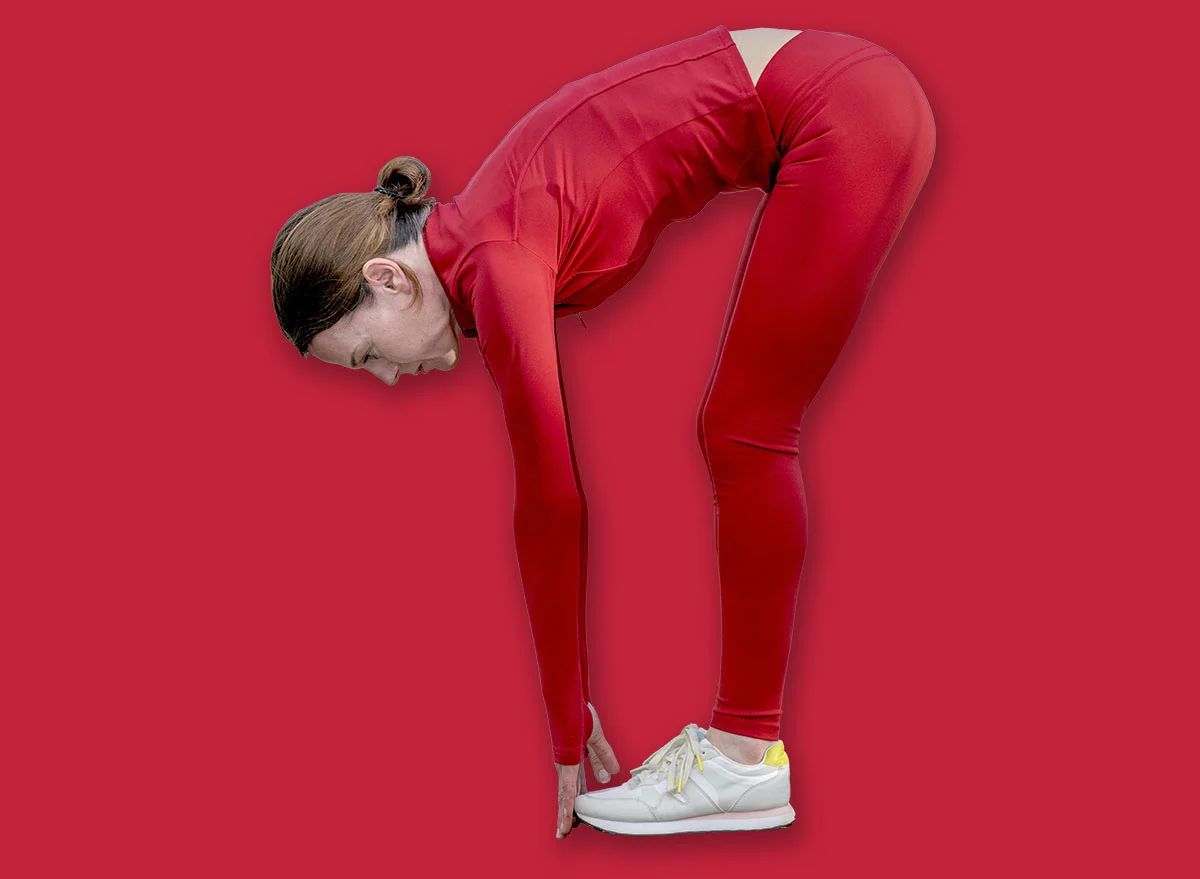
5. Standing Toe Touches: The Flexibility Benchmark
While the previous four exercises focus on strength and power, the Standing Toe Touch focuses on the often-neglected component of functional health: hamstring mobility.
The Mechanics:
- The Stretch: By keeping the legs relatively straight and hinging at the hips, you lengthen the entire posterior chain.
- The Rationale: "Standing toe touches are useful to build into your training because they largely test your hamstring flexibility," notes Angelino. "Tight hamstrings are common causes of a variety of different types of injuries. They’re also associated with persistent daily discomfort in some cases."
Maintaining the ability to reach your toes is a simple, effective way to gauge your flexibility. If you can perform this movement with ease, you are likely avoiding the common, chronic low-back issues that plague sedentary populations.
Implications: Building a Better Future
The implications of integrating these movements are profound. By shifting the focus of your fitness routine away from "machine-based" isolation work and toward "functional-standing" compound movements, you are effectively "future-proofing" your body.
The goal isn’t necessarily to become a competitive powerlifter at 65. The goal is to retain the independence, mobility, and strength required to navigate life without restriction. When you prioritize standing exercises, you aren’t just building muscle; you are training your nervous system to stabilize your body in an upright, gravity-defying, and capable manner.
As Angelino highlights, the transition from being "just fit" to "functionally superior" starts with recognizing that your body is a single, integrated unit. By adopting these five movements, you provide your body with the exact stimulus it needs to stay strong, mobile, and resilient—no matter what your birth certificate says.