











For many fitness enthusiasts, the "plank" has long been considered the undisputed king of core training. It is simple, requires no equipment, and provides a clear metric for progress: how many seconds can you hold it? However, as we age, the nature of functional strength changes. The goal shifts from merely "holding" a static position to maintaining stability while the body is in motion.
For those over 60, rebuilding core strength requires a more sophisticated approach—one that prioritizes movement control, pelvic alignment, and coordination. According to Dr. Akanni Salako, a Doctor of Physical Therapy and founder of The Wellness Lab, it is time to move beyond the static plank and embrace a more dynamic way of training the body’s powerhouse.
The Foundation: Why the Core Matters After 60
Your core is far more than just your abdominal muscles. It is an intricate complex of muscles encompassing the hips, pelvis, and lower back. Together, these structures act as the body’s central control center. A robust core does more than provide an aesthetic midsection; it supports the spine, facilitates balance, and enables the fundamental movements of daily life—bending, lifting, reaching, and walking.
As we move past the age of 60, the physiological demands on our core change. The primary concern becomes injury prevention and maintaining functional independence. A weak core can lead to poor posture, back pain, and a decrease in balance, which significantly increases the risk of falls. Strengthening this area is not merely a fitness goal; it is a vital component of longevity and quality of life.
The Expert Perspective: Re-evaluating Traditional Training
Dr. Akanni Salako, a renowned advocate for women’s health and an expert in physical rehabilitation, argues that the fitness industry has over-indexed on static holds.
"There’s nothing wrong with planks, but a plank primarily asks you to hold one position and resist movement," Dr. Salako explains. "While that is useful for building endurance, it doesn’t necessarily translate to the chaos of everyday life. We need to transition from asking, ‘Can you hold your core tight for 30 seconds?’ to ‘Can your core stay strong and controlled while the rest of your body moves?’"
By shifting the focus to dynamic stability, we teach the core to engage proactively rather than reactively. This approach minimizes strain on the lower back and promotes better movement patterns across all planes of motion.
The Four Pillars of Dynamic Core Stability
To facilitate this shift, Dr. Salako recommends four specific floor exercises. These movements require nothing more than a workout mat, a bit of floor space, and your own body weight, making them highly accessible for home practice.
1. The Dead Bug: Mastering Independent Limb Movement
The Dead Bug is perhaps the most effective exercise for re-learning how to dissociate limb movement from trunk stability.
Why it works: It forces the midsection to remain rigid while the arms and legs move independently. This mimics the coordination required for walking or reaching for an object on a high shelf. It trains the brain and the abdominal wall to work in tandem, ensuring the pelvis doesn’t tilt or rotate during active movement.
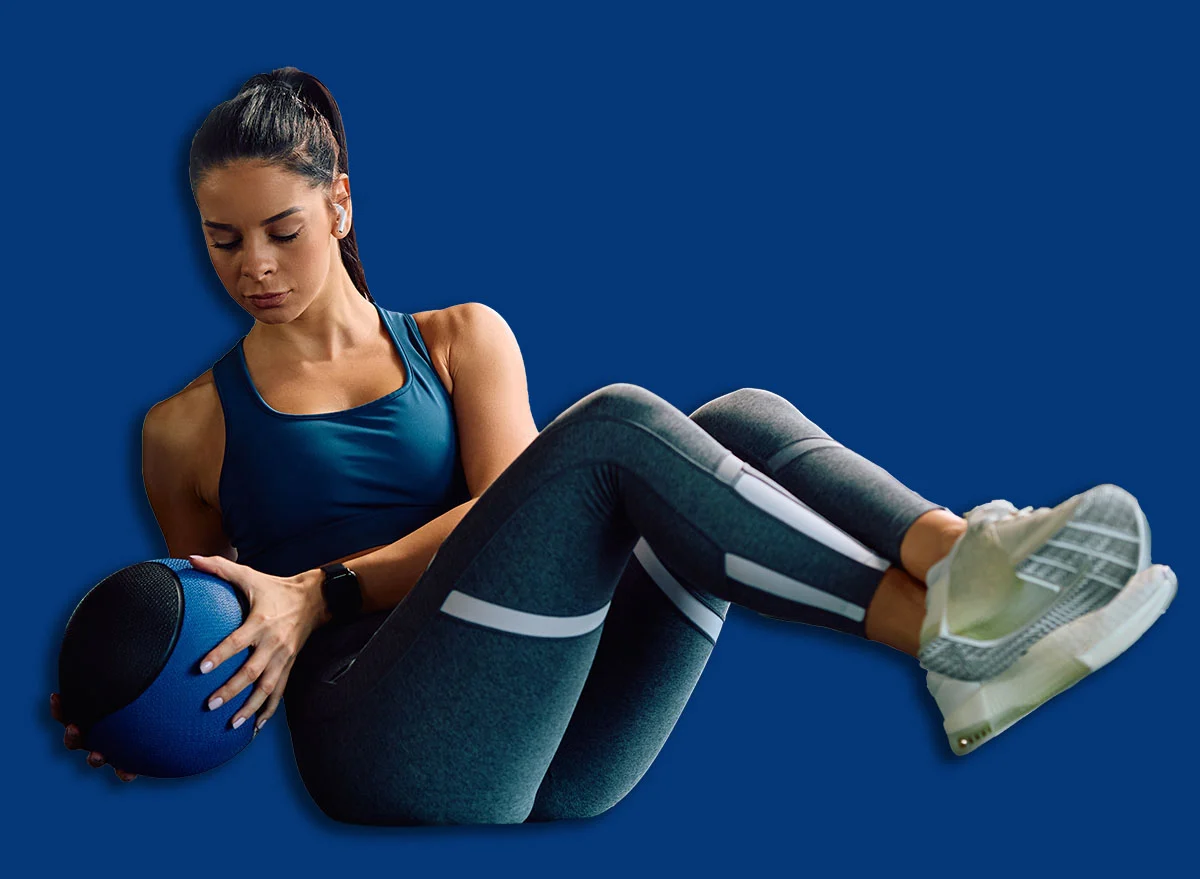
2. Russian Twists: Introducing Controlled Rotation
While many traditional core exercises focus on flexion (the "crunch"), the Russian Twist introduces the element of rotation.
Why it works: Rotation is a fundamental part of human movement. Whether you are reaching for your seatbelt or turning to look behind you, your obliques play a critical role. Dr. Salako emphasizes that for those who haven’t trained their core consistently, it is vital to start with body weight and a limited range of motion. By focusing on quality over speed, you strengthen the obliques and protect the spine from shearing forces.
3. The Reverse Crunch: Prioritizing Pelvic Health
For many seniors, traditional sit-ups and crunches can place undue stress on the neck and hip flexors. The Reverse Crunch flips the script by moving the lower body toward the upper body.
Why it works: This movement requires you to actively control the position of your pelvis relative to your rib cage. By moving the knees toward the chest in a controlled manner, you engage the lower abdominals without the aggressive pull of the hip flexors. It is a safer, more effective way to isolate the lower core, and it can be modified easily to accommodate varying fitness levels.
4. The Bird Dog: Cross-Body Coordination
The Bird Dog is a staple in physical therapy for a reason. It combines stability with balance and cross-body, or "contralateral," movement.
Why it works: By extending the opposite arm and leg, you create an unstable environment that forces the core to work harder to prevent the trunk from twisting. This is the closest analog to how the body functions during a standard gait cycle (walking). It is an essential exercise for improving balance and stability, effectively reducing the risk of instability-related injuries.
Implications for Longevity and Daily Function
The shift toward these four exercises represents a broader trend in geriatric fitness: "Functional Training." Functional training is not about hypertrophy—it is about utility.
When you perform a Bird Dog or a Dead Bug, you are not just burning calories; you are training your nervous system to stabilize your spine in real-time. This has massive implications for long-term health:
- Improved Balance: By training the muscles that keep the pelvis level, you naturally improve your balance, which is the number one predictor of physical health in older adults.
- Reduced Back Pain: Chronic lower back pain is often the result of an "unstable" core that cannot handle the forces of gravity. These exercises build the internal "corset" needed to support the lumbar spine.
- Increased Independence: The ability to move limbs independently of the torso allows for easier performance of Activities of Daily Living (ADLs), such as getting out of a chair, stepping over obstacles, and carrying groceries.
Official Guidelines and Best Practices
While these exercises are highly effective, Dr. Salako and other physical therapy experts stress the importance of the "Goldilocks principle"—not too much, not too little, but just right.
- Consistency Over Intensity: It is far better to perform these movements for 10 minutes, five days a week, than to engage in a grueling, hour-long session once every two weeks.
- Focus on Form: Because these exercises target stability, poor form negates the benefit. If you feel your back arching during a Dead Bug or your hips swaying during a Bird Dog, stop, reset, and reduce your range of motion.
- Listen to Your Body: A core workout should challenge the muscles, but it should never cause sharp or shooting pain. If you experience discomfort in your joints or spine, consult with a physical therapist to modify the movement.
Conclusion: A New Mindset for the Mature Athlete
Aging should not be a process of physical decline; it should be a period of refined capability. By moving away from the static, high-tension holds of the past and toward a more fluid, control-oriented model of exercise, those over 60 can significantly enhance their physical resilience.
As Dr. Salako notes, your core is the anchor of your daily life. Treating it with the respect it deserves—not just through brute force, but through intelligence, coordination, and intentional movement—is the secret to staying strong, mobile, and independent for years to come. Whether you are a fitness veteran or someone just starting their journey, these four exercises provide a scientifically backed, accessible path to a stronger, more capable version of yourself.