







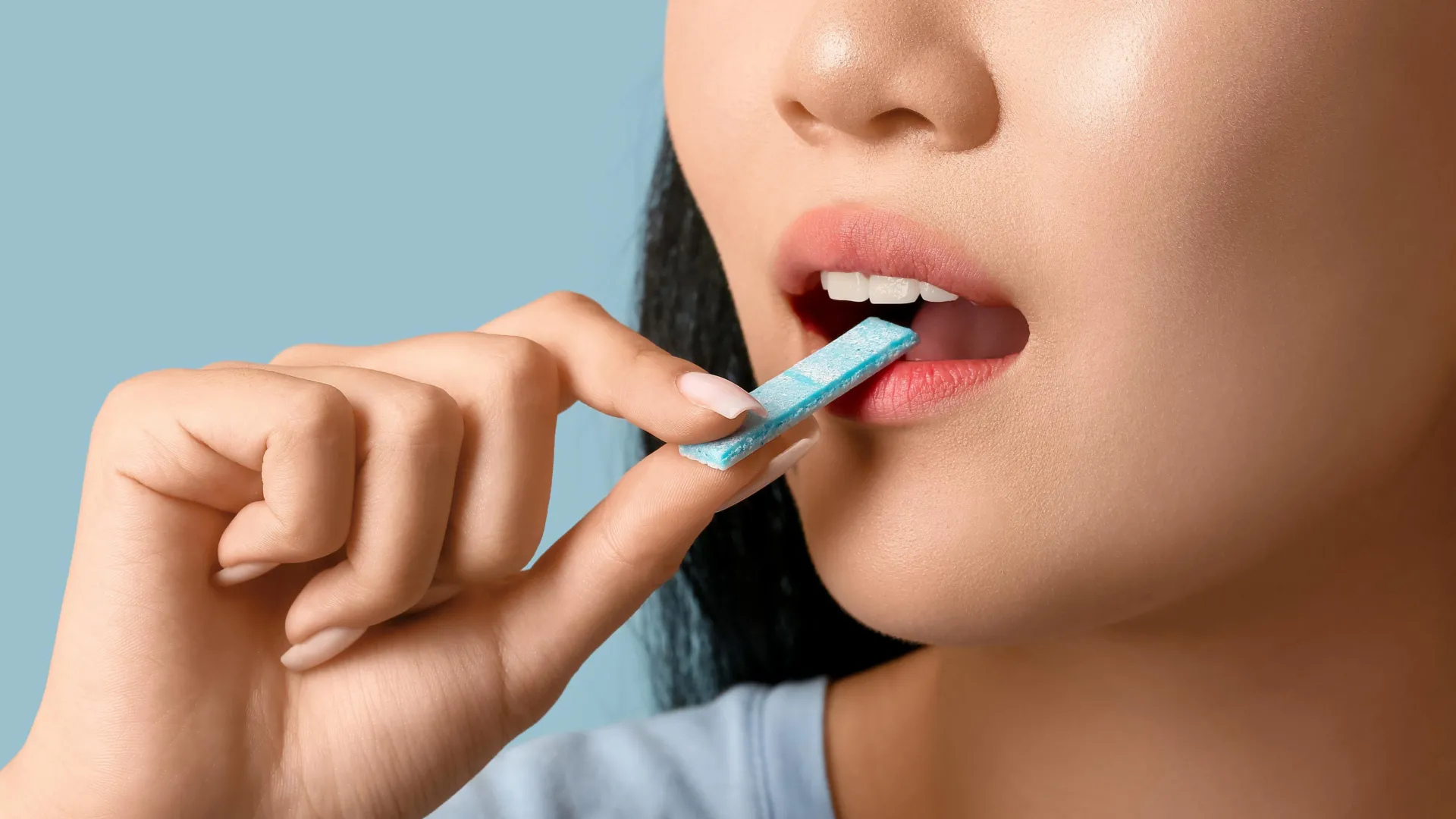
In a counterintuitive twist that challenges conventional dietary wisdom, researchers at King’s College London have uncovered an unexpected physiological synergy: chewing sugar-containing gum after consuming nitrate-rich vegetables can significantly enhance the body’s ability to lower blood pressure. While sugar is typically cautioned against for its detrimental effects on metabolic and dental health, this study suggests that, under specific, short-term conditions, the acidity introduced by sugary gum acts as a catalyst for a critical chemical transformation in the mouth.
The study, recently published in the British Journal of Clinical Pharmacology, highlights how our oral microbiome serves as a gatekeeper for cardiovascular health. By manipulating the pH levels of the oral cavity, researchers have opened a new door into understanding how we might optimize the intake of dietary nitrates found in common superfoods like beetroot, spinach, and kale.
The Biological Mechanism: The Nitrate-Nitrite-Nitric Oxide Pathway
To understand why a piece of bubblegum might influence blood pressure, one must first understand the "Nitrate-Nitrite-Nitric Oxide" pathway. When we consume nitrate-rich vegetables, the nitrates themselves are biologically inert. They accumulate in our tissues but remain inactive until they interact with the unique ecosystem of bacteria living in the human mouth.
These oral commensal bacteria act as a biological reduction plant. They convert dietary nitrate into nitrite, which is then swallowed and absorbed into the bloodstream. Once in the systemic circulation, this nitrite is converted into nitric oxide—a potent vasodilator. Nitric oxide signals the smooth muscles surrounding our blood vessels to relax and widen, a process known as vasodilation. This widening reduces resistance to blood flow, effectively lowering systolic and diastolic blood pressure.
Historically, the efficiency of this conversion process has been a "bottleneck" in human physiology. Researchers have long sought methods to maximize this bacterial conversion to reap greater cardiovascular rewards, and it is here that the concept of salivary acidity becomes paramount.
The Chronology of the Discovery
The journey to this discovery began with a clinical question: Does the acidity of the oral environment act as a throttle or an accelerator for nitrate conversion?
Previous Observations
The research team, led by Dr. Andrew Webb, Clinical Senior Lecturer in the School of Cardiovascular & Metabolic Medicine & Sciences at King’s College London, had previously observed a negative correlation between certain foods and nitrate conversion. In earlier trials, they found that consuming grapefruit juice—which alters salivary chemistry—actually inhibited the conversion of nitrate into nitrite. This led them to hypothesize that the opposite intervention—increasing acidity—might provide the missing link to boost the reaction.
The Crossover Study Design
To test this, the researchers organized a crossover clinical trial involving healthy volunteers. The study was meticulously structured to ensure that each participant acted as their own control:
- The Intervention: Participants consumed a standardized shot of concentrated beetroot juice, a powerhouse of dietary nitrate.
- The Variable: Immediately following the juice, participants chewed either a sugar-containing gum (Hubba Bubba®) or a sugar-free alternative (Wrigley’s Extra®).
- The Monitoring: For three to six hours post-consumption, the team collected rigorous data, including blood samples, saliva samples, and continuous blood pressure monitoring.
- The Crossover: After a one-week washout period, the participants returned to repeat the protocol, swapping the gum types to eliminate individual biological bias.
Supporting Data: The Impact of pH on Cardiovascular Health
The results of the trial were striking, providing quantitative evidence that oral pH plays a decisive role in metabolic outcomes.
The pH Shift
The sugar-containing gum successfully lowered the pH inside the mouth by an average of 1.4 points, creating a significantly more acidic environment. This shift proved to be the "sweet spot" for the bacteria responsible for the nitrate-to-nitrite conversion.
The Conversion Efficiency
The data revealed a direct correlation between the increased acidity and the volume of nitrite produced. Participants who chewed the sugary gum exhibited:
- A 45% increase in salivary nitrite levels.
- A 25% increase in systemic circulating nitrite levels compared to those who chewed the sugar-free gum.
Hemodynamic Results
The ultimate test was whether this chemical spike would translate into clinical blood pressure readings. The results confirmed the hypothesis:
- Systolic Blood Pressure: Fell by nearly 3 mmHg.
- Diastolic Blood Pressure: Dropped by nearly 2 mmHg compared to the sugar-free group.
While a 3 mmHg drop may appear modest in a clinical setting, for individuals with hypertension or those looking to optimize their cardiovascular performance, these fluctuations are statistically and physiologically significant.
Official Responses: A Nuanced Interpretation
The research team was careful to frame these findings within the context of overall health, emphasizing that this is a "proof of concept" study rather than a new dietary prescription.
Dr. Andrew Webb addressed the clinical implications with caution: "The effects we observed were short-term, lasting only several hours. We are absolutely not recommending that the general public start chewing sugary gum as a long-term strategy for blood pressure management. The well-documented risks of frequent sugar consumption—including dental decay and metabolic dysfunction—far outweigh the temporary benefits for blood pressure."
However, Dr. Webb noted that the findings provide a fascinating insight into culinary traditions. "The classic tradition of following a savory course rich in salad leaves and vegetables with a sweet dessert—perhaps fruit—may inadvertently be a way to maximize the cardiovascular benefits of a meal," he suggested. "Sugary chewing gum is particularly effective because it maintains contact with the oral bacteria for an extended period, which a sugary drink would not achieve."
Bridging the Gap to Public Health
Dr. Charlotte Mills, co-author from the University of Reading, highlighted the broader implications for nutritional science. "Our findings suggest that we can improve how the body processes nutrients simply by altering the environment in which the digestion begins," she explained. "The challenge now is to find a way to replicate the acidic environment created by the sugar without the negative health impacts of sucrose."
The team is currently looking toward "tooth-friendly" and metabolically sound alternatives that can manipulate oral pH to favor nitrate conversion without the risk of cavities or insulin spikes.
Implications for Athletic Performance
One of the most promising applications of this research lies in the field of sports science. Dietary nitrate is already a staple supplement for elite athletes, used to improve oxygen efficiency and delay fatigue during high-intensity exercise.
If the conversion of nitrate to nitric oxide can be consistently enhanced through the simple addition of a specific oral pH-modifier, athletes could potentially achieve better performance outcomes from the same amount of beetroot juice. The researchers are now planning a larger-scale study specifically targeting athletic populations to see if this "gum-nitrate" combination translates into improved stamina, power output, and recovery times.
Conclusion: A New Path for Nutritional Research
The King’s College London study represents a significant departure from traditional cardiovascular research, which often focuses on the systemic absorption of nutrients in the gut. By refocusing the lens on the oral microbiome and the chemical environment of the mouth, the researchers have identified a previously overlooked mechanism for health optimization.
As the scientific community moves forward, the goal will be to decouple the benefits of oral acidity from the hazards of dietary sugar. Whether this leads to specialized, nitrate-optimizing lozenges or simply a better understanding of how we sequence our meals, the research underscores a fundamental truth: the path to heart health is not just about what we eat, but the complex biological interactions that begin the moment food enters our mouths.
The study, while clear in its findings, serves as a reminder that the human body is an intricate machine of chemical reactions. For now, the takeaway is one of scientific curiosity: we are closer than ever to "hacking" our own metabolic pathways, provided we do so with the precision that the complexity of human biology demands.