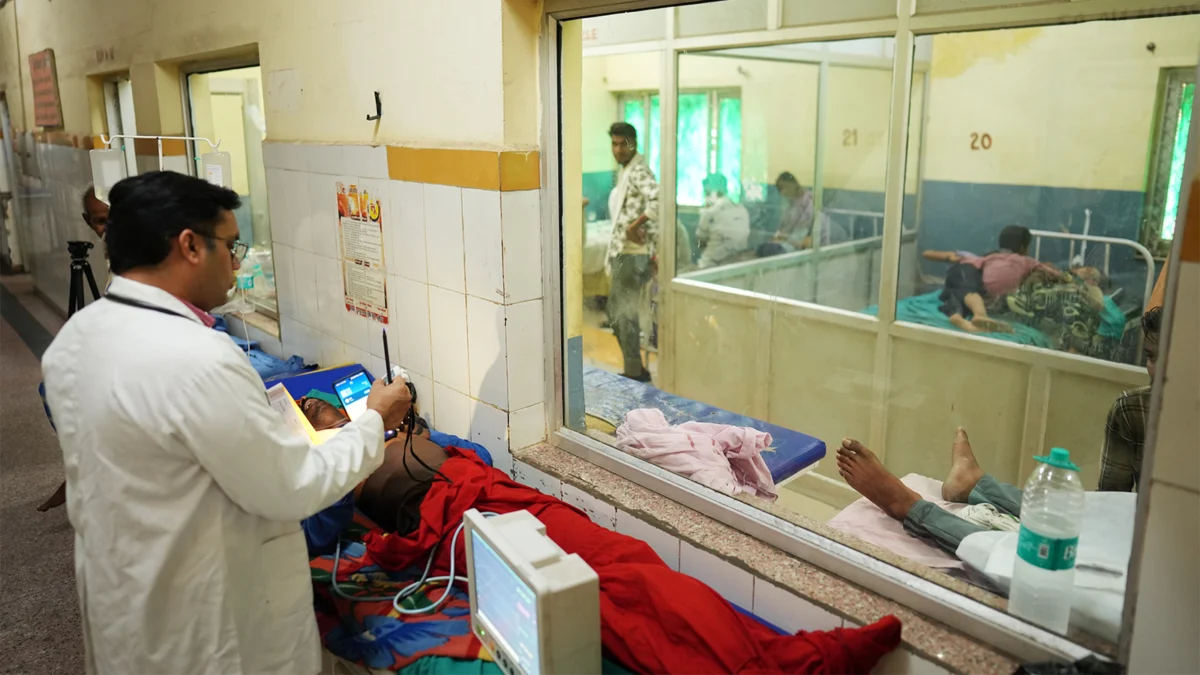
As global temperatures continue their relentless upward trajectory, the medical community is beginning to grasp a more nuanced and unsettling reality: extreme heat is not merely a precursor to heatstroke. It is a catalyst for a wide-ranging spectrum of medical emergencies that tax healthcare systems, alter urban safety, and threaten public health in ways previously under-accounted for.
A comprehensive new study, published in the journal Science Advances, has provided the most granular look yet at how Chicago’s healthcare infrastructure reacts when the mercury climbs above 92.6°F (33.7°C). By analyzing over 916,000 hospital and urgent care visits between 2011 and 2023, Northwestern University researchers have illuminated a correlation between rising temperatures and a staggering variety of ailments, ranging from accidental gunshot wounds to complex renal and mental health crises.
The Scope of the Crisis: A Decade of Data
For years, the public discourse surrounding climate change and health has remained narrowly focused on traditional "heat-related illnesses"—conditions like heat exhaustion, heat cramps, and the life-threatening heatstroke. However, the Northwestern study suggests that these clinical codes represent only the tip of the iceberg.
The research team, led by Dr. Abel Kho, an internal medicine professor at Northwestern’s medical school, combed through nearly a million patient records to identify shifting patterns during Chicago’s hottest days. The results were stark. When the temperature crosses the 92.6°F threshold, the city’s emergency departments experience a quantifiable surge in admissions for more than a dozen broad categories of injury and illness.
“The sound of the city is the sound of ambulances,” Dr. Kho remarked, reflecting on his own experience as a former emergency room physician. “Hot days are just like, something’s going to happen. You know you’re going to be busy.”
Chronology: A Decade of Rising Heat
The study’s longitudinal approach—spanning from 2011 to 2023—allowed researchers to observe how urban populations react to heat over an extended timeframe. This period saw significant fluctuations in local climate, providing a robust dataset that captures both typical summer heat and anomalous, extreme heat events.
By cross-referencing meteorological data with anonymized electronic health records (EHRs), the researchers were able to create a timeline of vulnerability. The data suggests that as the frequency and intensity of heat waves have increased over the last decade, so too has the burden on the city’s urgent care network.
The chronological data provides a compelling narrative of a city under pressure. It highlights that the "heat season" is no longer just a few isolated days of discomfort; it is a recurring environmental stressor that forces the healthcare system into a state of perpetual readiness.
Supporting Data: Beyond the Expected
Perhaps the most alarming aspect of the Northwestern study is the specific, and in some cases, counter-intuitive nature of the medical spikes recorded during high-heat events.
The Surge in External Injuries
The data revealed that heat acts as a significant multiplier for external, often violent, injuries. Accidental gunshot wounds, for instance, showed a dramatic spike, jumping more than 30-fold compared to days where temperatures remained below 92°F. Similarly, unspecified injuries resulting from physical assaults saw a significant increase. Sociologists and public health experts have long suggested that heat can exacerbate irritability and aggression, but the statistical link to clinical trauma records provides hard data to support the theory that heat is a driver of social and physical volatility.
Renal and Metabolic Stress
The physiological strain of heat is most evident in the renal system. The study confirmed that kidney complaints and disorders see a distinct uptick during heat waves. Dehydration, which is common during heat events, forces the kidneys to work under suboptimal conditions, often leading to acute failure or the exacerbation of pre-existing chronic kidney disease.
The Marijuana Paradox
One of the more unexpected findings involved a rise in mental health issues associated with cannabis use. Dr. Kho explains that when the human body is under physiological stress—such as that caused by extreme heat—it becomes less resilient to the effects of various substances. “When there’s heat, there’s a much higher likelihood of people having… exacerbations of drug effects, like cannabinoids,” Kho noted. This suggests that the metabolic changes induced by heat may lower the threshold for adverse psychiatric or physiological reactions to marijuana.
Skin and Vascular Issues
The study also cataloged a rise in dermatological problems and varicose vein complications. While these are often dismissed as "minor" compared to cardiovascular or trauma events, they account for a massive volume of urgent care visits, further straining the capacity of local clinics to handle more severe cases.
Official Responses and Expert Analysis
The findings have sent a ripple of concern through the public health community, with many experts noting that the study validates long-held suspicions that the true cost of climate change is hidden in the fine print of hospital billing codes.
Dr. Jonathan Patz, chair of health and environment at the University of Wisconsin, praised the study for its scope. "It helps confirm that we’ve been underestimating health risks from heat exposures," he stated. He argues that by failing to track these disparate illnesses as "heat-related," governments and municipalities have been significantly under-investing in climate adaptation and public health interventions.
Dr. Courtney Howard, a Canadian emergency room physician and president-elect of the Canadian Medical Association, emphasized the economic and systemic implications. "It is a reminder that the price of climate change is increased illness, strain on our health care system, and health care costs," she noted.
The study also received praise for its demographic inclusivity. University of Washington climate and health scientist Dr. Kris Ebi noted that the study’s representation of Black patients and women is a significant strength. Historically, these groups have been underrepresented in medical research, yet they are often the most vulnerable to the impacts of urban heat islands and environmental inequality.
Implications: A Call to Action
The implications of the Northwestern study are broad, touching on urban planning, clinical practice, and public policy.
Rethinking Clinical Triage
For emergency physicians, the study suggests a shift in how they view patients during heat waves. Dr. Nicholas Cozzi of the Illinois College of Emergency Physicians urges the public not to wait for signs of heatstroke to seek help. He emphasizes that patients with chronic conditions—such as multiple sclerosis, kidney disease, or vascular issues—must view extreme heat as a primary trigger for their underlying conditions.
The Urban Heat Island Effect
The study’s findings are particularly salient for urban environments like Chicago, which are susceptible to the "urban heat island" effect. As concrete and asphalt absorb and retain heat, the nocturnal relief that is vital for human recovery is often lost. This means that the "heat" is not just a daytime phenomenon; it is a constant, lingering pressure that prevents the body from recovering, leading to the cumulative medical failures observed in the study.
The Missing Link: Cardiovascular Data
Notably, the study did not find a significant spike in cardiovascular-related admissions, which contradicts some previous literature. Dr. Kho attributes this to "coding drift"—a phenomenon where, because cardiovascular patients often present with multiple issues, the primary reason for the visit might be coded as "kidney distress" or "dehydration" rather than a cardiac event. This highlights a need for better, more granular data collection in electronic health records to ensure that the impact of heat on heart health is not being obscured by secondary symptoms.
Conclusion: Preparing for a Warmer Future
As coauthor and climate scientist Dr. Daniel Horton points out, the trajectory of climate change is clear: heat waves are becoming more frequent, more intense, and more persistent. The Northwestern University study serves as a sobering "canary in the coal mine." It proves that the morbidity associated with climate change is not a distant, theoretical threat—it is happening in emergency rooms today.
For the healthcare sector, the challenge ahead is to integrate climate intelligence into clinical practice. This means better warning systems, more targeted outreach to vulnerable populations, and a fundamental shift in how we categorize, report, and respond to the vast array of health emergencies that occur when the climate changes. As Dr. Kho’s experience in the ER confirms, when the temperature rises, the city’s health declines—and we must now prepare for a future where that heat is no longer the exception, but the rule.