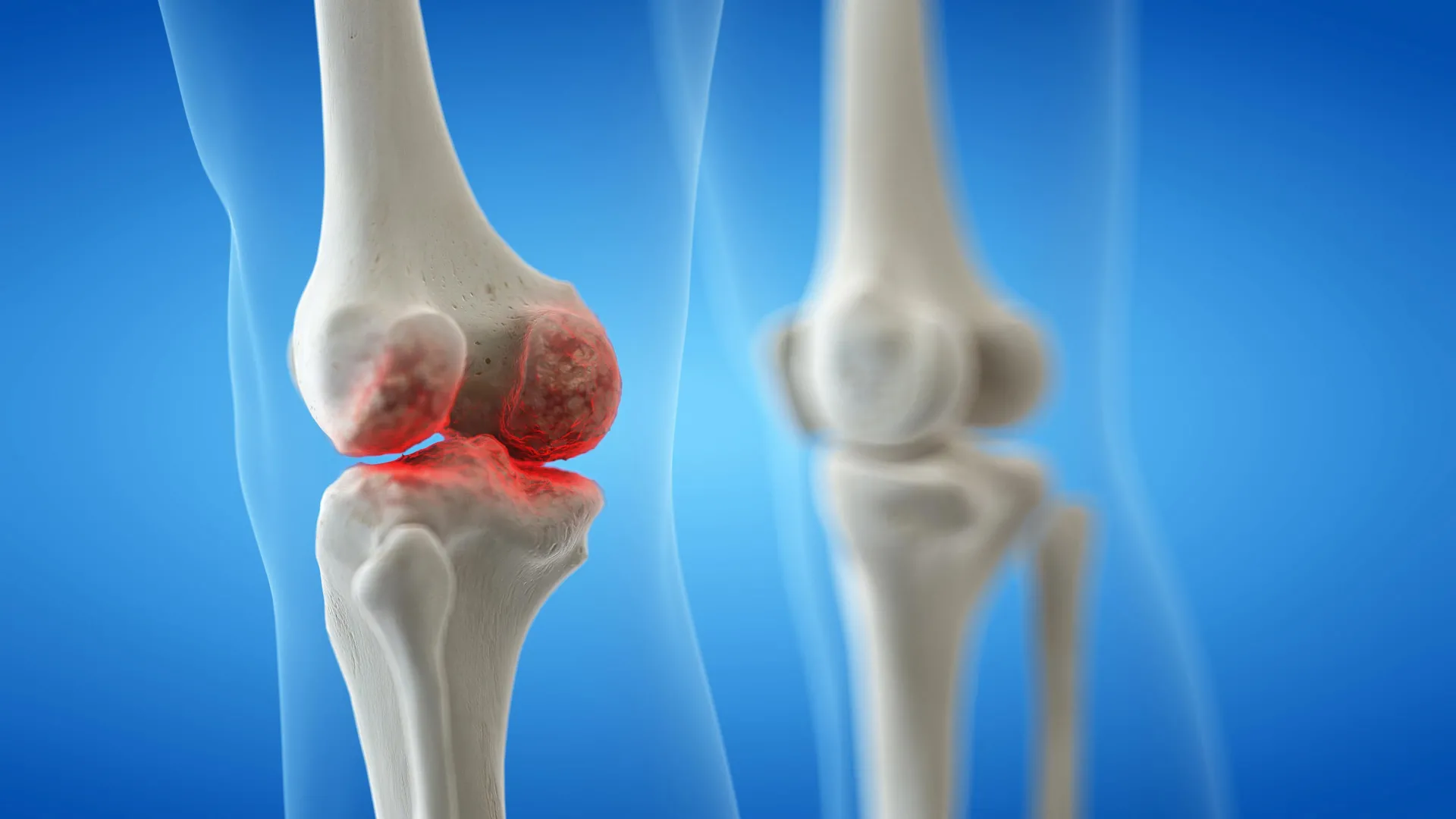
Knee pain has long been categorized as a hallmark of aging, a persistent ache that many accept as an inevitable tax on the body after decades of use. Yet, for more than 30 million Americans, this discomfort is not merely a nuisance—it is a chronic condition known as osteoarthritis (OA). As the most common form of arthritis and the leading cause of disability in the United States, knee osteoarthritis is shifting from a “geriatric concern” to a pressing public health priority that affects the workforce, the economy, and the long-term vitality of millions.
The Mechanics of Deterioration: What Happens Inside the Joint?
At its core, knee osteoarthritis is a degenerative disease characterized by the gradual breakdown of articular cartilage. This slick, rubbery tissue acts as a shock absorber, lining the ends of the bones where they meet to form the joint. In a healthy knee, cartilage allows for frictionless movement. However, as this protective layer thins, cracks, and eventually wears away, the bones begin to rub against one another.
This friction triggers a cascade of inflammatory responses, leading to swelling, stiffness, and debilitating pain. Over time, the joint space narrows, bone spurs (osteophytes) may develop, and the entire structure of the knee begins to lose its stability.
A Chronology of a Chronic Condition
While the symptoms of osteoarthritis often manifest in later life, the "chronology" of the disease often begins years, or even decades, before the first significant flare-up.
- The Pre-Clinical Phase: Often triggered by mechanical stress, such as a prior sports injury, ligament tear, or meniscus damage, the initial damage to the joint cartilage may be asymptomatic.
- The Onset of Symptoms: As cartilage degradation progresses, individuals typically report stiffness upon waking or after long periods of inactivity. This is often the stage where patients seek initial medical guidance.
- The Progressive Stage: Without intervention, the pain becomes more consistent. Simple tasks—climbing stairs, kneeling to garden, or even walking from the car to the office—become difficult.
- The Impact Phase: At this stage, mobility is severely compromised. This leads to a sedentary lifestyle, which creates a dangerous feedback loop: inactivity leads to muscle atrophy, which places more stress on the joint, accelerating the degradation of the remaining cartilage.
Supporting Data: The Scope of the Crisis
The statistics surrounding knee osteoarthritis are staggering. According to the Centers for Disease Control and Prevention (CDC), the prevalence of the condition is rising, driven by an aging population and a steady increase in national obesity rates.
- Demographics: While often associated with the elderly, nearly half of all knee OA cases occur in individuals of working age (under 65). This has profound implications for the labor market, contributing to billions of dollars in lost productivity and absenteeism annually.
- Risk Factors: Research indicates that the primary drivers of knee OA include:
- Weight: Every pound of excess weight exerts roughly four pounds of pressure on the knees. Losing just 10 pounds can relieve 40 pounds of cumulative stress from the knee joint with every single step.
- Muscle Strength: Weak quadriceps and hamstrings fail to stabilize the joint, leaving the cartilage to bear the brunt of every movement.
- Genetics: A family history of arthritis does increase risk, though it is not a deterministic sentence.
- Gender: Women are statistically more likely to develop severe osteoarthritis than men, a trend researchers are still working to fully explain through hormonal and structural studies.
Official Responses and Clinical Perspectives
Dr. Abby Cheng, an orthopedic surgeon at Washington University School of Medicine in St. Louis and a specialist in physiatry, emphasizes that managing knee health requires a holistic, proactive approach.
"Osteoarthritis can cause knee pain and stiffness, which can negatively impact a person’s activity level, risk of falling, mood and general quality of life," Dr. Cheng notes. "It is not just about the joint; it is about the person’s ability to engage with the world."
Dr. Cheng highlights that clinical treatment is no longer limited to the "wait and replace" mentality of the past. Today, medical providers emphasize a multi-modal strategy:
- Anti-Inflammatory Management: Beyond medication, this involves systemic changes. "Eating more plants and less processed or sugary food reduces inflammation in the body, which can reduce pain from osteoarthritis in all joints," she explains.
- Structural Support: Strengthening the thigh muscles remains the gold standard for non-surgical care. When the muscles are strong, they act as an "external brace," taking the pressure off the compromised joint.
- Medical Interventions: For those with moderate to severe pain, physicians may utilize cortisone injections, hyaluronic acid injections, or, in advanced cases, total knee arthroplasty (replacement).
The Hidden Implications: Beyond the Joint
The consequences of knee osteoarthritis extend far beyond the physical joint. Because the condition is often painful and limiting, it acts as a gateway to other chronic diseases.
The Inactivity Trap
When an individual experiences chronic pain, their natural instinct is to reduce movement. However, physical inactivity is a primary risk factor for heart disease, Type 2 diabetes, and certain cancers. By failing to address knee pain early, patients often inadvertently increase their systemic health risks, creating a "secondary" health crisis.
The Economic Toll
For the individual, the economic impact includes lost wages, co-pays, and the high cost of surgical procedures. For society, the prevalence of OA contributes to the rising cost of healthcare and the reduction of the available workforce. Early intervention—through physical therapy and weight management—is significantly more cost-effective than surgical repair.
Debunking Myths: The "Running" Fallacy
One of the most persistent myths in orthopedics is that high-impact activities like running inevitably "destroy" the knees. Current research suggests otherwise. For those with healthy joints, regular running can actually strengthen the cartilage by promoting healthy blood flow and nutrient delivery to the joint tissues.
"Some people think that because a parent or grandparent had osteoarthritis, they will develop it too," says Dr. Cheng. "And while it’s true that osteoarthritis can run in families, it doesn’t mean there’s nothing a person can do to successfully lower their risk of developing it."
The key is proper form, gradual progression, and listening to the body’s signals. Running is not a death sentence for the knees; rather, it is a tool for maintaining metabolic health and joint stability, provided it is balanced with appropriate strength training.
The Path Forward: Taking Control
The narrative of knee osteoarthritis is changing from one of inevitable decay to one of manageable health. By prioritizing anti-inflammatory nutrition, maintaining a healthy weight, and committing to lifelong strength training, individuals can significantly alter their trajectory.
Patients are encouraged to work closely with their healthcare providers to develop personalized plans. These plans should not be "one-size-fits-all" but should evolve as the patient’s condition changes. Whether it is joining a local exercise group, consulting with a physical therapist, or simply making dietary adjustments, the cumulative effect of small, consistent changes is profound.
Osteoarthritis may be a common condition, but it is not an insurmountable one. By taking control of the variables within our power—diet, weight, muscle strength, and movement—we can protect our joints and ensure that our mobility remains a lifelong asset rather than a fleeting luxury. It is your health; take control today.