From the rapid-fire feeds of TikTok to the curated bestseller lists of health influencers, vegetable and seed oils—commonly lumped together as "seed oils"—have become the latest battleground in the modern nutrition wars. To the uninitiated, the discourse can feel like a fever dream: prominent voices are labeling common pantry staples like canola, soybean, and sunflower oil as "toxic sludge," "motor oil," or "the hateful eight."
The movement, largely bolstered by the rise of the carnivore diet and ancestral-health circles, claims these oils are the silent, hidden drivers behind a tsunami of chronic diseases, from obesity and anxiety to ulcerative colitis and heart disease. But is there truth to the alarmism, or is this merely a case of internet-fueled chemophobia?
The Core Arguments: Ancestral Wisdom vs. Modern Processing
The anti-seed oil movement is built on a narrative of "natural vs. artificial." The logic typically follows a specific timeline: humans have thrived on animal fats—tallow, lard, and butter—for thousands of years. Conversely, industrial vegetable oils were products of the 20th-century food boom, created by profit-driven corporations seeking to monetize cheap-to-grow crops like soy, corn, and rapeseed.
Critics argue that these oils were aggressively marketed as "heart-healthy" alternatives to butter during the low-fat craze of the 1980s. When that experiment backfired—leading to the widespread consumption of trans-fat-laden margarine—the narrative shifted to "vegetable oils are actually the real culprit."
Conversely, mainstream nutrition scientists and organizations like the American Heart Association (AHA) often maintain that these oils are not only harmless but, when polyunsaturated fats replace saturated fats, may actually confer cardiovascular benefits. So, where does the truth lie? As with most complex nutrition topics, the reality is far more nuanced than a meme can capture.
A Brief Chronology of the Seed Oil Evolution
The inclusion of refined oils in the human diet is a relatively recent phenomenon.
- Pre-1900s: Human fat intake was derived primarily from animal sources (butter, lard, suet) or simple mechanical extraction of fruits (olives, coconuts).
- The Early 20th Century: Advances in chemical engineering allowed for the extraction of oils from seeds that were previously considered "non-oily." Technologies like hexane solvent extraction and high-heat deodorization were introduced to make these oils palatable and shelf-stable.
- The 1950s–1980s: A shift in dietary guidance occurred, fueled by Ancel Keys’ diet-heart hypothesis. Saturated fats were demonized, and vegetable oils were promoted as the heart-healthy gold standard.
- The 2010s–Present: The rise of social media and the "Ancestral Diet" movement brought a re-evaluation of industrial oils. Influencers began pointing to the chemical processing methods—involving solvents, bleaching, and high-heat deodorization—as the source of modern metabolic dysfunction.
How "Non-Oily" Foods Become Oil
To understand the criticism, one must understand the extraction process. Unlike extra-virgin olive oil, which can be produced at home with a simple press, seeds like corn, canola, and soy contain very little natural fat. A cup of green olives is naturally rich in oil, while a cup of corn has negligible fat content.

To extract oil from these sources, manufacturers use a rigorous, multi-stage industrial process:
- Cleaning and De-hulling: Removing extraneous plant matter.
- Crushing/Grinding: Breaking down the seeds to expose the fat.
- Solvent Extraction: Using chemical solvents like hexane to "wash" the oil out of the meal.
- Refining, Bleaching, and Deodorizing (RBD): A series of high-heat treatments that remove impurities, odor, and color.
Critics argue that this process strips away beneficial polyphenols and, in some cases, creates trace amounts of trans fatty acids. While the FDA banned the use of partially hydrogenated oils (the primary source of artificial trans fats) in 2018, the concern remains that high-heat industrial processing can lead to the oxidation of unstable polyunsaturated fats, potentially increasing their inflammatory potential.
The Scientific Reality: Smoke Points and Stability
One of the most persistent myths in the kitchen is the "smoke point" argument. For years, chefs and home cooks were told that heating olive oil would destroy its nutrients and create toxic compounds. We now know that extra virgin olive oil (EVOO) is remarkably stable, even at high temperatures, thanks to its high monounsaturated fat content and rich profile of polyphenols.
Research comparing oils heated to 464°F (240°C) for several hours showed that EVOO remained more stable than canola oil. This debunking suggests that while home-cooking habits are often scrutinized, they are rarely the primary driver of health issues.
The Omega-6 "Inflammation" Theory
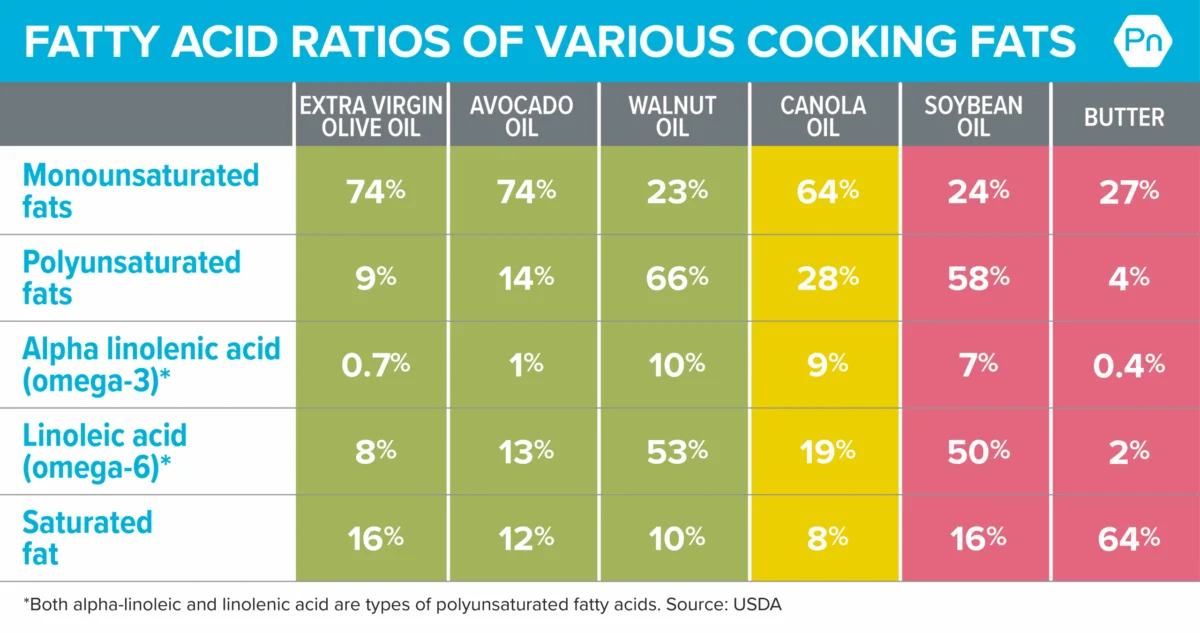
The primary scientific grievance against seed oils is their high concentration of omega-6 polyunsaturated fatty acids (PUFAs). The typical modern diet contains a ratio of omega-6 to omega-3 fats that is significantly skewed—often 16:1 or 20:1.
Some researchers argue this imbalance promotes systemic inflammation. However, current consensus is shifting. A landmark 2019 study published in Circulation found that increased consumption of omega-6 fats was actually associated with a lower risk of heart disease and stroke. The distinction is critical: omega-6s from whole foods like walnuts and seeds come packaged with fiber, vitamins, and antioxidants. Omega-6s from highly refined, industrial oils come isolated, stripped of their protective matrix.
The Real Culprit: Ultra-Processed Foods
The most important takeaway for any consumer is that the danger of vegetable oils is often conflated with the danger of the products they inhabit. Most people aren’t consuming "seed oils" by the spoonful; they are consuming them in ultra-processed foods (UPFs).

Ultra-processed foods—chips, cookies, frozen pizzas, and salad dressings—are designed to be hyper-palatable and are often calorie-dense but nutrient-poor. When you eat a bag of industrial potato chips, you are getting refined corn or soybean oil, but you are also getting refined carbohydrates, excessive sodium, and zero fiber.
A massive review involving nearly 10 million people found that diets high in ultra-processed foods are consistently associated with premature death, obesity, and metabolic syndrome. The issue, therefore, is not necessarily the molecule of the oil itself, but the entire "matrix" of the ultra-processed diet.
Implications for Your Kitchen
So, how should you navigate the grocery aisle?
- Prioritize Minimally Processed Fats: Extra virgin olive oil, avocado oil, and walnut oil remain the gold standard. They are minimally processed and retain their natural phytonutrients.
- Budget Considerations: If EVOO is outside your price point, expeller-pressed canola oil or high-oleic sunflower/safflower oils are reasonable, health-neutral alternatives. They lack the potent antioxidant profile of EVOO but are superior to highly refined, solvent-extracted oils.
- Shift the Focus to Whole Foods: Rather than stressing over the type of oil in your salad dressing, focus on getting your fats from whole food sources like avocados, nuts, seeds, and fatty fish. These foods provide the "protective packaging" that processed oils lack.
- Limit Ultra-Processed Foods: The most effective way to reduce your intake of potentially oxidized, refined oils is to reduce your consumption of packaged, shelf-stable snacks. If your diet consists of 80% whole foods, the occasional use of refined oil in a home-cooked meal is unlikely to be the cause of any metabolic health crisis.
Conclusion
The demonization of seed oils is a symptom of a broader, legitimate concern: the industrialization of the human diet. While the "toxic sludge" labels are largely hyperbolic and unsupported by the weight of clinical evidence, the skepticism regarding industrial processing is rooted in sound nutritional principles.
The goal for the average person should not be to live in fear of every drop of soybean oil, but to prioritize a diet rich in minimally processed, whole-food fats. By returning to the basics—cooking with stable, cold-pressed oils and reducing reliance on the ultra-processed food industry—you can optimize your health without falling prey to the latest internet-driven dietary hysteria.