As we navigate our sixth decade, the body undergoes a series of natural physiological shifts. Among the most significant is the gradual loss of muscle mass—a process known as sarcopenia—which typically begins in our 30s but often accelerates after age 60. Maintaining physical independence during this chapter of life is not merely a goal; it is a fundamental requirement for long-term health. According to fitness experts, the secret to vitality in your 60s and beyond is not found in high-intensity weightlifting or marathon running, but in functional endurance.
We sat down with Josh York, Founder and CEO of GYMGUYZ, the world’s largest in-home and on-site personal training company, to explore how to accurately assess your physical baseline. York argues that true "exceptional" endurance is defined by the ability to handle the demands of daily life—climbing stairs, carrying groceries, or walking through a park—without feeling completely depleted.
The Core Philosophy: Why Endurance Matters After 60
Endurance is defined as the body’s ability to perform a task for a sustained period without succumbing to excessive fatigue. For those entering their 60s, endurance serves as the primary defense against the decline of functional capacity.
"To me, exceptional endurance after 60 means having something left in the tank," York explains. "It’s about maintaining the capacity to live your life on your own terms. If you are constantly exhausted by simple daily chores, your independence is at risk. By testing your endurance with specific, full-body movements, we can identify where your strengths lie and where you may need to focus your training."
The following four exercises serve as a diagnostic tool. They are designed to engage multiple muscle groups simultaneously, providing a clear window into how your body manages physical stress when fatigue begins to set in.
1. The Sit-to-Stand Test: Assessing Lower Body Power
The sit-to-stand movement is the gold standard for assessing lower body strength and mobility. It mimics the act of rising from a chair, a movement essential for navigating the world independently.
The Mechanics
To perform this test, use a standard-height chair. Sit with your feet hip-width apart and your back straight. Without using your hands for momentum, stand up fully, then return to a seated position with control.
Why It Matters
This exercise engages the quadriceps, glutes, and core. When you can perform this movement repeatedly without losing form, you are building the muscular endurance required for walking, climbing, and balance. In your 60s, this is the primary defense against falls and sedentary behavior.
2. The Step-Up: Improving Balance and Coordination
The step-up is a functional exercise that tests unilateral strength—the ability to move one side of the body independently of the other.
The Mechanics
Using a sturdy step or a low platform, place one foot firmly on the surface. Press through your heel to lift your entire body up until your leg is straight, then slowly lower yourself back down. Ensure your hips remain level throughout the movement.
Why It Matters
Life is rarely symmetrical. When we walk, we are essentially performing a series of single-leg movements. Strengthening this pattern improves gait stability and reduces the risk of joint pain in the knees and hips, which is a common complaint for those over 60.
3. Incline Pushups: Upper Body and Core Integration
While a floor pushup is a classic test of strength, the incline pushup is a more accessible and safer way to measure endurance for the 60+ demographic while still hitting the chest, shoulders, and triceps.
The Mechanics
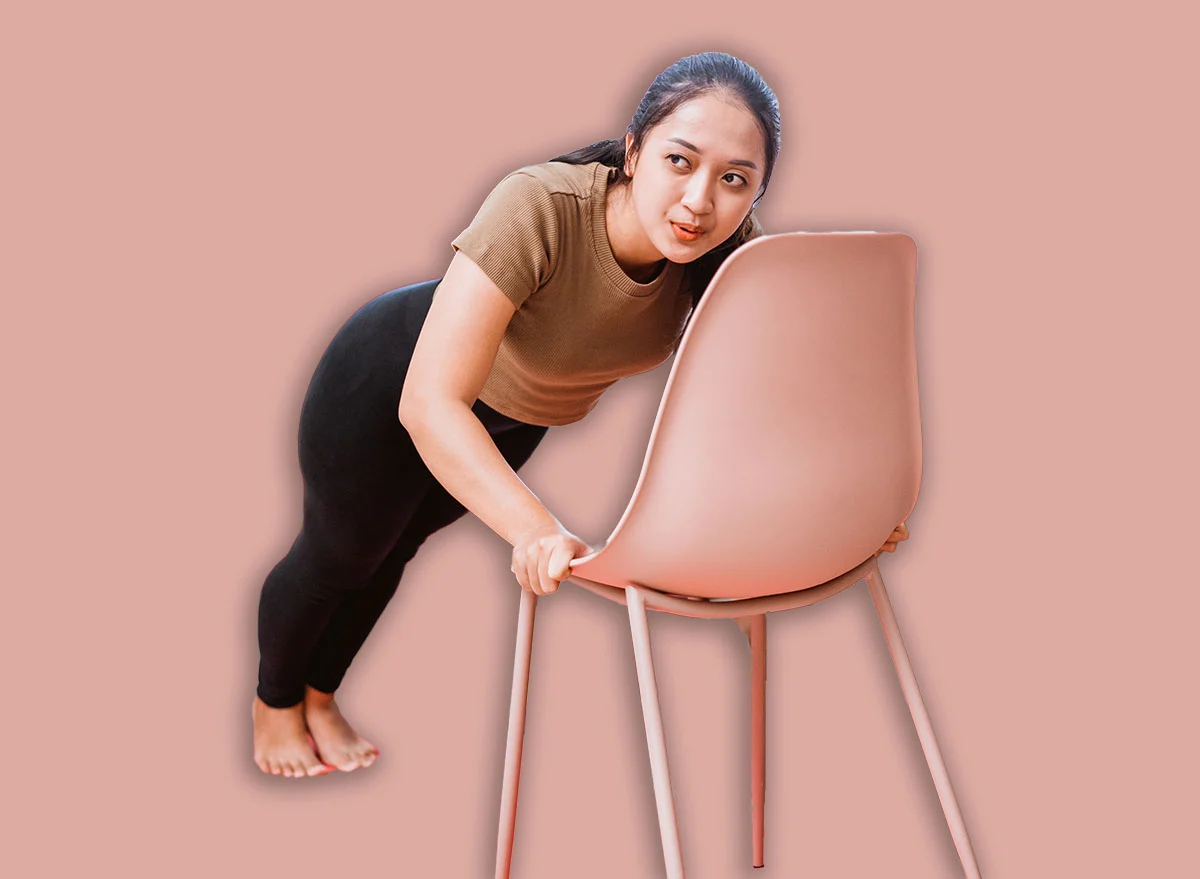
Place your hands on a sturdy elevated surface—like a countertop or a stable chair pushed against a wall. Extend your legs behind you so your body forms a straight line. Lower your chest toward the surface, keeping your elbows tucked, and push back up.
Why It Matters
This movement assesses core stability as much as upper body strength. Keeping the body in a straight line requires significant abdominal engagement, which is essential for protecting the lower back and maintaining good posture as we age.
4. The Loaded Carry: Real-World Resilience
If there is one exercise that replicates the demands of daily life, it is the loaded carry. Whether it is carrying a bag of groceries or a suitcase, this movement tests your ability to stabilize the body under load.
The Mechanics
Hold a weight in each hand (a light dumbbell or even a gallon of water works). Stand tall with your shoulders back and walk at a steady pace for a set distance or time. The goal is to maintain a neutral spine and a steady gait without swaying.
Why It Matters
Loaded carries develop grip strength and "postural endurance." As we age, our ability to hold things securely and maintain a steady posture while walking is vital for safety and mobility.
Supporting Data: The Science of Aging and Muscle Loss
Research consistently shows that after the age of 50, muscle mass can decline at a rate of 1% to 2% per year. By the age of 60, this loss can impact metabolic health, bone density, and glucose regulation.
However, the "Use It or Lose It" principle is heavily supported by clinical data. A study published in the Journal of Aging and Physical Activity highlights that resistance-based endurance training can significantly reverse age-related muscle decline. Participants who engaged in functional movement patterns—similar to the four exercises listed above—showed improved mitochondrial function and increased insulin sensitivity, both of which are critical for longevity.
Implications for Your Routine
If you find these movements challenging, you are not alone. York emphasizes that these tests are not meant to be demoralizing, but rather, they serve as a roadmap for progress.
"The beauty of these four movements is that they are infinitely scalable," York notes. "If you cannot do a standard step-up, use a lower step. If a pushup is too difficult, increase the height of the incline. The goal is to find your baseline and build from there."
Incorporating Into Your Lifestyle
- Consistency over Intensity: Aim to perform these exercises three times a week.
- Mindful Movement: Focus on the quality of the repetition rather than the speed. Fatigue should be felt in the muscles, not in the joints.
- The "Tank" Metric: If you finish these exercises and feel like you could have done two or three more reps, you are in a good position. If you are struggling to finish the first set, it is a clear sign that you should prioritize these movements in your weekly training.
Conclusion: A Proactive Approach to Aging
Reaching your 60s is a milestone that deserves to be celebrated with vitality. By focusing on functional endurance, you aren’t just training for the gym; you are training for life. Whether it is the independence of carrying your own groceries or the confidence of navigating stairs without hesitation, these four movements provide the foundation for a robust and active future.
As York concludes, "Your endurance is your freedom. The more you cultivate it, the more you can continue to engage with the world in the way you always have." Consult with a physician or a certified personal trainer before beginning any new exercise regimen to ensure that these movements are safe for your specific physical condition. By taking these small, consistent steps today, you are investing in the quality of your life for years to come.