









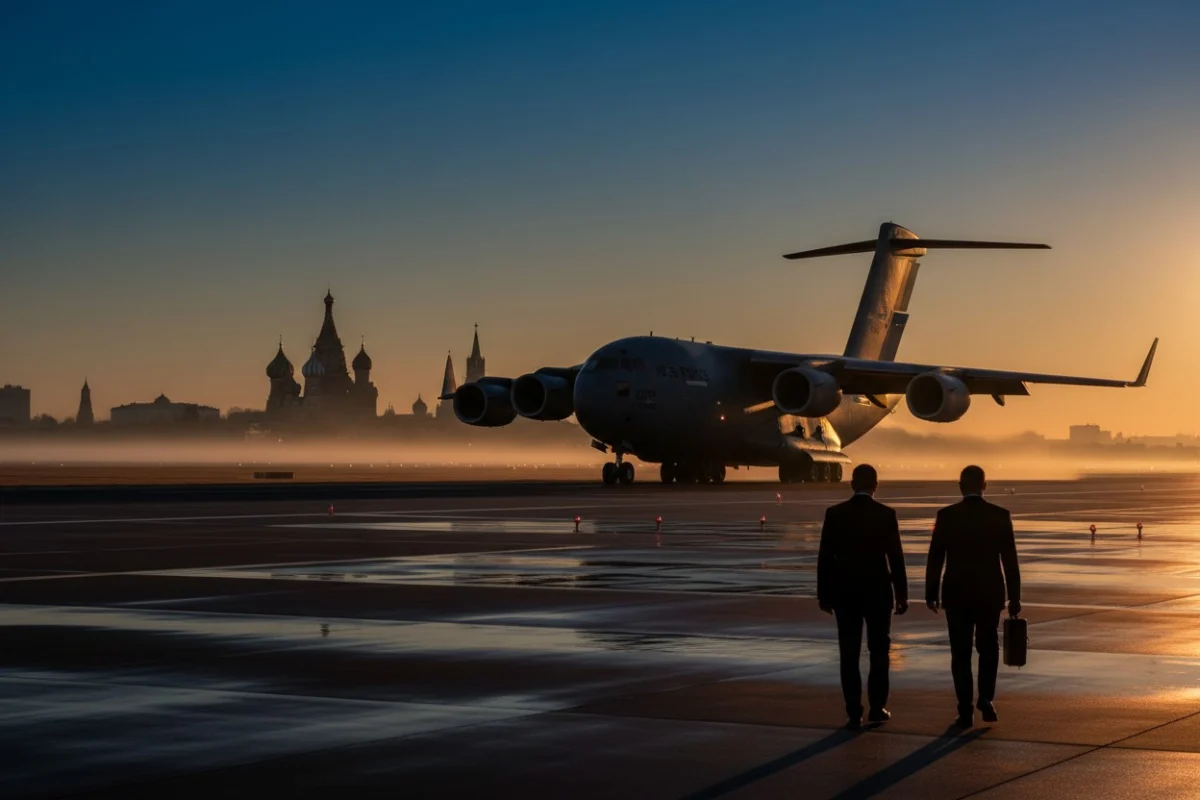
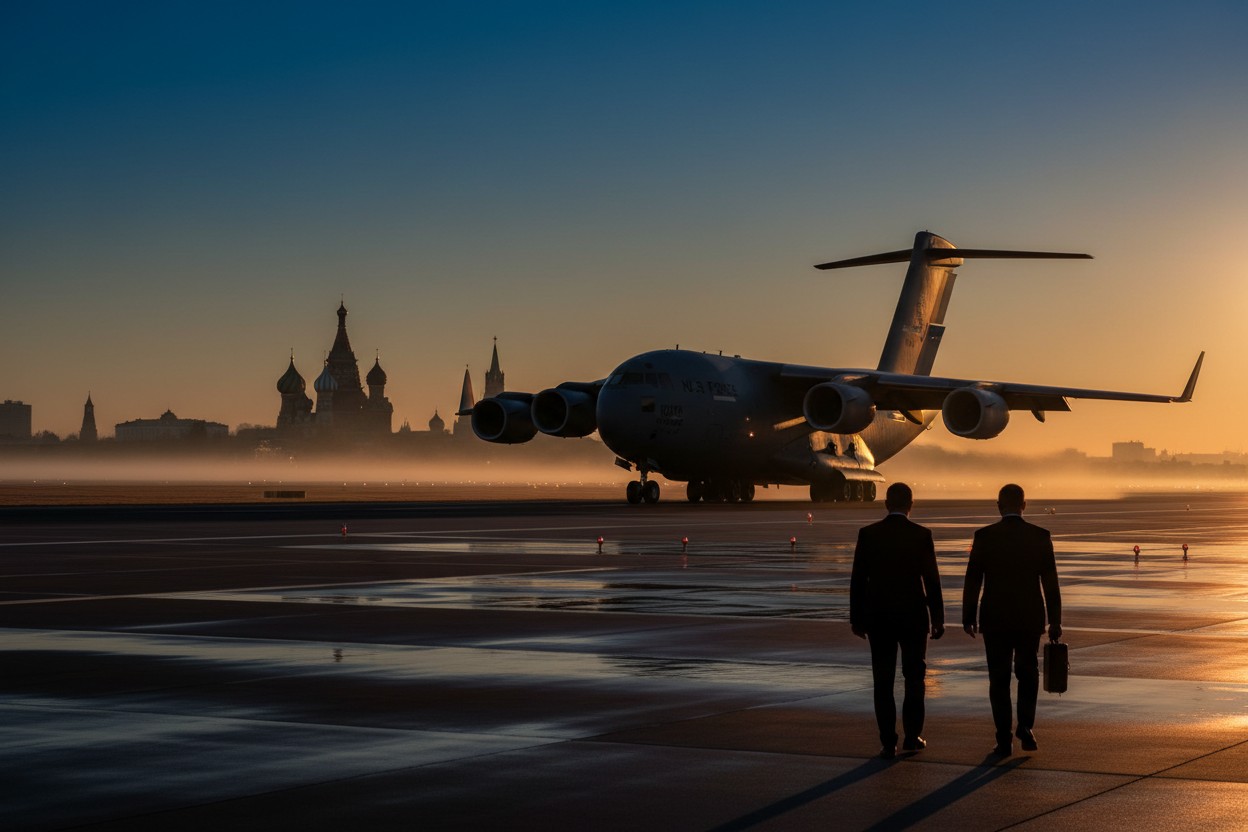
In an extraordinary display of back-channel diplomacy, CIA Director John Ratcliffe arrived in Moscow earlier this week aboard a U.S. Air Force C-17 Globemaster III, marking a rare and highly sensitive engagement between the world’s two most powerful intelligence agencies. The visit, conducted under a shroud of operational secrecy, represents the first known journey to the Russian capital by a CIA director of the current administration and signals a potential, albeit fragile, pivot in the geopolitical standoff between Washington and the Kremlin.
While the U.S. government has remained largely silent regarding the specifics of the trip, Kremlin Press Secretary Dmitry Peskov confirmed on Wednesday, August 26, that the meeting took place. The high-stakes visit occurs as the global community watches the stalled conflict in Ukraine with increasing anxiety, and as the Trump administration shifts its strategy toward forcing a negotiated settlement to the multi-year crisis.
The Chronology of a Secret Mission
The journey began thousands of miles from the Kremlin. Flight-tracking data from Flightradar24 corroborated reports that a Boeing C-17A military transport aircraft departed from Joint Base Andrews in Maryland—the primary hub for senior U.S. government officials—before making a strategic stop in Riga, Latvia. The aircraft touched down at Moscow’s Vnukovo International Airport on Tuesday, August 25.
The logistics of the trip were marked by meticulous planning. According to sources within the Ukrainian government, the United States proactively informed Kyiv of the impending delegation’s travel. In a move that highlights the precarious nature of the theater of operations, Washington reportedly requested that Ukraine suspend all drone strikes against Russian infrastructure during the window of the delegation’s transit and stay. This request underscores the desire of U.S. officials to ensure a secure, uninterrupted environment for sensitive, face-to-face negotiations.
While Ratcliffe engaged in high-level discussions with his Russian intelligence counterparts, Kremlin officials confirmed that he did not meet with President Vladimir Putin. However, Peskov noted that Putin was briefed on the proceedings shortly after the conclusion of the talks, suggesting that the dialogue carried the direct authorization of the Russian head of state.
Strategic Background: A Deepening Crisis
The meeting arrives at a point where bilateral relations are described by both sides as being in a "deep crisis." For years, the architecture of European security has been dismantled by the kinetic conflict in Ukraine, the imposition of historic Western sanctions, and a total breakdown in formal diplomatic channels.
The impetus for this clandestine mission is largely attributed to the evolving stance of the Trump administration. Since early 2025, the White House has implemented a policy of "calculated disengagement" regarding military aid to Ukraine. By pausing both weapons shipments and intelligence sharing, the U.S. has effectively pressured the administration of President Volodymyr Zelensky to signal a newfound readiness for ceasefire negotiations.
Analysts point to the energy crisis as a secondary, yet powerful, catalyst. Ukrainian drone strikes against Russian oil refineries have reverberated through global markets, exacerbating shortages of refined products like diesel. Concurrently, broader instability in the Strait of Hormuz has created a perfect storm of energy volatility, forcing the U.S. to seek a more stable, or at least predictable, relationship with Moscow to stabilize the global economy.
The Intelligence Perspective: A Rare Dialogue
The direct engagement between the CIA and Russian intelligence services—specifically those organizations responsible for foreign and internal security—is a rarity in the post-2022 landscape. Such meetings are typically reserved for "track-two" diplomacy, where intelligence agencies act as proxies for political leaders who cannot yet afford the domestic or international fallout of formal diplomatic rapprochement.
Experts suggest the agenda likely spanned several critical topics:
- De-escalation Protocols: Establishing "red lines" to prevent accidental direct military confrontation between NATO and Russian forces.
- Prisoner Exchanges: The potential for a high-profile swap, a common feature of intelligence-led diplomacy.
- Security Architecture: Discussing the long-term viability of the current border configurations and the neutral status of Ukraine.
The presence of the C-17 aircraft has led to widespread speculation. While it could simply represent the transport of a diplomatic delegation, the choice of a heavy military transport suggests the possibility of moving significant diplomatic cargo or facilitating a logistical handoff for a sensitive prisoner transfer.
Official Responses and Diplomatic Caution
The Kremlin’s public posture remains one of studied skepticism. Dmitry Peskov’s comments on Wednesday provided a sober assessment of the situation: "It is too early to determine whether the meeting could help pull bilateral U.S.-Russian relations out of their deep crisis."
This caution is likely a tactical necessity. For the Kremlin, any admission that they are "desperate" for U.S. intervention would undermine their narrative of sovereignty and strength. Conversely, for the U.S., the lack of an official statement from Washington serves to preserve the integrity of the talks and minimize political blowback from critics who view any engagement with Moscow as a concession.
From the Ukrainian perspective, the news of the meeting was met with a mixture of apprehension and forced cooperation. Having been asked to "stand down" for the duration of the visit, Kyiv is acutely aware that their future is being negotiated in rooms where they have no direct representation. The shift in U.S. policy—from being the primary backer of Ukraine’s "total victory" to being the primary broker of a "negotiated settlement"—has forced a fundamental re-evaluation of the war’s trajectory.
Implications: The Long Shadow of NATO Expansion
The broader context of this meeting cannot be fully understood without examining the history of NATO expansion. Academic analysts, such as Glenn Diesen, have frequently highlighted the 2008 warnings issued by former CIA Director William Burns. In his now-famous cable, Burns warned that the inclusion of Ukraine into the NATO orbit would be viewed by Russia as an existential red line, likely triggering the very civil war and intervention that the world has witnessed over the past few years.
The current visit by Director Ratcliffe may represent an attempt by the U.S. to "reset" the clock, acknowledging that the security architecture of 2008–2024 has failed to prevent catastrophic loss of life and global economic instability. By engaging directly with the Russian intelligence apparatus, the U.S. is signaling that the era of relying solely on public posturing is coming to an end, in favor of a more pragmatic, intelligence-driven approach to regional stability.
Looking Forward: A Fragile Path to Rapprochement
As the U.S. delegation concludes its business and returns to American soil, the international community is left to decipher the cryptic silence from both Washington and Moscow. Is this the first step toward a grand bargain, or merely a tactical pause to manage the immediate pressures of energy markets and military exhaustion?
The visit of the C-17 to Vnukovo airport will likely be studied by historians as a potential turning point. It highlights that even in the darkest hours of conflict, the mechanisms of the "Great Game" remain intact. The intelligence agencies, often the architects of conflict, are now the primary conduits for the conversation that may eventually end it.
For now, the world remains in a holding pattern. With peace talks between Ukraine and Russia stalled and the humanitarian toll continuing to mount, the secretive meetings in Moscow offer a glimmer of hope that diplomacy—conducted in the shadows—may succeed where public rhetoric has failed. However, as the Kremlin warned, the road to exiting the current "deep crisis" remains long, fraught with obstacles, and contingent upon the willingness of both powers to prioritize stability over the entrenched positions of the last decade.
Summary of Key Data Points
- Primary Actors: CIA Director John Ratcliffe and senior Russian intelligence officials.
- Transport: U.S. Air Force C-17A Globemaster III, traveling via Riga, Latvia.
- Confirmed Locations: Joint Base Andrews (Maryland), Riga, and Moscow (Vnukovo).
- Key Issues: U.S.-Russia bilateral relations, ceasefire negotiations in Ukraine, energy supply stability.
- Status of Ukraine: Informed of the meeting; requested to pause drone strikes as a condition of the talks.