











For millennia, human beings navigated the landscape of health and performance using the most sophisticated diagnostic tool in existence: the nervous system. We relied on the visceral feedback of our own senses—the heavy thud of a racing heart, the dull ache of muscle fatigue, and the clarity of a well-rested mind—to determine whether we were thriving or faltering.
Today, however, the landscape of self-assessment has shifted. We have traded the subjective whispers of our bodies for the cold, hard digits displayed on our wrists. From heart rate variability (HRV) and step counts to sleep architecture and caloric expenditure, we are now a generation obsessed with the "quantified self." While these devices offer a powerful bridge between subjective feelings and objective reality, they have also introduced a new dilemma: at what point does the pursuit of data precision begin to undermine our innate ability to listen to our own bodies?
The Rise of the Data-Driven Lifestyle
The modern fitness tracker is a marvel of miniaturization. In a sleek, wrist-worn device, we can now house accelerometers, optical heart rate sensors, and advanced algorithms that translate raw movement into meaningful health metrics.
In the best-case scenarios, these devices serve as an essential "reality check." Human beings are notoriously poor at quantifying their own behaviors. We are prone to cognitive biases, such as the "optimism bias," where we believe we are moving more and eating less than we actually are. A colleague once insisted he was strictly adhering to a caloric deficit, only to discover through meticulous tracking that he was consuming an additional 500 calories daily—hidden entirely in his affinity for barbecue sauce.
Yet, there are exceptions. Elite performers, such as the legendary sprinter Ben Johnson, were once reported to have an uncanny ability to call out their 100-meter sprint times within a tenth of a second. This is an outlier level of body awareness, but it serves as a North Star for what is possible when we refine our internal calibration. The question we must now ask is: How can the average person use modern technology to reach that same level of self-accuracy without losing their autonomy in the process?
The Accuracy Paradox: Not All Data is Equal
It is a common misconception that all health data is created equal. The reality is far more nuanced. Hardware quality, software sophistication, and the robustness of the underlying datasets vary wildly between manufacturers.
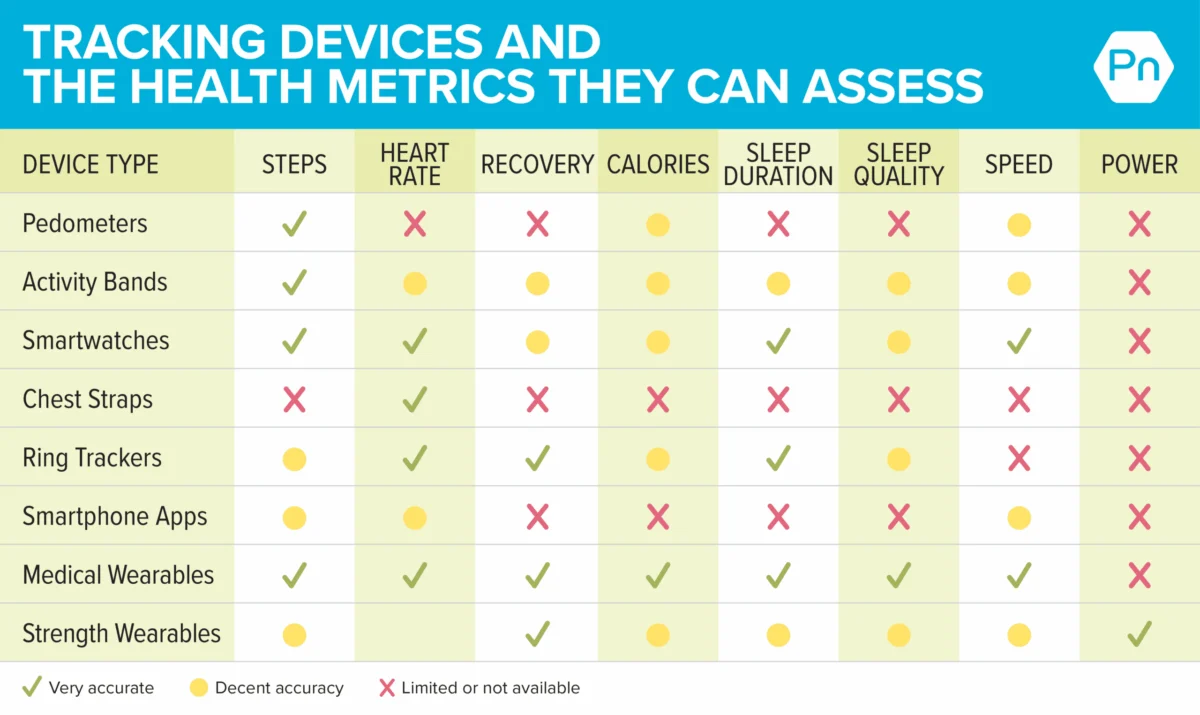
When analyzing the reliability of current consumer-grade wearables, we find a distinct hierarchy of accuracy. Heart rate and step-count data are generally considered highly reliable, as the mechanical and electrical signals involved are relatively straightforward to capture. Conversely, metrics such as "calories burned," "movement velocity," and even "sleep quality" often rely on proprietary algorithms that carry significant margins for error.
If you are using a device to optimize your life, it is vital to understand the difference between measured data and estimated data. Relying on an estimated calorie count to dictate your dietary intake is a recipe for frustration; relying on a measured resting heart rate to assess recovery, however, is a data-backed strategy that can prevent overtraining.

The Inverted U: When Too Much Data Becomes a Burden
Perhaps the most fascinating aspect of the fitness tracking revolution is the "paradox of choice" applied to health information. Computer scientist Samantha Kleinberg, an expert in decision-making, has noted that even a small amount of surplus information can have a surprisingly negative effect on our cognitive processes.
This relationship follows an "inverted U" curve. At the low end of the information spectrum, we lack the data to make informed decisions. At the high end, we suffer from "analysis paralysis." We have all experienced this: the search for the perfect local taco spot, where reading hundreds of conflicting reviews leaves us more confused than if we had simply walked into the nearest place.
In the world of health, this leads to a state where we are drowning in data but starving for wisdom. When the information provided by a watch or app becomes too complex—or worse, contradictory to how we feel—we must ask: Does this tracking actually increase my well-being and performance?
Three Indicators of Tracking Health
To determine if your relationship with technology is symbiotic or parasitic, look for these three signals.
1. The Validation Signal
Tracking is beneficial when it confirms what the body is feeling, thereby reducing anxiety. Consider the case of an athlete who doubts the efficacy of low-intensity "Zone 2" training because it feels "too easy." When the data shows a consistent, downward trend in their resting heart rate and improved recovery times, the tracker serves as a vital pedagogical tool. It validates the process, builds confidence, and allows the athlete to trust the training methodology.
2. The Prompting Signal
Behavioral change requires three things: motivation, ability, and a prompt. Trackers excel at the "prompt." Many users find that once they see objective data linking a specific behavior—like late-night alcohol consumption—to a plummeting sleep quality score, the motivation to change becomes automatic. In this sense, the data acts as a mirror that shows us our habits in a way our ego previously prevented us from seeing.
3. The Calibration Signal
Tracking is at its best when it helps us understand our limits. Many people struggle with "junk volume"—training that is hard enough to cause fatigue but not specific enough to drive performance gains. By monitoring real-time metrics of output and recovery, individuals can learn to distinguish between the fatigue of progress and the exhaustion of burnout.
The Dangers of Data Over-Reliance
The primary risk of the quantified-self movement is "sensor dependency." There is a documented phenomenon where users become so tethered to their devices that they lose the ability to interpret their own internal signals.

The most famous example of this is the "MyFitnessPal Blackout" of 2019, where millions of users found themselves adrift when the app went down. Without their digital tally, many reported feeling genuine anxiety about how much they "were allowed" to eat. This represents a complete outsourcing of internal authority to an external algorithm. When we stop trusting our own hunger, fullness, and energy levels, we lose the most fundamental aspect of the human experience: the ability to self-regulate.
Reclaiming the Senses: A Three-Step Strategy
To regain the balance between technology and intuition, we must move toward a model of "informed sensing." Here is how to use technology as a tool for self-discovery rather than a replacement for self-awareness.
Step 1: The "Guess-Check-Adjust" Method
Before you glance at your tracker, perform a self-assessment. If you have just finished a run, ask yourself: On a scale of 1 to 10, how hard was that? How long do I think I need to recover? Once you have made your prediction, compare it to the data. This creates a calibration loop. Over time, your internal sense of "hard" or "easy" will become far more accurate.
Step 2: Develop Mental Shortcuts
Instead of relying on a device to tell you when to stop lifting, use the Rate of Perceived Exertion (RPE). Ask yourself, "If I were offered a million dollars to do one more rep with perfect form, could I?" This question, while subjective, is a powerful tool for finding the boundary of true muscular failure. It leverages your brain’s ability to assess internal capacity—a skill that, if practiced, is far more reliable than a generic fitness tracker algorithm.
Step 3: Utilize Your Biological Network
Humans possess a vast array of sensory inputs that technology cannot touch. We have proprioception (the sense of where our body is in space), interoception (the sense of our internal physical state), and a sophisticated nervous system that recognizes patterns faster than any smartphone app. When you exercise, pay attention to the subtle signals: the cadence of your breath, the tension in your shoulders, and the way your energy shifts throughout the day.
The Future of Self-Assessment
As wearable technology continues to evolve, we will undoubtedly see more precise metrics and more personalized AI-driven insights. However, the most successful individuals of the future will not be those who follow their trackers most strictly, but those who use their trackers to become more attuned to their own humanity.
Objective data is a map, but you are the explorer. A map is useful for navigating unfamiliar terrain, but it is no substitute for the experience of walking the path. By integrating the objective insights of our devices with the subjective wisdom of our senses, we can build a practice that is not only sustainable and data-backed but also deeply rewarding.
Ultimately, the goal of all health technology should be to make itself obsolete—by teaching you to know yourself so well that you no longer need a screen to tell you how you are doing.