











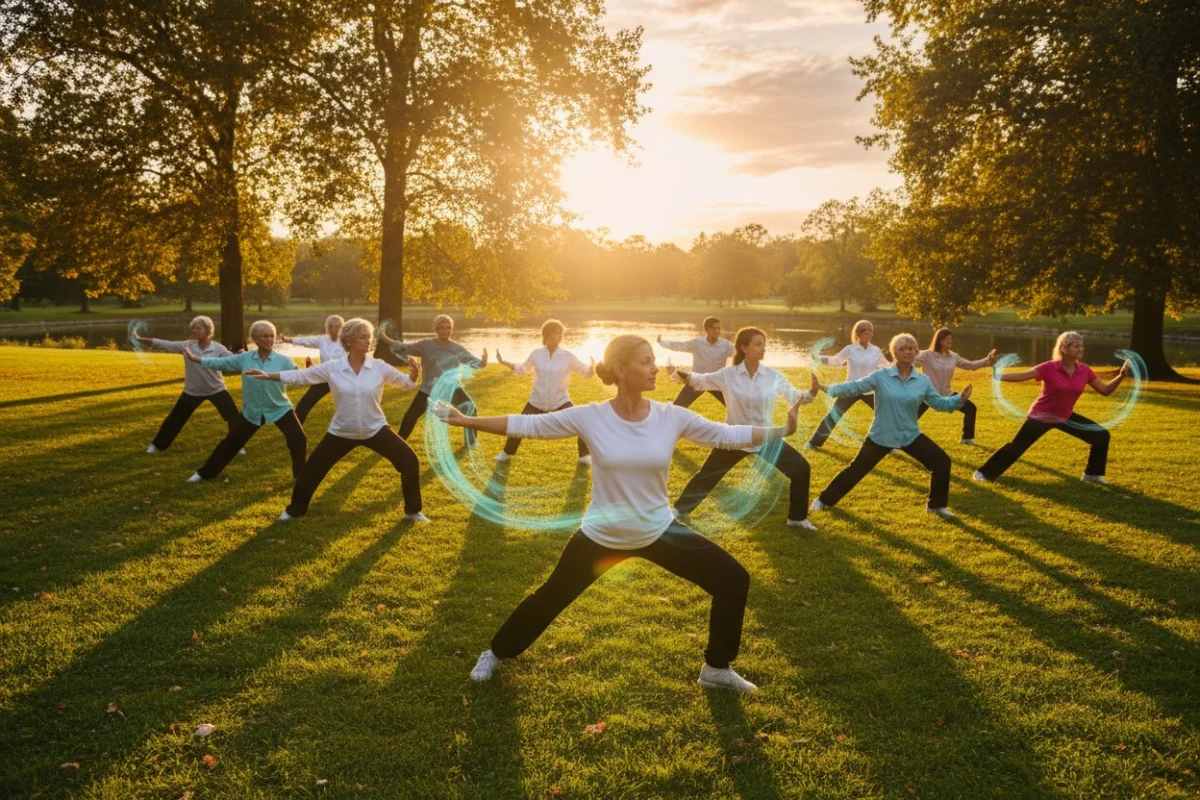
In a monumental development for integrative medicine, a massive umbrella review published in the British Journal of Sports Medicine has provided what researchers are calling the most definitive evidence to date regarding the efficacy of traditional Chinese exercises (TCEs). By analyzing 1,744 randomized controlled trials (RCTs), the study concludes that practices such as Tai Chi, Qigong, and Baduanjin are not merely cultural relics, but potent, evidence-based tools for managing chronic musculoskeletal conditions.
As the global population ages and the prevalence of chronic pain reaches epidemic proportions, this study offers a compelling, low-cost, and accessible path toward improving the quality of life for the more than 1.7 billion people currently living with musculoskeletal disorders worldwide.
The Scope of the Evidence: A Quantitative Breakthrough
The review, conducted by an interdisciplinary team of researchers from various hospitals and universities across China, stands as the largest synthesis of its kind. To achieve such a high level of statistical certainty, the researchers examined 92 data syntheses derived from 1,744 individual clinical trials. The sheer scale of this meta-analysis allows clinicians and public health officials to move past anecdotal support and rely on what the authors describe as "high-certainty evidence."
The practices evaluated—including Tai Chi, Qigong, Baduanjin, Wuqinxi, and Yijinjing—have long been rooted in the philosophy of balancing the body’s internal energy, or qi. As noted by David Peters in The Complete Guide to Integrated Medicine, these exercises view physical symptoms as manifestations of systemic disharmony. This latest research suggests that the physiological impact of these movements aligns with modern biomedical markers of health, bridging the gap between ancient Eastern philosophy and contemporary Western clinical standards.
Chronology: The Evolution of Clinical Validation
The journey toward this landmark study has been decades in the making.
- Early 2000s: Preliminary pilot studies began to emerge, suggesting that Tai Chi could improve balance and reduce fall risks in elderly populations.
- 2010s: As the opioid crisis intensified, researchers pivoted to non-pharmacological pain management, leading to a surge in high-quality RCTs focused on traditional movement therapies.
- 2021: The CDC reported that 20.9% of U.S. adults suffer from chronic pain, with nearly 7% suffering from "high-impact" chronic pain that prevents daily functioning. This data set the stage for a new urgency in finding sustainable, long-term rehabilitation strategies.
- 2025: A study from the Beijing University of Chinese Medicine found that gentle, meditative movement was as effective as conventional medication or cognitive behavioral therapy for treating insomnia—a common co-morbidity for those with chronic pain.
- 2026 (Present): The current umbrella review in the British Journal of Sports Medicine serves as the capstone, consolidating years of data to provide a definitive recommendation for clinical integration.
Supporting Data: Why Movement Matters
The findings of the umbrella review are granular, providing specific evidence for different pathologies. For individuals suffering from knee osteoarthritis, these exercises demonstrated a marked improvement in functional movement and mobility. For those battling fibromyalgia, the research identified significant improvements in sleep quality—a primary driver of pain perception.
Perhaps most impressively, the study highlighted the impact on bone mineral density. Tai Chi, when practiced consistently, proved to be an effective intervention for patients with osteopenia and osteoporosis.
The "Gold Standard" Protocol
The study did not just identify what works; it identified how much is required to achieve therapeutic results. The researchers concluded that the maximum physiological and mental health benefits were observed when participants adhered to the following regimen:
- Frequency: At least three times per week.
- Duration: Sessions lasting long enough to accumulate 150 minutes of exercise per week.
- Consistency: Benefits were most pronounced in cohorts that maintained the practice for longer than six months.
Beyond pain management, these exercises offer a form of functional strength training. As Peter Wayne notes in The Harvard Medical School Guide to Tai Chi, these movements provide a unique combination of lower-body stabilization and upper-body range-of-motion work, which is often superior to static strength training for older adults who may be intimidated by gym-based weightlifting.
Official Responses and Clinical Perspectives
The clinical community has responded with cautious optimism, noting that the study’s findings could fundamentally change how physical therapists and rheumatologists design rehabilitation programs.
"For too long, the medical community has viewed these exercises as a ‘complementary’ add-on," says one leading orthopedic researcher. "This review forces us to acknowledge that these are primary interventions. They are safe, they are scalable, and they carry virtually no side-effect profile compared to NSAIDs or opioid-based painkillers."
The authors of the review have explicitly called for the inclusion of these exercises in international clinical guidelines. By formalizing these practices into standard rehabilitation protocols, hospitals can offer patients a "prescription for movement" that is both empowering and cost-effective.
Implications for Public Health and Global Policy
The implications of this research extend far beyond the clinic walls. With the global population rapidly aging, the economic burden of musculoskeletal conditions is threatening to overwhelm healthcare systems.
1. Reducing Pharmacological Reliance
One of the most significant findings is the potential for these exercises to act as a substitute for pharmaceutical intervention. By managing pain through movement, patients can potentially reduce their reliance on painkillers, thereby avoiding the risks of addiction, gastrointestinal issues, and other drug-related side effects.
2. Promoting Healthy Aging
Public health initiatives are increasingly focused on "healthy aging"—not just extending life, but extending functional life. The review suggests that integrating Tai Chi and similar exercises into community centers, senior living facilities, and primary care clinics can serve as a primary prevention strategy for mobility loss and chronic disability.
3. Patient Empowerment
Traditional Chinese exercises shift the burden of care from the provider to the patient. By teaching individuals how to manage their own pain through self-regulated movement, the healthcare system can foster a sense of agency. This transition from "passive recipient of care" to "active participant in recovery" is a hallmark of modern patient-centered medicine.
Conclusion: A Paradigm Shift in Pain Management
The umbrella review published in the British Journal of Sports Medicine represents more than just a collection of data; it represents a paradigm shift. By confirming the efficacy of traditional Chinese exercises with high-certainty evidence, the study provides a robust scientific foundation for what millions have practiced for centuries.
As we move forward, the challenge for public health policy will be implementation. Ensuring that these exercises are taught by qualified instructors, that they are accessible to diverse socioeconomic groups, and that they are integrated into existing insurance and medical frameworks will be the next frontier.
However, the path is now clear. For a world struggling with an epidemic of chronic pain and the limitations of pill-based solutions, the answer may be found in the deliberate, mindful, and consistent movement of the body. Whether it is the slow, flowing motion of Tai Chi or the rhythmic breathwork of Qigong, the evidence is in: the most effective medicine for many may have been waiting in the practice of ancient movement all along.
Key Takeaways for Patients and Practitioners
- Efficacy: Tai Chi and related exercises are proven to improve pain, sleep, and physical function.
- Accessibility: These exercises require minimal equipment and can be adapted for all fitness levels.
- Commitment: To see results, aim for 150 minutes of practice per week over a period of at least six months.
- Clinical Integration: Patients should discuss these findings with their primary care physicians to integrate these practices safely into existing treatment plans for conditions like arthritis or fibromyalgia.