











Editor’s note: This story includes discussion of suicide. If you or someone you know needs help, the national suicide and crisis lifeline in the U.S. is available by calling or texting 988.
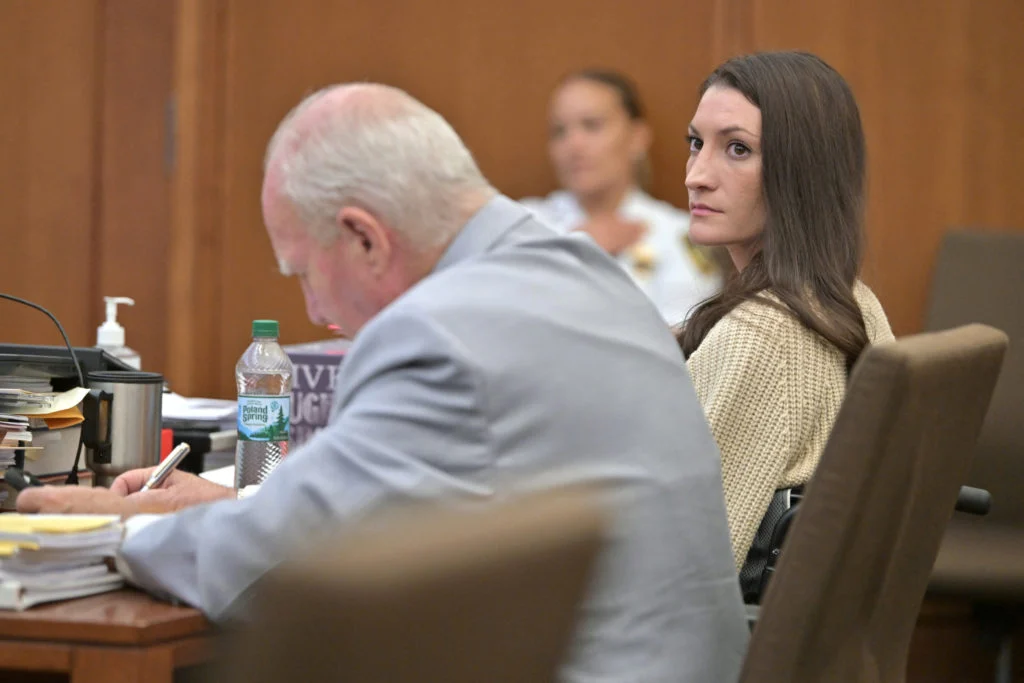
BOSTON — The high-stakes murder trial of Lindsay Clancy, a 36-year-old former labor and delivery nurse accused of strangling her three young children in their Duxbury, Massachusetts, home, reached a pivotal juncture this past Friday. As the defense rested its case after weeks of harrowing testimony, the courtroom shifted gears, with prosecutors launching their rebuttal phase. The trial, which has captivated and polarized the public, is now barreling toward closing arguments, leaving a jury to decide whether the tragedy was a calculated act of malice or the horrific byproduct of a severe, untreated mental health crisis.
The Core Facts: A Family Tragedy
The charges stem from a January 2023 incident that left the small, affluent coastal community of Duxbury in a state of profound shock. Clancy is accused of strangling her children—Callan, 8 months; Dawson, 5; and Cora, 5—before attempting to take her own life by jumping from a second-story window of the family home. The attempt left her paralyzed from the waist down.
The prosecution’s narrative is stark: They contend that Clancy, a trained medical professional, meticulously planned the killings, creating a window of opportunity by sending her husband on errands. Conversely, the defense, led by attorney Kevin Reddington, does not contest that Clancy killed her children. Instead, they argue that she is not criminally responsible due to postpartum psychosis—a rare, severe, and potentially life-threatening medical condition characterized by hallucinations, delusions, and a total break from reality.
A Chronology of Declining Health
To understand the legal battle, one must look at the months preceding the tragedy. Throughout the trial, the jury heard testimony from family members detailing a precipitous decline in Clancy’s mental health. Witnesses described a woman who was "begging for help," struggling with intense sleep deprivation, hormonal fluctuations, and the overwhelming demands of caring for three young children.
The defense painted a picture of a woman who sought medical intervention repeatedly, cycling through various psychiatric treatments and medications in the weeks leading up to the January incident. Despite these efforts, her condition allegedly spiraled. Family members testified to her erratic behavior, growing anxiety, and a sense of hopelessness that was not alleviated by the clinical support she received.
The events of the day in question remain the central focus of the courtroom. Prosecutors argue that the timing of the killings, while her husband was away, demonstrates intent. The defense, however, argues that the act was not one of cold-blooded murder but a manifestation of a "delusional belief system."
Expert Testimony: The Shadow of Andrea Yates
The defense’s case concluded with the testimony of Dr. Phillip Resnick, a renowned forensic psychiatrist and expert in the field of filicide—the killing of a child by a parent. Resnick’s appearance was highly anticipated, not only for his expertise but for his historical role as a defense witness in the 2006 trial of Andrea Yates, the Texas mother who famously drowned her five children.
Resnick’s testimony provided a psychological framework for the jury, characterizing Clancy as "clearly psychotic" on the day of the killings. He described her internal state as being akin to a "puppet" whose strings were being pulled by an external, uncontrollable force. According to Resnick, his interviews with Clancy revealed a woman suffering from severe depression and potential bipolar disorder, who claimed to be hearing voices commanding her to kill her children.
Crucially, Resnick introduced the concept of "altruistic filicide." He testified that Clancy operated under a distorted, delusional logic: she believed that if she were to take her own life, her children would be left to suffer in a world without her. She perceived their death as a way to "save" them, leading them to a better place. "She believed that she was doing what was right for her children," Resnick told the jury, arguing that there was no evidence of abuse or malice, only the tragic delusion of a mother in the throes of psychosis.
The Prosecution’s Rebuttal: Disputing the Diagnosis
The prosecution has remained steadfast in its effort to dismantle the "postpartum psychosis" defense. During cross-examination of Dr. Resnick, prosecutor Jennifer Sprague pointedly questioned why Clancy had not disclosed these violent thoughts to medical providers in the lead-up to the tragedy. Resnick maintained that such silence is common, as mothers often fear that revealing the true extent of their mental suffering will lead to their children being removed from their care.
Following the defense’s rest, the prosecution called Dr. Avram Mack, a forensic psychiatrist, to the stand. Dr. Mack offered a counter-narrative, acknowledging that Clancy was suffering from a major depressive episode but rejecting the claim that she was experiencing psychosis or bipolar disorder.
Mack testified that while Clancy’s actions were the result of mental illness, he believed she retained the ability to distinguish right from wrong. He recounted that Clancy told him she heard a male voice urging her to kill the children so she could then kill herself, and that she whispered "go to God" as she carried out the acts. For the prosecution, this indicates a level of cognition that negates the defense of legal insanity. Mack’s testimony serves as the cornerstone of the state’s argument that, regardless of the depression, Clancy was a rational actor at the time of the killings.
The Implications: A Legal and Social Reckoning
The Lindsay Clancy trial has ignited a fierce national debate regarding the treatment of postpartum mental illness and the legal standards for criminal responsibility.
Legal Precedent and Accountability
The outcome of this trial will likely serve as a litmus test for how the American justice system handles cases of postpartum psychosis. If the jury finds Clancy not guilty by reason of insanity, it will signal a broader judicial recognition of the physiological and psychological devastation that can accompany childbirth. If they find her guilty, it may reinforce a more rigid standard that holds individuals accountable for their actions, regardless of the biological factors that may have influenced their decision-making.
The Crisis of Postpartum Health
Beyond the courtroom, the case has shed light on the systemic gaps in maternal mental healthcare. Advocates for women’s health argue that the current system is ill-equipped to identify and treat the most severe forms of postpartum illness. The tragedy has spurred rallies and public conversations, with supporters of Clancy emphasizing that she was a woman in pain who fell through the cracks of a medical system that failed to recognize the severity of her condition.
The case also forces society to confront the uncomfortable intersection of motherhood and violence. It challenges the idealized image of motherhood, forcing a dialogue about the extreme pressures placed on women and the potential consequences when that support structure fails.
Conclusion: The Final Verdict Awaits
As the trial enters its final stages, the jury is left with two vastly different versions of Lindsay Clancy. Was she a mother whose mind was hijacked by a biological storm, or was she a calculated offender who used her knowledge as a nurse to disguise her actions?
Closing arguments are expected to take place next week, following which the fate of Lindsay Clancy will be placed in the hands of the jury. Regardless of the verdict, the trial has already left an indelible mark on the public consciousness, serving as a haunting reminder of the fragility of the human mind and the devastating ripple effects of untreated mental health crises. The courtroom in Boston has become a stage for a much larger, painful inquiry into whether justice can truly account for the invisible, internal battles that sometimes lead to the most unthinkable of outcomes.