











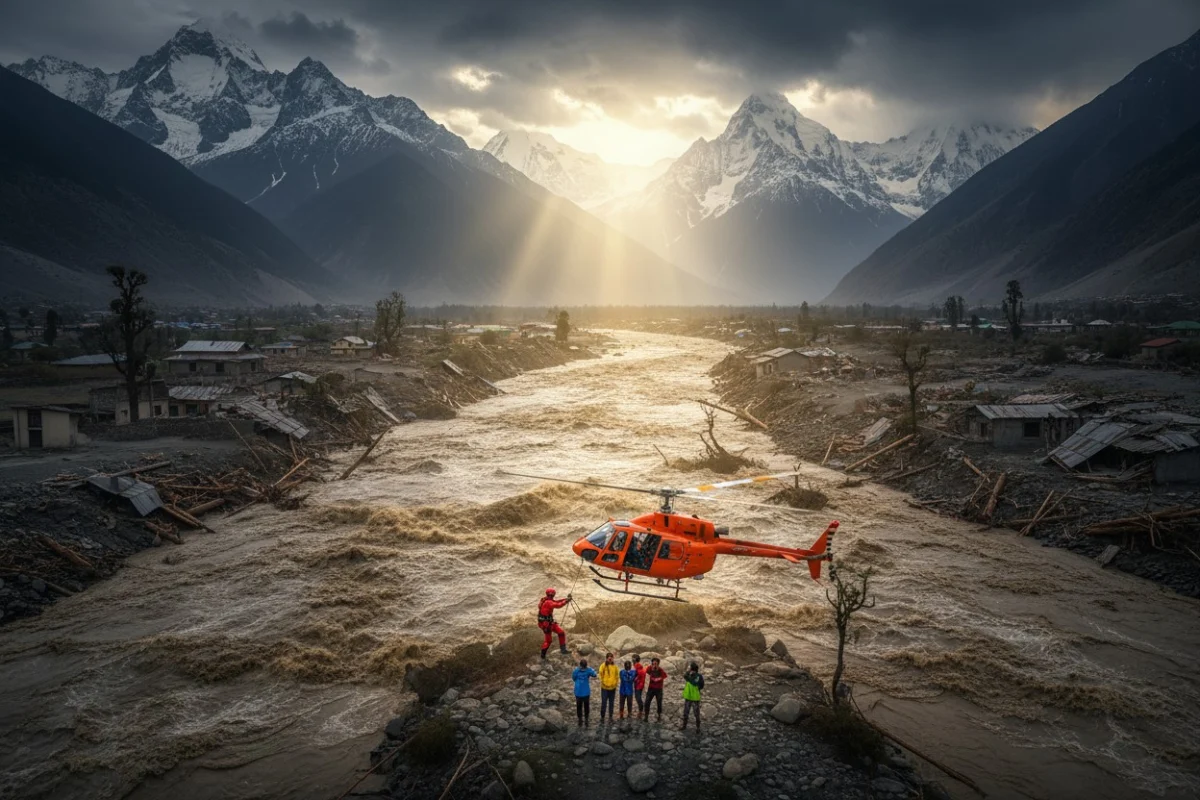
A Region Submerged: The Scale of the Devastation
In what is being described as one of the most severe natural disasters in the modern history of the Himalayas, a catastrophic flash flood tore through the mountainous border region between Nepal and China on Wednesday morning. The deluge, described by survivors as a "wall of water" composed of rock, mud, and debris, struck with such suddenness that it left virtually no time for evacuation.
Entire villages have been effectively erased from the map, while critical infrastructure—including essential mountain roads, power grids, and hydroelectric dams—has been pulverized. Nepalese Foreign Minister Shisir Khanal delivered a grim assessment of the situation, stating, "Town after town has been wiped out within hours." As of the latest reports, the confirmed death toll in Nepal has surpassed 330, with thousands more currently unaccounted for. The disaster has transcended borders, impacting the Chinese side as well, where the vital Gyirong Port customs post was decimated by the torrent.
The speed of the disaster underscores the inherent volatility of the Himalayan terrain. Geologists have long warned that flash floods and landslides in this region can escalate from minor tremors or water accumulation into life-threatening events within minutes, often catching residents and pilgrims entirely off guard.
Chronology of a Tragedy
The disaster began early Wednesday morning when sudden, high-velocity water movement, likely triggered by a combination of slope instability and localized hydrological shifts, surged through the high-altitude valleys.
- Early Morning (04:00 – 07:00): The initial breach occurred, likely stemming from a landslide-induced damming of mountain streams. The sudden release of water sent a massive debris flow into populated valleys and project sites.
- Mid-Morning (08:00 – 11:00): News of the catastrophe reached Kathmandu and Beijing. The scale of the destruction became apparent as communication lines failed and aerial reconnaissance confirmed that roads leading to the border were severed.
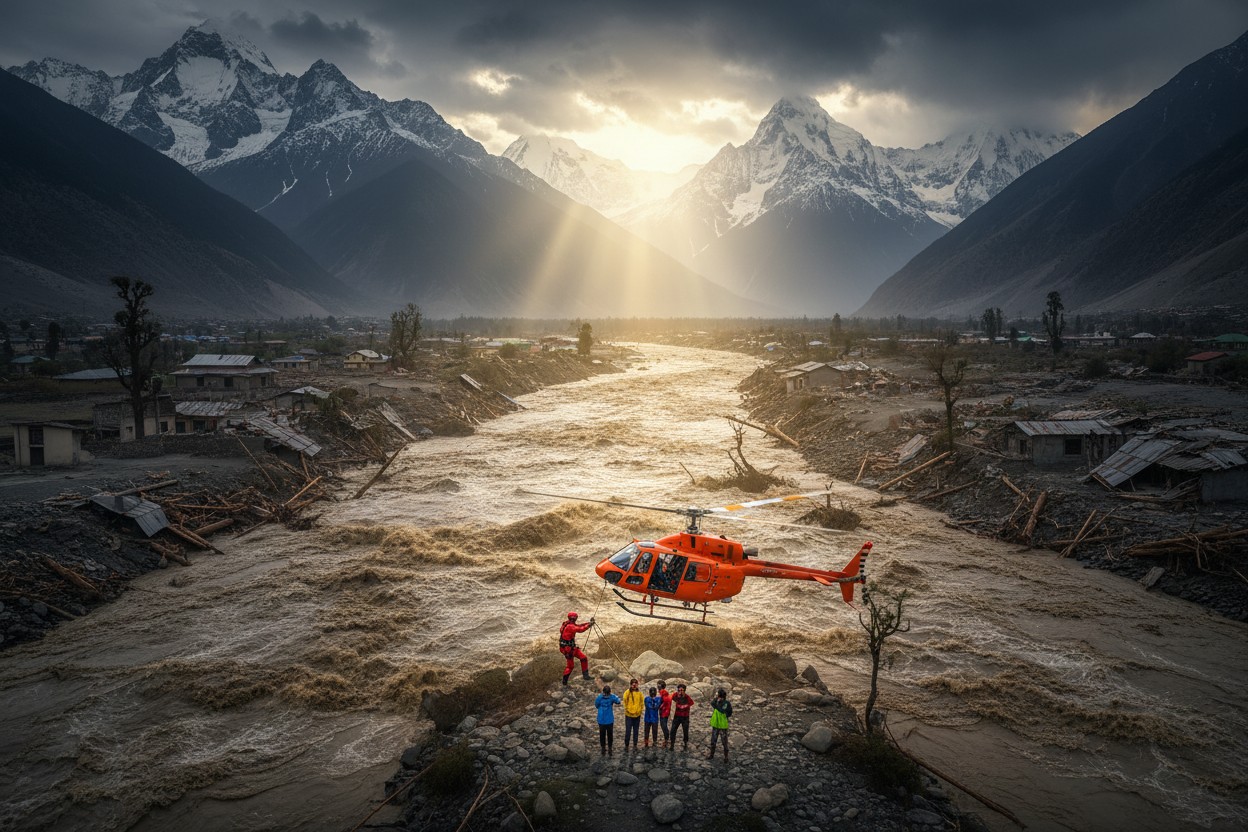
- Afternoon (12:00 – 18:00): The Nepalese Army initiated "Operation Rescue," deploying helicopters to extract survivors trapped in mud and on the rooftops of remaining structures. Simultaneously, Chinese Premier Li Qiang arrived at the Gyirong township to oversee the mobilization of the People’s Liberation Army (PLA) for disaster relief.
- Evening (19:00 onwards): International attention sharpened as reports of missing foreign nationals began to emerge, shifting the disaster from a local tragedy to a multi-national emergency.
A Global Humanitarian Crisis: Supporting Data
The human cost of this disaster is staggering, with a diverse demographic of victims. The remote, high-altitude nature of the region meant that hundreds of pilgrims and infrastructure workers were in the path of the floodwaters.
Missing Person Demographics
The figures provided by the Nepalese tourist board and regional authorities highlight the international scope of the loss:
- Indian Nationals: Over 400 tourists and pilgrims are missing, including a group of 77 from the Isha Foundation and 70 workers employed at the Trishuli hydropower project.
- Chinese Nationals: Approximately 558 individuals are reported missing, including 260 foreign nationals present at the border hub.
- Other International Citizens: The toll includes 54 citizens from the United Kingdom, 33 from the United States, and over 100 Nepalese citizens, with the numbers expected to fluctuate as search teams reach more isolated areas.
The presence of so many foreign nationals—particularly pilgrims traveling to the sacred site of Mansarovar in Tibet—has turned this into a complex logistical challenge for consular services across Asia and the West.
Official Responses and Diplomatic Coordination
The global community has mobilized to address the fallout. The Kremlin issued a formal statement, with President Vladimir Putin expressing deep condolences to the leadership of Nepal and China, noting that Russia "shares in the grief of the friendly Nepalese people."
In New Delhi, the Indian Foreign Ministry has established a dedicated task force to coordinate with Kathmandu, specifically focusing on the recovery of the Trishuli project workers. In Beijing, Foreign Ministry Spokesman Lin Jian confirmed that China is working in close cooperation with Nepal. "We are in constant communication," Lin stated. "Our priority is search and rescue, and we are mobilizing every resource to locate those still missing."
In Kathmandu, the response is being led by the Prime Minister’s Office. Spokesman Hemraj Aryal emphasized that while rescue teams have reached most accessible sites, the primary hurdle remains the "lack of road connectivity." The destruction of bridges and arterial mountain roads has effectively isolated dozens of small communities, forcing reliance on air-drops and helicopter extractions.
Ongoing Threats: The Looming Risk of Secondary Disasters
The situation remains precarious. China’s Ministry of Water Resources has issued an urgent warning regarding a landslide-formed lake in Nepal. The lake, currently overflowing, is being fed by mountain runoff; experts estimate that approximately 3 million cubic meters of water will flow into the basin over the next 72 hours.
Basanta Raj Adhikari, director of the Center for Disaster Studies at Tribhuvan University, warned of "second and third waves" of flooding. Even in the absence of heavy rain, the structural integrity of the mountains has been compromised. "The risk of further landslides is extreme," Adhikari noted. "We are monitoring the geological stability in real-time, but the danger of glacial collapse or dam breach remains very high."
Implications: The Long Road to Recovery
While the current phase is defined by search and rescue, the long-term outlook is sobering. The Nepalese Ministry of Health and Food Safety has begun implementing disease surveillance protocols, fearing that the lack of clean water and the presence of stagnant mud could lead to an outbreak of waterborne illnesses.
Key Challenges for Post-Disaster Recovery:
- Rehabilitation of Infrastructure: The total loss of power lines and roads means that reconstruction will take months, if not years. The Trishuli hydropower project, a cornerstone of the regional energy supply, will require extensive engineering assessments before it can be deemed safe or operational.
- Socio-Economic Revitalization: With villages wiped out, the focus must shift to re-housing thousands of displaced residents. As Hemraj Aryal noted, "The main thing is revitalizing and re-engaging the people in society." This will require substantial international aid, as the local economy in these mountainous regions is fragile and highly dependent on tourism and infrastructure work.
- Climate Resilience: Scientists have long warned that the Himalayan region is a "canary in the coal mine" for climate change. Increased melting of glaciers and intensified weather patterns are making these once-stable valleys increasingly dangerous. This tragedy will likely serve as a catalyst for a global re-evaluation of how infrastructure is built in seismically and hydrologically active zones.
Conclusion
The tragedy at the Nepal-China border is a grim reminder of the vulnerability of human populations in the face of nature’s raw power. As the sun sets on the search teams working through the thick, suffocating mud, the international community watches with bated breath. The recovery will be a grueling, years-long endeavor, but for now, the focus remains on the immediate: finding the missing, providing medical relief, and bracing for the potential of further floods that could once again turn the landscape into a torrent of destruction.
For the survivors, the recovery is not just about rebuilding homes, but about piecing together lives that were upended in the span of a single, devastating morning. As the global response continues to coalesce, the focus will inevitably shift toward how the world can better protect those living in the shadow of the world’s highest mountains.