








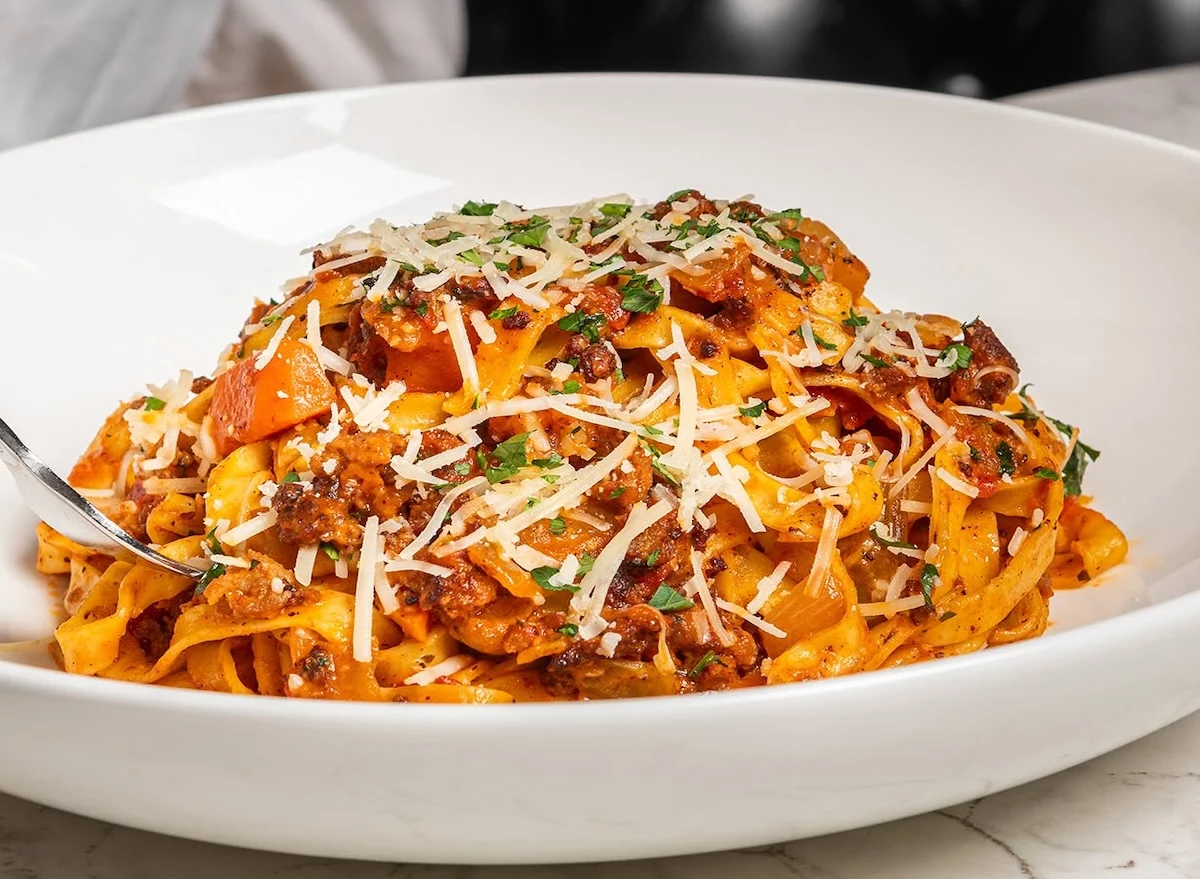
Bolognese is more than just a meat sauce; it is the soul of Italian comfort food. Originating from the culinary heartland of Bologna in the Emilia-Romagna region, a traditional ragù alla bolognese is a complex, slow-simmered labor of love. It relies on the marriage of finely minced meats, aromatics, a touch of dairy, and just enough tomato to bind the components into a velvety, umami-rich coating that clings perfectly to wide, flat pasta.
However, in the world of national restaurant chains, the definition of "Bolognese" can vary wildly. While some establishments prioritize high-volume, quick-service delivery, others aim to replicate the slow-cooked, authentic techniques of Italian home kitchens. To navigate the landscape of national Italian dining, we consulted with Chef Steve Ingber, Executive Chef and Owner of MileHighCook. With a keen eye for technique and a professional palate, Chef Ingber breaks down which national chains are successfully elevating this classic dish and why they deserve a spot on your dinner rotation.
The Anatomy of an Authentic Bolognese
Before evaluating the chains, it is essential to establish the benchmark. A true Bolognese is defined by its patience. "A real Bolognese needs hours," Chef Ingber explains. "You can taste the time in the best versions."
Authentic preparation, as observed in the Emilia-Romagna tradition, centers on a "meat-first, tomato-second" philosophy. The sauce should not be a pool of liquid at the bottom of the bowl; instead, it should be a thick, rich ragù that coats every strand of pasta. The balance of textures—the grain of the ground beef and sausage against the silkiness of the noodles—is what separates a mediocre dish from a memorable one.
1. Maggiano’s Little Italy: The Gold Standard for Tradition
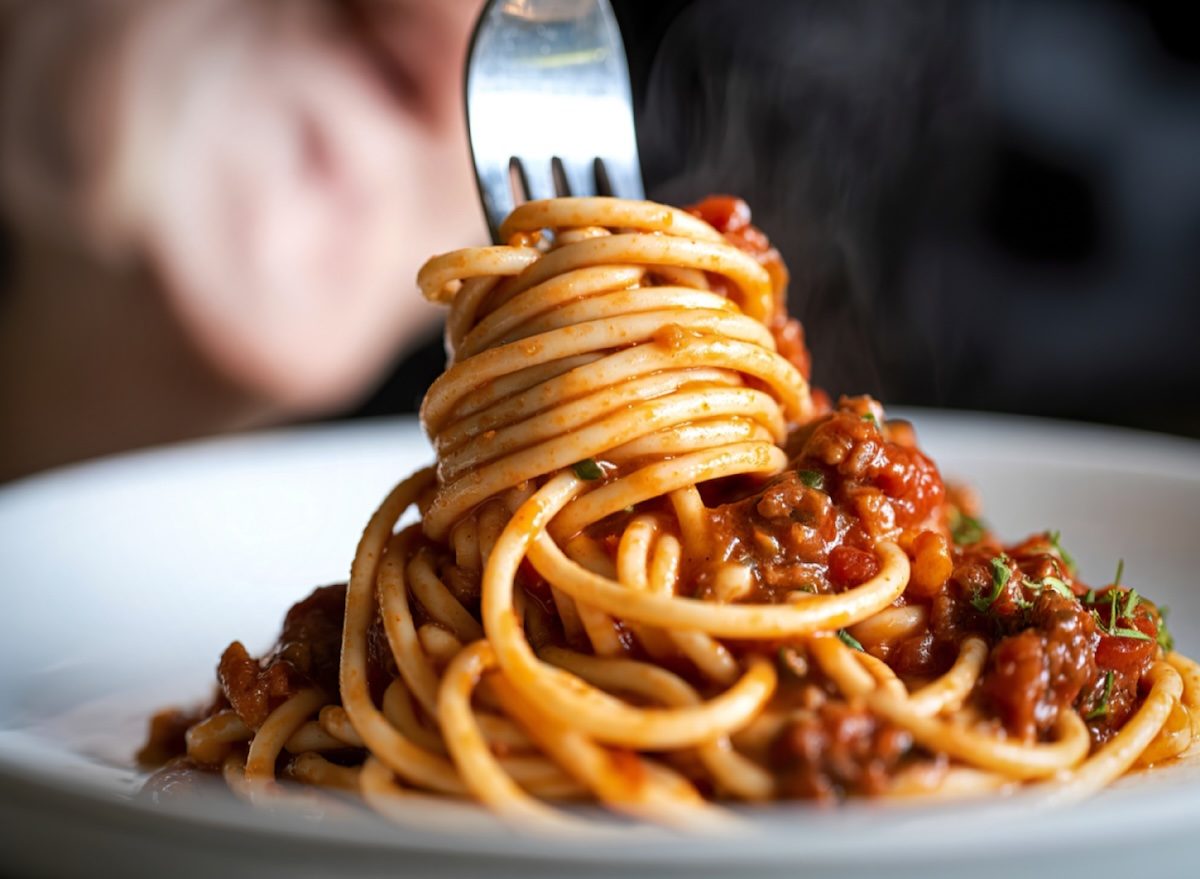
For Chef Ingber, the top contender in the national chain space is undoubtedly Maggiano’s Little Italy. Their Fettuccine Bolognese has become a benchmark for many diners, and for good reason.
The Craft Behind the Plate
Maggiano’s utilizes a blend of beef and Italian sausage, creating a depth of flavor that is often missing in simplified versions of the dish. By allowing the sauce to simmer for hours, the fats and proteins emulsify into a rich, savory coating.
"It’s meat first, tomato second, the way it’s done in Emilia-Romagna," Ingber notes. "The sauce is constructed to cling to the pasta rather than pool underneath it. You aren’t just eating pasta with a side of sauce; you are eating a cohesive, integrated dish where the meat is the star."
Why It Resonates
The popularity of the Maggiano’s version stems from its consistency. In a landscape where chains often rotate menus to keep up with trends, Maggiano’s has remained committed to the fundamentals. It satisfies the craving for "old-school" Italian comfort without feeling mass-produced.
2. Buca di Beppo: Embracing the "Unapologetic" Style
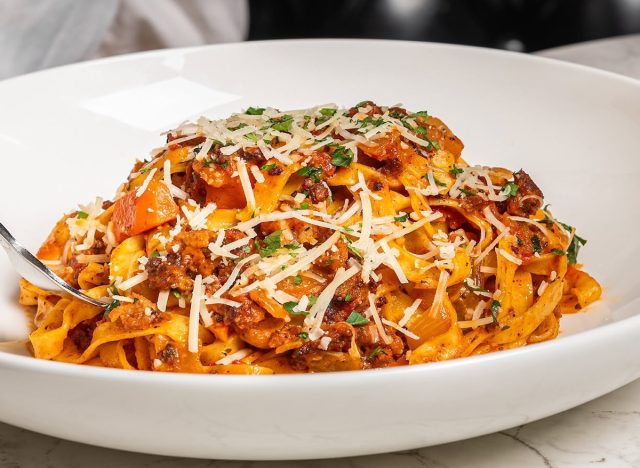
While some diners seek refinement, others seek the festive, communal experience that only a chain like Buca di Beppo can provide. Their Bolognese Pappardelle is a masterclass in the "more is more" philosophy of American-Italian dining.
The Appeal of the Family-Style Approach
Buca di Beppo is famous for its large-format portions intended for sharing. According to Chef Ingber, this is exactly where the charm lies. "Buca’s Bolognese is hearty, unapologetic red-sauce cooking," he says. "The portions are built for the middle of the table, designed to anchor a family gathering."
Culinary Implications
The choice of pappardelle—a wide, flat egg noodle—is a deliberate move to support the heavy, robust ragù. While it may lack the subtle, nuanced acidity of a fine-dining preparation, it excels in comfort. For diners who equate "Italian" with warmth, generosity, and bold flavors, Buca di Beppo provides a quintessential experience that isn’t trying to be anything other than a crowd-pleaser.
3. North Italia: Elevating the Chain Experience
If Maggiano’s is the traditionalist and Buca is the entertainer, North Italia acts as the modern innovator. By focusing on scratch-made ingredients, North Italia bridges the gap between a convenient national chain and a high-end, chef-driven boutique restaurant.
The Power of House-Made Pasta
The defining feature of North Italia’s Bolognese is the pasta itself. Fresh, house-made noodles provide a structural integrity and a "tooth" (al dente bite) that dried pasta simply cannot replicate.
"North Italia makes their pasta in-house, and fresh pasta changes everything about how a Bolognese eats," Ingber observes. "The sauce feels tighter, more refined. It hits the palate with a level of sophistication that is closer to what you would expect at a local, independent trattoria."
Why It Matters
For consumers who are increasingly wary of "processed" chain food, North Italia offers transparency. The emphasis on technique—properly emulsifying the sauce with pasta water and ensuring the freshness of the egg noodles—demonstrates that even at scale, quality remains possible.
4. Bravo! Italian Kitchen: The Virtue of Simplicity
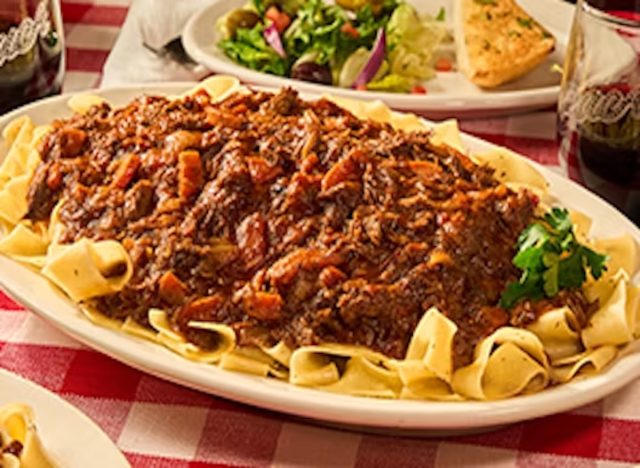
Sometimes, in the search for complex flavors and culinary innovation, we lose sight of the beauty in simplicity. Bravo! Italian Kitchen earns a recommendation from Chef Ingber precisely because it refuses to overcomplicate a classic.
The No-Gimmick Philosophy
"Bravo keeps it traditional," says Ingber. "It’s a slow-cooked meat sauce over pasta with no gimmicks. Sometimes, the version that doesn’t reinvent anything is the one that satisfies the most."
In a market saturated with "fusion" pasta dishes, Bravo’s adherence to the fundamentals is refreshing. It serves as a reminder that a well-executed, classic Bolognese—balanced in fat, acidity, and meat-to-pasta ratio—is timeless.
5. Brio Italian Grille: The Wine-Forward Contender
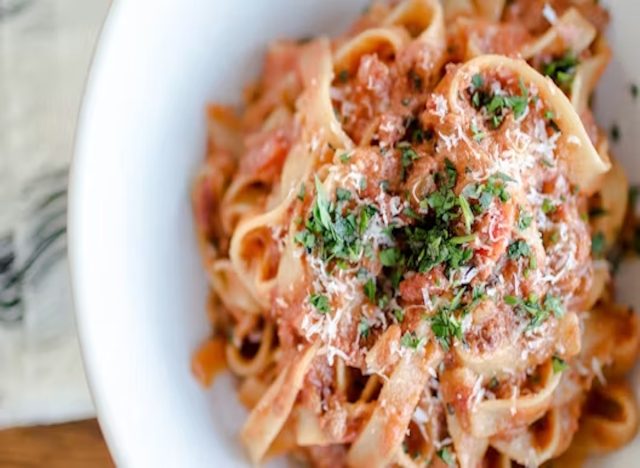
For those who view dinner as a leisure activity—paired with a robust glass of red wine—Brio Italian Grille offers a distinct profile that Chef Ingber categorizes as "Tuscan-inspired."
The Rustic Character
The key to Brio’s version is its acidity and depth, achieved through a heavier reliance on wine in the braising process. "Brio leans rustic," Ingber explains. "It has a deeper, wine-forward flavor in the sauce. It pairs exactly the way a Bolognese should, which is to say, it is built for a glass of red and a long, drawn-out dinner."
Supporting Data: Why Bolognese Remains a Category Leader
Market research indicates that Bolognese (often labeled as "meat sauce" or "ragù") remains one of the top three most ordered pasta dishes in the United States. Its success is rooted in:
- The Comfort Factor: During economic volatility or stressful times, diners trend toward "familiar" comfort foods.
- Nutritional Perception: Compared to cream-based sauces (like Alfredo), consumers often perceive a tomato-based meat sauce as a more balanced meal, offering protein and fiber alongside carbohydrates.
- Versatility: It is a dish that appeals to all age groups, making it the "safe" choice for family outings.
Implications for the Future of Chain Dining
The insights provided by Chef Steve Ingber suggest a shifting landscape. As consumers become more food-literate, the "all chains are the same" narrative is dying out. Chains that invest in house-made pasta (like North Italia) or long-simmering techniques (like Maggiano’s) are positioning themselves to survive in an increasingly competitive market.
For the casual diner, this means that convenience no longer has to come at the expense of quality. Whether you are looking for a massive, family-style platter to share or a refined, fresh-pasta experience, there is a national Italian chain that respects the history of the Bolognese.
Final Thoughts
Next time you find yourself at one of these establishments, take a moment to evaluate the sauce. Does it coat the pasta? Can you taste the hours of labor? Is it meat-forward? By applying these criteria, you can elevate your dining experience from a simple meal to a culinary appreciation of one of Italy’s greatest contributions to the global table.
Reporting by Heather Newgen, with expert insights provided by Chef Steve Ingber of MileHighCook.