










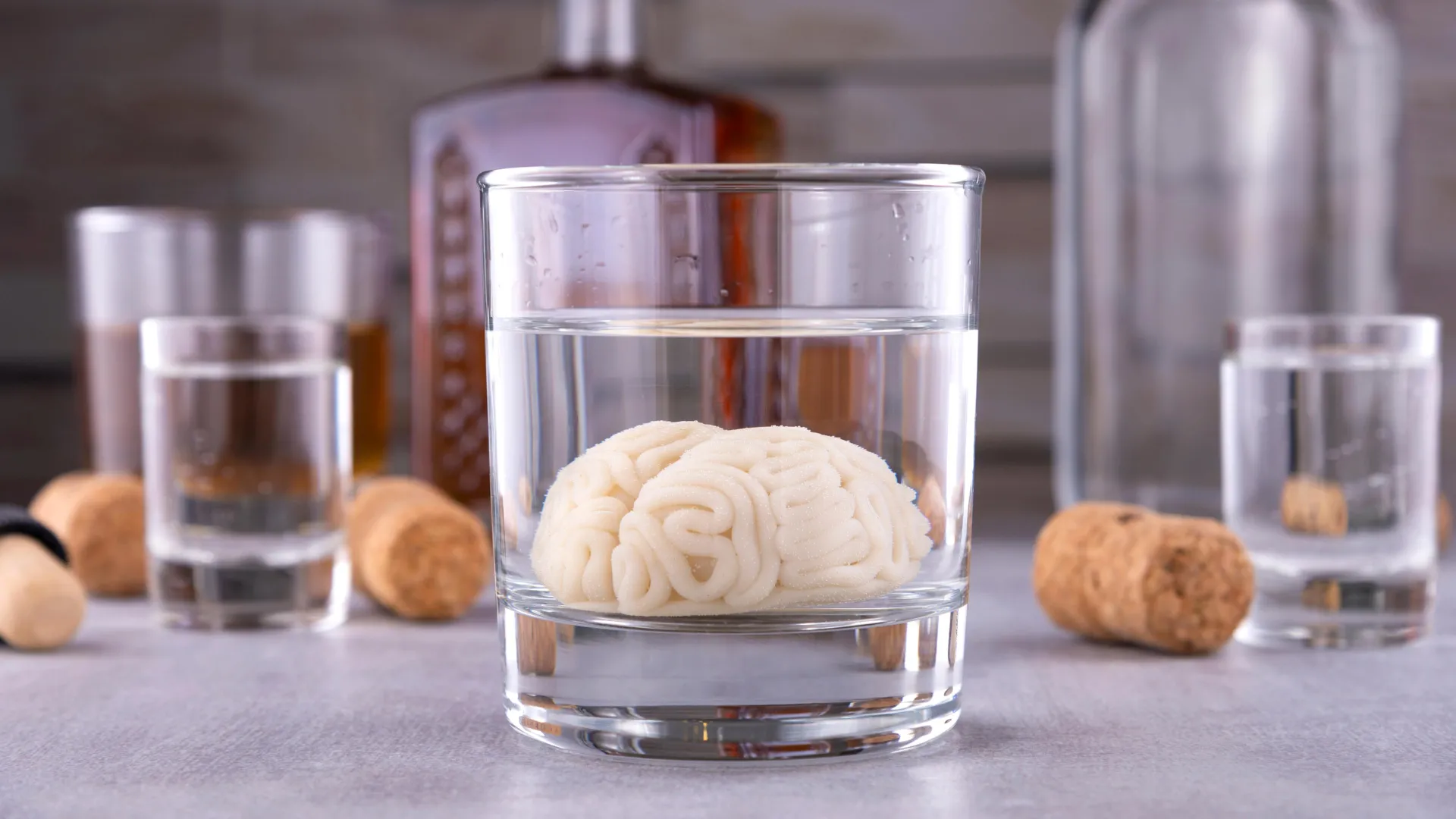
In the ongoing battle against the public health crisis of alcohol use disorder (AUD), the medical community has long championed abstinence as the gold standard for recovery. Yet, despite the well-documented health benefits of avoiding alcohol, relapse remains a pervasive and frustratingly common reality for millions. New research suggests that the answer to this "revolving door" of recovery may lie not in a lack of willpower, but in the physiological changes the brain undergoes during periods of forced sobriety.
A groundbreaking study involving mouse models has uncovered that forced abstinence may prime the brain for relapse, creating a neural environment that drives compulsive, aversion-resistant drinking. By identifying a specific region of the brain that acts as a "relapse trigger," researchers are beginning to map a path toward better screening, more effective clinical interventions, and a deeper understanding of why some individuals struggle more than others to maintain sobriety.
The Paradox of Abstinence: Uncovering the Root of Relapse
For decades, addiction researchers have theorized that the brain does not simply "reset" when alcohol is removed; rather, it adapts to the absence of the substance in ways that may paradoxically increase the risk of relapse. To test this, researchers conducted a study on mice, providing them with long-term voluntary access to alcohol, followed by a period of forced abstinence.
The findings were striking. A subset of the abstinent mice developed what researchers call "aversion-resistant alcohol intake." When the scientists added quinine—a substance that makes liquids taste intensely bitter—to the alcohol, these mice continued to consume it, often in even greater quantities than they had before the forced abstinence period.
This behavior mirrors the clinical reality of AUD in humans, where individuals often persist in drinking despite severe negative consequences, such as health issues, social isolation, or legal ramifications. The study suggests that abstinence itself may induce bodily challenges that compel the brain to seek out alcohol with renewed, and sometimes desperate, intensity.
Chronology of a Neural Shift: The Role of the BNST
To understand the mechanics behind this behavior, the research team focused on a small, almond-shaped collection of cells known as the bed nucleus of the stria terminalis (BNST). Long implicated in the regulation of emotional states like anxiety and depression, the BNST is a critical hub for the brain’s stress-response system.
Mapping the Impulse
The research team monitored the activity of neurons within the BNST during various stages of the study:
- Baseline Phase: Mice were given voluntary access to alcohol, establishing a baseline for consumption.
- Forced Abstinence: The mice were deprived of alcohol for a set period.
- The Re-entry Phase: Upon returning the mice to the environment where alcohol was previously available, the researchers observed a marked change. Even when the spout contained only water, the mice attempted to drink from it—a clear indicator of "craving" or habit-driven seeking behavior.
- Hyper-Activity Measurement: The researchers discovered that the abstinent mice who had developed a taste for the bitter, "aversion-resistant" alcohol showed more than double the neural activity in the BNST compared to the control group.
Perhaps most significantly, this surge in BNST activity was detected before the mice were given access to the bitter alcohol. This indicates that the brain is essentially "primed" for relapse, signaling a state of heightened vulnerability that could potentially be measured.
Supporting Data: A Growing Public Health Crisis
The implications of this research are set against a backdrop of worsening statistics in the United States. While the public often views alcohol as a socially acceptable, even celebratory substance, the medical reality is stark.
- The Mortality Gap: In 2024, deaths associated with alcohol use were 4.5 times higher than those attributed to the opioid epidemic, a disparity that often goes unnoticed in mainstream discourse.
- Widespread Prevalence: Over 80% of Americans aged 12 and older consume alcohol at some point in their lives. Among this population, roughly 10%—nearly 30 million people—will develop AUD.
- The "Doubling" Effect: Since 1999, the number of individuals diagnosed with AUD in the United States has effectively doubled.
Despite the availability of FDA-approved treatments, the diagnostic and recovery landscape remains stagnant. Currently, clinicians have few tools to predict which patients are at the highest risk for relapse, leading to a "one-size-fits-all" approach that often fails to account for the unique neurological state of the individual in early recovery.
Official Perspectives and Clinical Implications
Public health experts have long advocated for a more nuanced approach to addiction. While "harm reduction" has become a cornerstone of opioid use disorder treatment, the field of alcohol recovery has remained tethered to the traditional abstinence model.
The current study does not suggest that abstinence is ineffective; rather, it highlights that the early stages of abstinence are a physiological danger zone. By recognizing that the BNST is overactive during this period, clinicians might eventually be able to screen patients to identify who is most at risk.
A New Diagnostic Frontier
If the findings in mice can be replicated in human subjects—a process already underway in laboratories like those led by Jennifer Blackford—the BNST could become a biological marker for addiction severity. Using brain-imaging technology, clinicians might be able to monitor the activity of this region to determine whether a patient requires more intensive intervention, such as specialized medication or behavioral therapy, during the fragile weeks of early sobriety.
What Lies Ahead: From Bench to Bedside
While the correlation between BNST activity and relapse-prone behavior is promising, many questions remain. The scientific community is currently grappling with several key unknowns:
- The Mechanism of Action: It remains unclear exactly what drives the surge in BNST activity. Is it a compensatory mechanism for the loss of dopamine, or is it an overreaction of the brain’s "anxiety circuit" attempting to cope with withdrawal?
- Cellular Specificity: The BNST is a complex structure containing various types of neurons. Identifying which specific cells are responsible for encoding this "relapse signal" is the next crucial hurdle for researchers.
- Translational Validation: The most significant step forward will be confirming these findings in humans. Jennifer Blackford’s ongoing research into the brains of individuals in early abstinence is the litmus test for the theory. If her team observes the same hyper-activity in human BNST, it could pave the way for a new era of "precision addiction medicine."
The Future of Neuro-Manipulation
Emerging tools in neuroscience are providing researchers with the ability to manipulate specific neurons with unprecedented precision. By using optogenetics and other advanced techniques, the team is working to determine whether quieting the BNST in mice can actually prevent the shift toward aversion-resistant drinking.
If researchers can successfully modulate this activity, it could lead to the development of new pharmacological targets—drugs designed specifically to calm the overactive BNST and ease the psychological burden of early recovery.
Conclusion: Reframing the Recovery Narrative
The persistent nature of alcohol use disorder has often led to stigmatization, with relapses being framed as a failure of character or motivation. This study provides a vital counter-narrative: relapse may be a predictable, biological consequence of the brain’s attempt to regulate itself during abstinence.
By shifting the focus from "willpower" to "neural architecture," the medical community is moving closer to a future where addiction is treated with the same scientific rigor and precision as any other chronic disease. While there is still much to learn about the complexities of the BNST and the biology of the addicted brain, the path forward is becoming clearer. Identifying the neurological precursors to relapse is not just a scientific victory—it is a critical step toward providing the millions of people suffering from AUD with the tools they need to reclaim their health and their lives.