









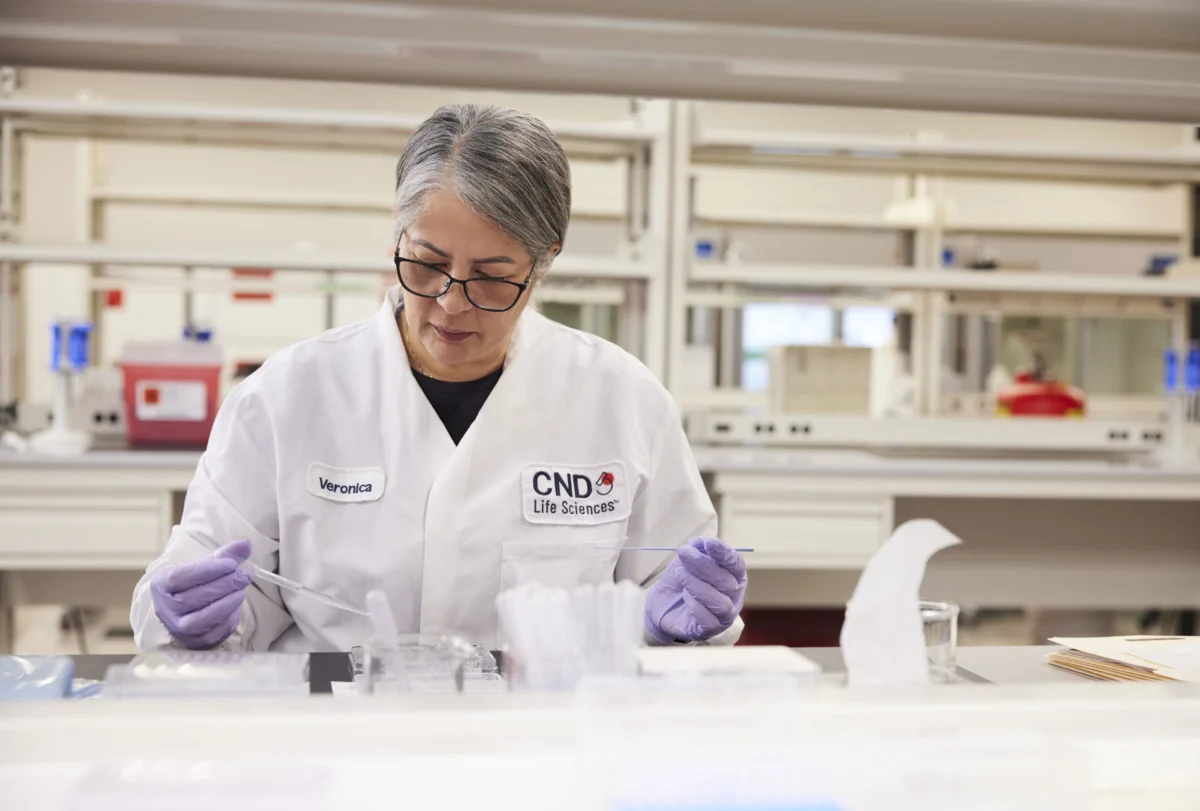
In a significant milestone for the field of precision neurology, CND Life Sciences has successfully closed a new round of growth financing. Led by S-Curve Partners—an operator-led healthcare investment firm—the capital infusion marks a pivotal moment for the company as it seeks to scale its innovative, skin-biopsy-based diagnostic platform. This funding will catalyze the expansion of the Syn-One Test, a tool that has already begun to redefine how clinicians identify and manage complex neurodegenerative conditions, particularly synucleinopathies.
As the medical community shifts toward earlier intervention and personalized medicine, CND’s mission to provide objective, biomarker-based insights has never been more relevant. By transforming the diagnostic landscape for diseases like Parkinson’s and REM sleep behavior disorder (RBD), CND is moving the needle from clinical guesswork to evidence-based precision.
Main Facts: The Power of the Syn-One Test
At the heart of CND Life Sciences’ growth is the Syn-One Test, a proprietary, commercially available laboratory-developed test (LDT) that represents a departure from traditional, symptom-based diagnosis. Unlike conventional neurological assessments that rely heavily on patient history and observational clinical scales, the Syn-One Test utilizes a minimally invasive skin biopsy to detect phosphorylated alpha-synuclein.
Alpha-synuclein is a protein that, when misfolded and aggregated in the skin’s nerve fibers, serves as a hallmark of synucleinopathies—a group of neurodegenerative diseases that includes:
- Parkinson’s Disease (PD)
- Dementia with Lewy Bodies (DLB)
- Multiple System Atrophy (MSA)
- REM Sleep Behavior Disorder (RBD)
By identifying these pathological markers directly, the Syn-One Test provides clinicians with the "objective evidence" required to differentiate between overlapping conditions. Since its commercial debut in 2020, the platform has seen rapid adoption. To date, more than 4,000 neurologists and specialists across the United States have utilized the test to evaluate over 60,000 patients, establishing a robust foundation for the company’s future scaling efforts.
Chronology of Development: From Concept to Clinical Standard
The trajectory of CND Life Sciences reflects a steady, evidence-driven approach to market entry.
- Pre-2020: The Foundation. CND focused on validating the science of cutaneous phosphorylated alpha-synuclein as a reliable biomarker. This involved years of clinical studies and peer-reviewed research to demonstrate that nerve fibers in the skin accurately reflect the pathology occurring within the central nervous system.
- 2020: The Commercial Launch. CND officially brought the Syn-One Test to the commercial market. The timing was critical, as the neurology field began clamoring for tools that could provide more definitive answers for patients with movement and sleep disorders.
- 2020–2024: Rapid Scaling. Over four years, the company successfully integrated the test into the clinical workflows of thousands of private practices and academic medical centers. The volume of 60,000+ tests performed highlights a high level of physician trust and clinical utility.
- 2024: The Strategic Infusion. The most recent financing round led by S-Curve Partners provides the capital necessary for "Version 2.0" of the company—moving from a single-product success story to a broader, multimodal diagnostic platform.
Supporting Data: Why Objective Biomarkers Matter
The necessity for CND’s technology is rooted in a sobering reality: neurodegenerative diseases are notoriously difficult to diagnose in their early stages. Current diagnostic accuracy for many synucleinopathies remains suboptimal, with significant rates of misdiagnosis occurring even in specialized clinics.
The clinical evidence supporting the Syn-One Test is substantial. Studies published in leading neurological journals have consistently shown that phosphorylated alpha-synuclein deposition in the skin is highly correlated with the presence of synucleinopathies. This biomarker-based approach provides several distinct advantages:
- Diagnostic Certainty: It allows clinicians to confirm a suspicion of a synucleinopathy, reducing the "diagnostic odyssey" that many patients endure.
- Early Identification of RBD: REM sleep behavior disorder is often a "prodromal" or precursor state to Parkinson’s or other diseases. Identifying this marker early allows for proactive patient monitoring and potential enrollment in clinical trials for disease-modifying therapies.
- Refining Research Cohorts: For pharmaceutical companies, the Syn-One Test provides a standardized way to identify and recruit the right patient populations for clinical trials, thereby increasing the probability of success for new drug candidates.
Official Responses: A Shared Vision for the Future
The leadership at both CND Life Sciences and S-Curve Partners expressed strong alignment regarding the strategic importance of this funding.
Rick Morello, CEO of CND Life Sciences, emphasized the validation provided by investors:
"We are pleased to deepen our relationship with S-Curve Partners and grateful for the continued support of existing investors and shareholders. S-Curve’s confidence in CND’s mission reflects the progress our team has made in expanding clinical adoption and advancing the science behind our scalable neurodiagnostics platform."
Dr. Todd Levine, MD, Chief Medical Officer and Co-Founder at CND, highlighted the clinical shift toward precision:
"As a neurologist, I am encouraged to see the neuroscience field move toward multimodal biomarkers and earlier intervention. This financing gives us the flexibility to invest in innovation, expand access to the Syn-One platform, and strengthen our pharmaceutical and research relationships."
Daniel Livschutz, Founding Partner at S-Curve Partners, noted the broader market context:
"Neurodegenerative diseases remain among the most underdiagnosed and misdiagnosed conditions in medicine. We believe CND has built one of the most differentiated platforms in neurodiagnostics, and this financing is intended to accelerate its evolution from a category-defining product to a broader platform supporting earlier diagnosis, disease differentiation, and more personalized care."
Implications: The Future of Neuro-Diagnostics
The successful funding round is not merely a financial transaction; it is a signal of a larger transformation within the healthcare industry. Several key implications arise from CND’s next phase of growth:
1. The Shift to Multimodal Diagnostics
While the Syn-One Test is currently the flagship, the future lies in "multimodal biomarker capabilities." This means that CND is moving toward integrating skin biopsy data with other diagnostic signals—potentially genetic markers, imaging, or digital biomarkers—to create a holistic "disease profile" for each patient. This level of granularity is essential for the next generation of precision medicine.
2. The Impact of Disease-Modifying Therapies
The neurology field is currently witnessing a historic influx of new therapies targeting the underlying causes of neurodegeneration rather than just symptoms. As these therapies move toward FDA approval, the demand for objective diagnostic tests will skyrocket. Pharmaceutical companies require clear metrics to prove that their drugs are impacting the pathology, and CND is positioned to be a primary partner in these research efforts.
3. Improving Patient Quality of Life
For the patient, the impact of this technology is profound. A diagnosis of Parkinson’s or dementia is life-altering, but the period of uncertainty preceding that diagnosis is often characterized by anxiety and ineffective treatments. By providing a clear, scientifically backed result, CND is helping patients receive the right care, at the right time, while sparing them unnecessary testing and prolonged uncertainty.
4. Setting a New Standard for Care
The widespread adoption of the Syn-One Test among 4,000+ clinicians suggests that the "gold standard" for diagnosing synucleinopathies is shifting. As the medical establishment moves away from purely observational diagnostics, CND’s platform is likely to become a mandatory component of standard neurological workups, much like a blood panel or an MRI scan is for other conditions.
Conclusion
As CND Life Sciences prepares to enter its next chapter, the convergence of robust clinical evidence, a proven diagnostic platform, and strong financial backing positions the company at the epicenter of a neurological revolution. By bridging the gap between molecular pathology and clinical practice, CND is not only enhancing the accuracy of today’s diagnoses but is also laying the infrastructure for the therapies of tomorrow. In the fight against neurodegeneration, objective data is the most powerful weapon—and with this new investment, CND is sharpening that weapon for the benefit of clinicians and patients worldwide.