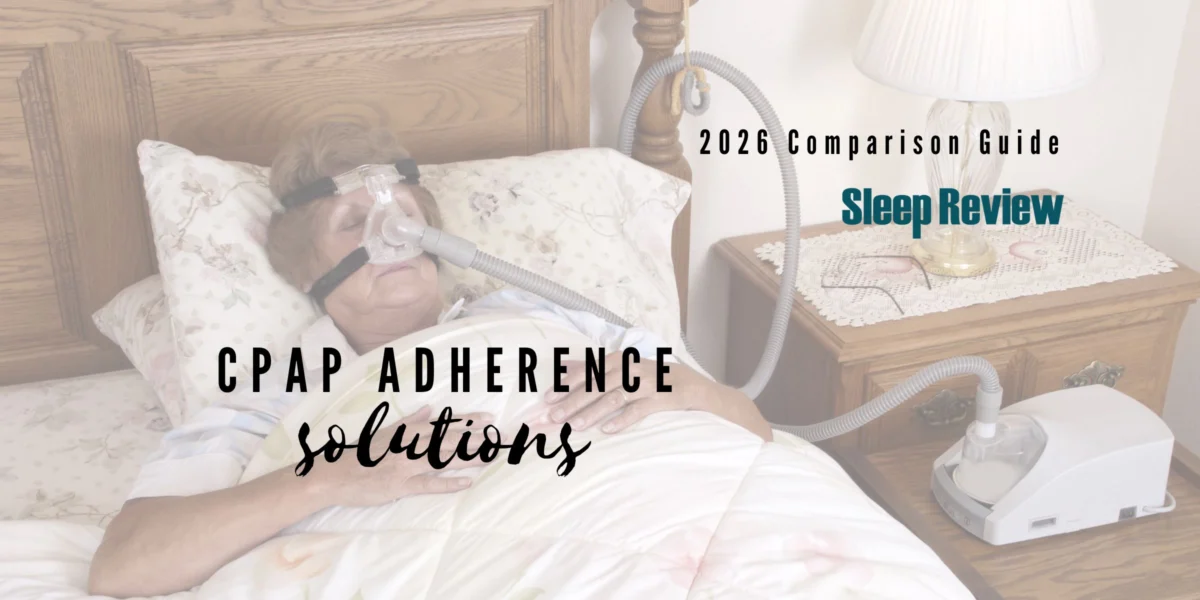
Continuous Positive Airway Pressure (CPAP) therapy remains the gold-standard treatment for obstructive sleep apnea (OSA), a condition affecting millions worldwide. Yet, for all its clinical efficacy, CPAP therapy faces a persistent and systemic challenge: patient adherence. The therapy is only as effective as the patient’s willingness to use it, and the stakes for non-adherence have never been higher.
In the current healthcare landscape, payors—including Medicare—enforce a strict "90-day compliance" rule. If a patient does not demonstrate consistent usage within the first three months of therapy, the equipment is often revoked, and reimbursement is halted. This creates an immense operational burden for sleep disorders centers, private practices, and Durable Medical Equipment (DME) providers, who are now tasked with managing the long-term habits of a diverse patient population. As a result, a growing number of clinical operations are looking toward specialized third-party vendors to manage CPAP adherence, moving away from in-house labor-intensive models toward sophisticated, tech-enabled outsourcing.
The Evolution of CPAP Management: A Chronology
The history of sleep apnea treatment has shifted from a clinical focus on diagnostics to a long-term focus on patient behavior.
- The Early Era (Pre-2010s): CPAP management was largely reactive. Patients were issued devices, given basic instructions, and sent home. Follow-ups were infrequent, often occurring only if the patient reported a problem or during a scheduled annual check-up.
- The Compliance Mandate (2010s–2020): Payors began formalizing the "90-day" window, requiring proof of usage (typically 4 hours per night for 70% of nights) to qualify for continued coverage. This forced clinics to become monitoring hubs, tasking nurses and respiratory therapists with checking data logs manually.
- The Digital Transformation (2020–Present): With the advent of cloud-connected devices, "remote patient monitoring" (RPM) became the industry standard. However, the sheer volume of data generated proved overwhelming for small practices. This led to the rise of specialized SaaS platforms and managed service vendors that utilize Artificial Intelligence (AI) and dedicated coaching teams to bridge the gap between data and patient action.
The Resource Burden: Why In-House Monitoring Fails
For a standard sleep lab, the math of adherence management is increasingly difficult to justify. Managing thousands of patients requires 24/7 monitoring, proactive engagement, and rapid intervention when a patient struggles with mask comfort, pressure settings, or psychological barriers.
When a small practice attempts to handle this internally, staff burnout is a common consequence. Clinical teams are pulled away from patient diagnostics—their core revenue-generating activity—to troubleshoot minor equipment issues. This has created a "service gap" that third-party vendors are filling by offering specialized, scalable solutions.
The Role of Technology and AI
Modern vendors do not merely monitor data; they curate it. Using Artificial Intelligence, platforms can now "phenotype" patients, categorizing them based on their comorbidities, demographic factors, and usage patterns. This allows for predictive interventions. For instance, if an AI detects that a patient has stopped using their device at 2:00 AM, the system can automatically trigger a text message offering specific troubleshooting advice, rather than waiting for a human clinician to notice the trend days later.
Supporting Data: Do External Solutions Work?
The evidence supporting the use of specialized adherence management is compelling. Across the industry, providers are reporting significant improvements in both short-term compliance and long-term retention.
- BetterNight: Tracking over 50,000 patients daily, BetterNight has consistently achieved Medicare adherence rates between 75% and 85%. Their "Clarity" system allows for exception-based management, ensuring staff focus only on patients who are actively struggling.
- Neru Health: By utilizing a hybrid model where AI handles roughly 80% of routine patient interactions, Neru Health has reported a 10%–20% increase in Medicare adherence rates compared to baseline, while simultaneously reducing clinical call volume by 34%.
- ResMed (myAir/AirView): Research published in the Journal of Clinical Sleep Medicine indicates that patients using the myAir app are twice as likely to achieve the CMS-defined 90-day adherence goal compared to non-users. Furthermore, over 80% of these users remain engaged with their therapy after one full year.
- Sanusom Inc: Utilizing a searchable intervention engine, Sanusom has helped providers achieve 90-day compliance rates 16% higher than the industry average, with 180-day adherence figures sitting 33% above the norm.
Official Vendor Landscape: A Comparative Overview
The following table highlights the current solutions available to providers seeking to outsource their CPAP adherence management:
| Company | Key Solution | Best For |
|---|---|---|
| BetterNight | Clarity | Large health systems, Sleep Centers |
| Neru Health | AI CPAP Coach | Practices looking for high-level AI automation |
| ResMed | myAir / AirView | Global standard, widely integrated |
| rtNOW | rtNOW Adherence | Practices valuing human-to-human RT contact |
| Sanusom | Sanusom | Reducing clinical escalations via software |
| sovaSage | sovaGuide | Scalable, AI-driven SaaS workflows |
| VGM Group | Total Sleep Services | End-to-end HME/DME support |
Implications for the Future of Sleep Medicine
The shift toward outsourcing CPAP adherence management has profound implications for the future of sleep medicine.
1. Shift from Transactional to Relationship-Based Care
The "90-day" window has long forced a transactional relationship between the patient and the provider. By leveraging automated systems and dedicated coaching vendors, providers can extend the relationship beyond the initial compliance phase. This transition is vital; research shows that long-term adherence—years after the initial diagnosis—is what actually reduces the risks of cardiovascular disease, stroke, and metabolic disorders associated with untreated OSA.
2. Standardization of Care
Historically, the quality of patient follow-up was dependent on the size and resources of the local sleep lab. A patient in a large urban hospital might receive gold-standard support, while a patient in a rural private practice might receive very little. Outsourced solutions democratize access to high-quality adherence tools, ensuring that all patients, regardless of their location, receive the same level of automated monitoring and timely intervention.
3. The Economic Imperative
For DMEs and sleep centers, the economic pressure is mounting. As reimbursement rates fluctuate and regulatory requirements tighten, efficiency is the only path to profitability. Outsourcing, while an additional line-item expense, often pays for itself by preventing the loss of revenue associated with device revocation and by increasing the frequency of resupply orders—which are the lifeblood of DME operations.
4. Patient Autonomy and Empowerment
Perhaps the most significant shift is the empowerment of the patient. Many modern solutions, such as ResMed’s myAir or Neru Health’s app, put data directly into the patient’s hands. By providing real-time feedback, "gamifying" the usage process, and offering self-service troubleshooting, patients feel more in control of their own health. This shift from passive recipient of care to active participant is perhaps the most powerful tool in the fight against non-adherence.
Conclusion
The "90-day compliance" rule is a harsh gatekeeper in the world of sleep medicine, but it has acted as a catalyst for innovation. Sleep centers and providers are no longer required to act as manual monitoring stations. Through the integration of AI-driven platforms, expert-led remote monitoring, and streamlined patient engagement tools, the industry is moving toward a more sustainable and effective model of care.
As the data confirms, the secret to long-term CPAP success is not found in the initial setup, but in the sustained support that follows. For providers, the choice to outsource these tasks is no longer just about saving time; it is about embracing a technological ecosystem that ensures patients remain on therapy, remain healthy, and remain compliant long after the initial three-month hurdle is cleared.
Note: This article is based on information submitted by CPAP adherence solutions marketers. While Sleep Review strives for accuracy, it cannot be held responsible for individual company claims. Providers are encouraged to conduct their own due diligence when selecting a vendor partner.