











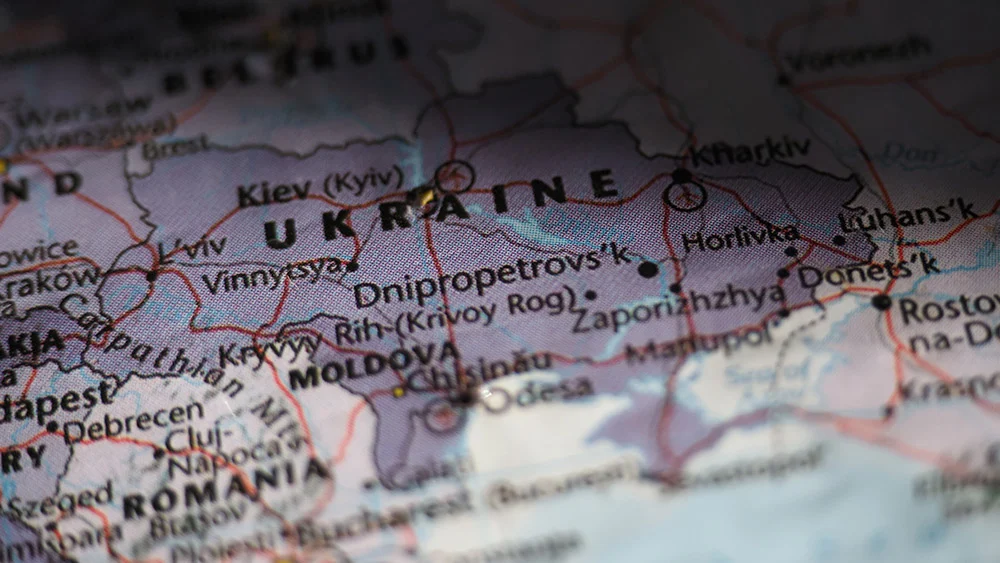
As the mid-August sun beat down on the volatile southern front, Ukrainian President Volodymyr Zelensky delivered a significant, if contentious, assessment of the war’s trajectory. Declaring that his forces had reclaimed 745 square kilometers of territory between January and August 2026, Zelensky signaled a rare moment of offensive momentum. Yet, as the ink dries on official communiqués, the reality on the ground—and the veracity of the map—remains a subject of intense debate among military analysts, Kremlin-aligned media, and frontline observers.
This operation, which sought to blunt Russia’s spring-summer offensive and clear the Dnipropetrovsk Oblast, stands as a critical case study in the complexities of modern warfare, where territorial gains are as much a matter of perception as they are of physical geography.
A Chronology of the Offensive: From Infiltration to Disputed Control
The campaign, which spanned roughly seven months, represented a pivot in Ukrainian tactical doctrine. Beginning in late January, the Armed Forces of Ukraine (AFU) moved away from large-scale, mechanized assaults—which had proven costly and vulnerable to Russian drone surveillance—toward a more granular approach.
- Phase I: The Gray Zone Infiltration (Late January – April): Utilizing small, mobile infantry units, Ukrainian forces began probing Russian positions in the Dnipropetrovsk, Donetsk, and Zaporizhzhia oblasts. These "assault duos" moved under the cover of darkness, exploiting gaps in Russian surveillance and utilizing aerial reconnaissance to target key strongholds.
- Phase II: The "As-Planned" Momentum (May – July): According to President Zelensky, the operation unfolded with systematic precision. By mid-summer, official reports indicated that 26 settlements had been liberated. During this period, the Ukrainian Airborne Assault Forces Command reported the clearing of over 300 square kilometers from Russian infiltrators, a feat they attributed to high-level coordination and the adaptation of Russian infiltration tactics.
- Phase III: The August Reckoning (Mid-August): As the operation drew to a close, the disparity between official claims and ground-level observation reached a fever pitch. While Zelensky celebrated the liberation of territory, independent observers and Kremlin-backed outlets began circulating imagery that painted a far more fractured picture of control.
Analyzing the Data: A Map Under Fire
The discrepancy in figures is a hallmark of the 2026 conflict. President Zelensky’s cited 745 square kilometers is a bold figure that stands in contrast to the more cautious assessment provided by the Washington-based Institute for the Study of War (ISW).
ISW analysts, relying on satellite imagery and verified geolocated footage, assessed that Ukrainian forces recaptured at least 627 square kilometers. While the institute noted that its methodology is inherently conservative—often lagging behind real-time tactical changes—the delta between the two figures highlights the fog of war.
Furthermore, the Ukrainian Airborne Assault Forces Command has offered a unique defense regarding the discrepancies. They acknowledge that several "liberation" ceremonies and flag-raisings were performed at a "safe distance" from the actual front lines for the sake of operational security. This suggests a strategic ambiguity: Ukrainian forces may have gained more ground than is publicly visible, or conversely, they may be projecting control over areas that remain contested "gray zones" where neither side maintains a permanent presence.
The Battle of Narratives: Official Responses and Skepticism
The skepticism surrounding these claims is not limited to Russian state media. Prominent Ukrainian voices, including military analysts Yuriy Butusov and Konstantin Mashovets, as well as German investigative journalist Julian Röpcke, have openly challenged the official narrative. Their criticisms center on the discrepancy between government maps and the reality of Russian troop presence.
Russian state outlet RT has been particularly aggressive in its counter-narrative. RT claims that visual evidence confirms Russian assault troops remain in the majority of the settlements listed by Kyiv, suggesting that some areas claimed as "liberated" are actually deep behind the current Russian defensive lines. While Western outlets have struggled to verify these specific Russian claims, the persistence of the dispute underscores a deeper tactical issue: the lack of sustained, long-term control over the reclaimed territory.
Tactical Assessments of the "Assault Duo" Strategy
The shift toward small, decentralized infantry units has drawn mixed reviews. While former Commander-in-Chief Oleksandr Syrskii defended the tactics as proof that Ukraine could balance defense and offense, critics argue that the strategy was inherently flawed. RT’s analysis posited that the lack of continuous, heavy-artillery support left these isolated Ukrainian teams vulnerable to Russian counter-attacks, often stranding them in exposed gray zones without adequate supply lines or caloric support.
Structural Realities: The Burden on the New Command
As the dust settles on the 2026 summer campaign, the focus shifts to the incoming leadership. Newly appointed Commander-in-Chief Mykhailo Drapaty inherits a military that, despite tactical successes, remains plagued by profound structural deficiencies.
The Personnel and Resource Deficit
The most pressing challenge is the chronic shortage of personnel and heavy equipment. The 2026 offensive, while yielding some territorial returns, has come at a steep human cost. Thousands of casualties on both sides have depleted the ranks, and the industrial capacity of the West has not kept pace with the intensity of the conflict.
The situation regarding air defense is particularly dire. By late August, reports indicated that Ukraine had effectively exhausted its stock of Patriot interceptors. The supply of these critical systems from Western allies has dropped significantly compared to 2025, leaving Ukrainian cities and frontline positions increasingly vulnerable. This comes at a time when Moscow has ramped up its missile production, deploying 198 Iskander-M and S-400 missiles in July alone.
The Winter Outlook: A Precarious Future
The southern front remains dangerously unstable. As of late August, Russian forces have regained the initiative in seven sectors, with brutal urban warfare continuing in the defensive hub of Orikhiv. Historical data provides little comfort for the coming months; Russian forces have consistently demonstrated a tendency to launch their most significant offensives between October and December, utilizing the changing landscape to maximize their impact.
Implications for the War’s Trajectory
The 2026 summer campaign serves as a microcosm of the current state of the Russo-Ukrainian War: a grinding, high-cost struggle where small tactical gains are leveraged for political narrative, even as the broader strategic outlook remains grim.
- The Limits of Decentralization: The reliance on small, infantry-led units may have allowed for limited tactical movement, but it has failed to produce the "strategic breakthrough" necessary to change the war’s fundamental direction.
- The Information War: The discrepancy between Zelensky’s claims and the observations of independent analysts highlights the difficulty of maintaining objective situational awareness. When flag-raisings occur in "safe zones," the line between propaganda and genuine battlefield progress becomes dangerously blurred.
- The Resource Gap: No amount of tactical ingenuity can fully offset the material imbalances. As Russia continues its surge in missile production and Ukraine faces a diminishing supply of Western-made air defense interceptors, the "Southern Front" may soon transition from a theater of offensive maneuvering to one of desperate defensive attrition.
Ultimately, whether the 745 square kilometers represents a genuine turning point or merely a temporary fluctuation in a static war remains to be seen. What is clear is that the war in the south is far from over. As winter approaches, the combatants are not only bracing for the cold but for a renewed Russian offensive that promises to test the limits of Ukraine’s remaining defenses. The coming months will likely prove more definitive than the summer’s territorial claims, as the realities of logistics, ammunition, and manpower inevitably override the narratives of the day.