







In a groundbreaking study that challenges conventional wisdom regarding cancer progression, researchers at The Wistar Institute have uncovered a disturbing biological link: the common dietary sugar fructose may act as a potent signaling molecule that fuels the metastasis of aggressive ovarian cancer. Published in the journal Nature Aging, the study provides a new perspective on why ovarian cancer remains one of the most lethal malignancies, suggesting that the very cells that survive chemotherapy—once thought to be dormant—may actually be orchestrating the cancer’s lethal return.
Main Facts: The Signaling Secret
The research, led by Dr. Katherine Aird and postdoctoral fellow Dr. Aidan Cole, identifies a novel mechanism of tumor recurrence. While platinum-based chemotherapy is often effective in the initial treatment of ovarian cancer, the disease frequently returns, spreading throughout the abdominal cavity. This metastatic process is responsible for approximately 90% of mortality in patients.
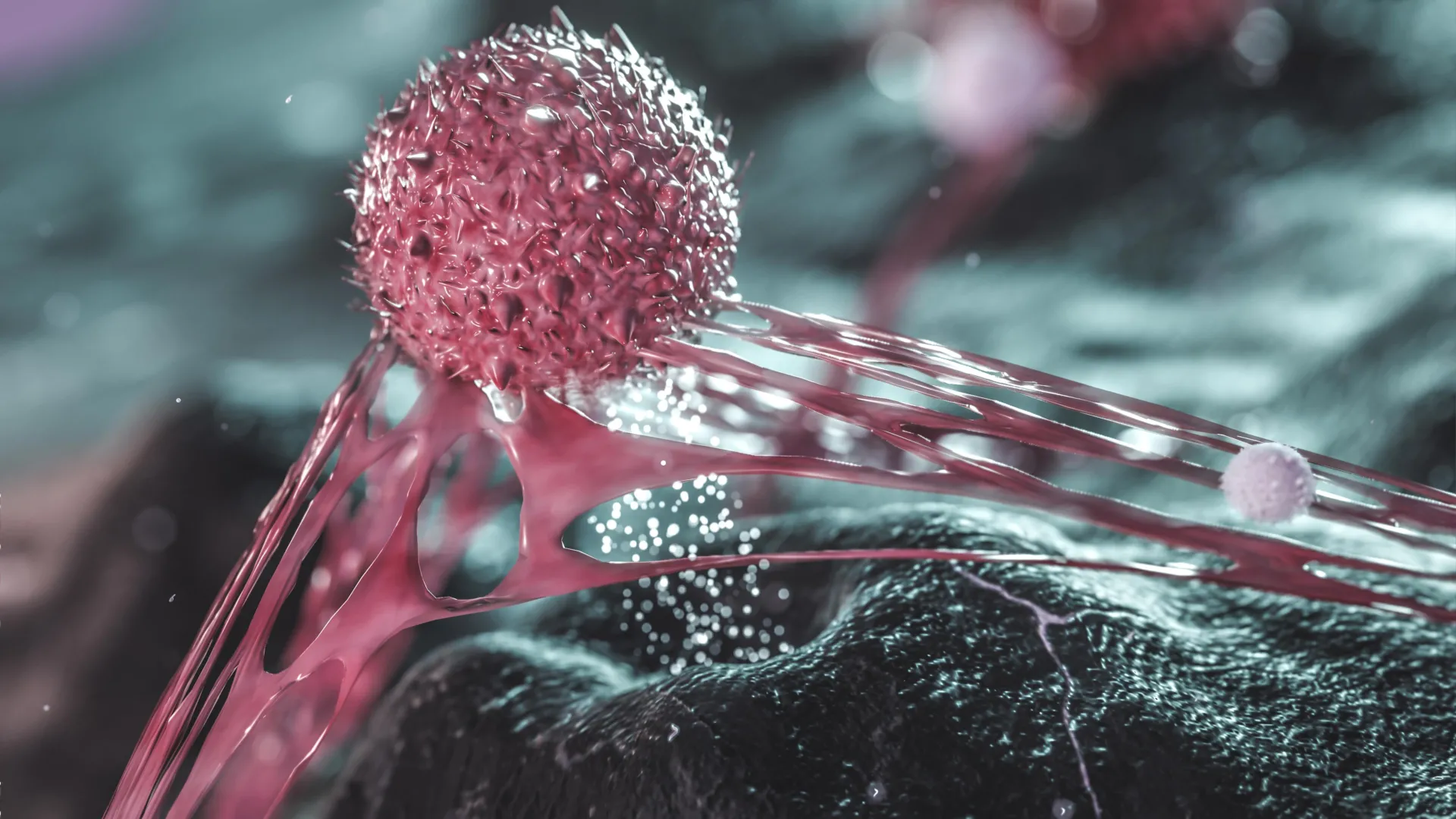
The Wistar team discovered that cancer cells that survive chemotherapy are not merely sitting idle; they are biologically active, secreting a complex cocktail of molecules that communicate with neighboring tumor cells. Among these secreted substances, the team identified fructose as a primary signal that triggers neighboring cells to detach and migrate. By lowering cholesterol production—a substance essential for maintaining the "biological glue" between cells—fructose effectively loosens the physical bonds that hold tumor cells together, facilitating their escape and subsequent spread.
A Chronological Breakdown of the Discovery
The path to this discovery was iterative, moving from cellular observations to complex preclinical models.
1. Identifying the "Surviving" Threat
The research began with the observation that chemotherapy does not eliminate all cancer cells. Although many cells die, a subset remains. These cells are no longer dividing, yet they continue to function as signaling hubs. The team sought to understand whether these cells were actively influencing their environment.
2. The Secreted Substance Experiment
To isolate the impact of these cells, the researchers developed a system to separate the surviving cells from the molecules they released. When they exposed naive, healthy cancer cells to the "secreted soup" produced by the chemotherapy-surviving cells, they observed a significant, measurable increase in the metastatic behavior of those cells. This was the first evidence in a preclinical model that the surrounding environment—not just the cells themselves—drives the spread of the disease.
3. Pinpointing Fructose
Through rigorous chemical analysis, the team identified the specific molecule responsible for this behavior: fructose. They found that high levels of dietary fructose—mimicking those found in a standard Western diet rich in sugary beverages—could induce the same aggressive, migratory behavior even in the absence of chemotherapy.
4. The Cholesterol Mechanism
Finally, using high-throughput techniques like CRISPR screening, the researchers decoded how fructose changes cell behavior. They discovered that fructose interferes with cholesterol synthesis within the cells. Because cholesterol is required to keep cells anchored to one another, its depletion acts like a solvent, dissolving the cellular bonds and allowing the cancer to mobilize.
Supporting Data: From Molecules to Metastasis
The implications of this study are backed by extensive analytical methods. The research team utilized large-scale screening to map the interaction between fructose metabolism and the structural integrity of tumor tissues.
The data reveals a concerning parallel: the mechanism triggered by fructose is similar to the effect of statins, the widely prescribed cholesterol-lowering medication used by millions of Americans. By inhibiting cholesterol production, both high fructose intake and statins appear to weaken the "adhesion" of cancer cells. This discovery necessitates a nuanced conversation regarding the intersection of diet, pharmaceutical use, and oncology.
Official Responses and Expert Perspectives
The research team is careful to frame these findings as a foundation for future investigation rather than a definitive clinical directive.
"Some cancer cells that survive chemotherapy aren’t dividing anymore, but they’re still biologically active," said Dr. Aidan Cole, the study’s first author. "Instead, they continue to release molecules that send signals to nearby cells. Our study is among the first to show that a nutrient—in this case, fructose—can act as one of those signals."
Dr. Katherine Aird, the study’s senior author and a professor at The Wistar Institute, emphasized the importance of context. "As far as we know, this is the first time anyone has shown, in a preclinical model, that it’s the molecules these cells release—not the cells themselves—that drive the cancer’s spread."
Regarding the potential risks associated with statins, Dr. Aird was cautious. "We haven’t tested this effect in patients yet, but it raises questions about combining cholesterol-lowering drugs with chemotherapy, especially since ovarian cancer is most common in postmenopausal women who are often already on statins."
Crucially, the researchers emphasize that patients should not alter their medication regimens or cease taking statins based on this study. The research is currently in the preclinical stage, and human clinical trials are required to determine if these mechanisms function identically in a complex, systemic human environment.
The Broader Implications: A New Era of Cancer Nutrition
The implications of the Wistar Institute study extend far beyond ovarian cancer. The researchers hypothesize that this fructose-driven pathway may be a universal mechanism for cancers that spread within the torso, such as pancreatic, colon, and liver cancers.
Dietary Choices as a Frontier of Care
Perhaps the most significant takeaway is the potential for nutritional intervention. Unlike genetic markers or the inherent biology of a tumor, dietary fructose intake is a modifiable risk factor. While the researchers have not yet conducted studies to prove that reducing fructose intake improves survival rates in cancer patients, the finding suggests that the "food as medicine" approach is ripe for exploration in oncology.
In the United States, where high fructose corn syrup can account for up to 20% of daily caloric intake for many individuals, the study serves as a stark reminder of the hidden systemic consequences of diet.
Future Research Directions
The Wistar Institute team has already begun planning follow-up studies. The primary goal is to replicate these findings across a wider array of cancer types and to investigate whether specific dietary modifications can be integrated into standard-of-care protocols for patients undergoing chemotherapy.
Furthermore, the team is investigating the "statins paradox." If statins potentially weaken cell adhesion, how can clinicians balance the cardiovascular benefits of cholesterol-lowering drugs with the need to prevent cancer spread? This delicate balancing act will likely define the next phase of the research, as scientists work to reconcile the benefits of life-saving medications with the unintended biological side effects they may inadvertently cause in the tumor microenvironment.
Conclusion
The study published in Nature Aging represents a shift in how we understand cancer recurrence. By identifying fructose as a biochemical messenger that promotes the escape of tumor cells, Dr. Aird, Dr. Cole, and their extensive team of collaborators have opened a new door in cancer biology. While the findings demand further validation, they underscore a vital truth: the microenvironment of a tumor is a complex ecosystem, and our dietary habits may play a more significant role in the survival and spread of cancer than previously understood.
As the medical community continues to refine personalized medicine, the role of nutrition—and its interaction with metabolic pathways—is emerging as a critical piece of the puzzle in the fight against aggressive, metastatic diseases. For now, the takeaway is clear: the science of cancer is moving beyond the tumor cell itself, into the nutrients that fuel its movement and the metabolic signals that command its spread.