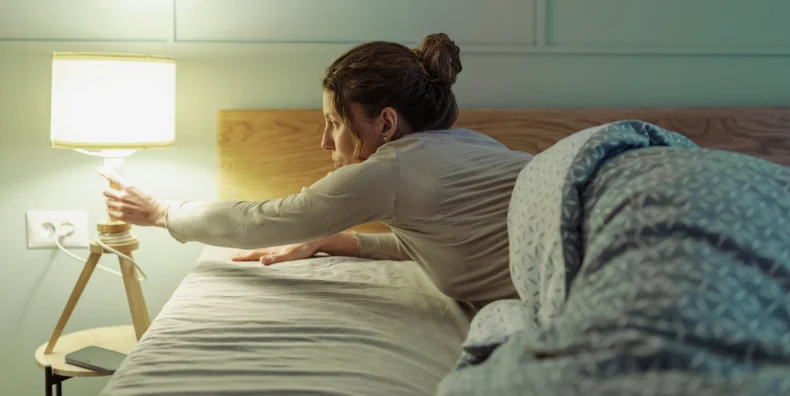
Sleep is often viewed as a passive state of rest, but for the millions of individuals living with bipolar disorder, it is a critical biological regulator. In the field of psychiatry, sleep disturbances are no longer dismissed as mere symptoms of mood episodes; they are recognized as core features of the illness that can both trigger and prolong periods of mania and depression.
Understanding the bidirectional relationship between sleep and bipolar disorder is essential for long-term stability. When sleep is disrupted, the brain’s ability to regulate emotion falters; conversely, as mood shifts, the body’s internal clock—the circadian rhythm—often becomes the first casualty. This article explores the clinical facts, the chronological progression of sleep issues across mood states, and the therapeutic implications for managing this complex condition.
Main Facts: The Bidirectional Relationship
The relationship between bipolar disorder and sleep is deeply intertwined and "bidirectional." This means that while a mood episode can cause a person to lose sleep or sleep too much, a primary disruption in sleep (such as jet lag or late-night stress) can actually trigger a new mood episode.
1. The Circadian Rhythm Disruption
At the heart of the issue is the circadian rhythm—the internal biological clock that regulates sleep-wake cycles, hormone release, and body temperature. Research suggests that people with bipolar disorder have a more sensitive or "brittle" circadian system. Even minor changes in daily routines can throw this system out of balance, leading to the rapid onset of symptoms.
2. Sleep as a "Biological Thermometer"
Clinical experts often refer to sleep patterns as a biological thermometer. By monitoring how many hours a person sleeps and the quality of that rest, clinicians can often predict an upcoming shift in mood before the patient even realizes it is happening. A sudden decrease in the need for sleep is frequently the most reliable "red flag" for impending mania.
3. Prevalence of Sleep Disorders
Sleep problems are nearly universal in bipolar disorder. During depressive episodes, approximately 63% of patients report insomnia, while others experience hypersomnia (excessive sleeping). Even during periods of euthymia—when the mood is considered stable—up to 52% of individuals continue to experience poor sleep quality, suggesting that sleep issues are a persistent, trait-like feature of the disorder rather than a temporary side effect.
Chronology: Sleep Patterns Across Mood States
The way sleep manifests changes dramatically depending on the "cycle" of the disorder. By following the chronology of a typical mood cycle, we can see how sleep acts as both a warning sign and a reinforcing factor.
The Prodromal Phase (The Warning Signs)
Before a full-blown manic or depressive episode begins, the "prodromal" phase occurs. During this time, subtle changes in sleep emerge. A person might find themselves staying up an hour later each night or waking up slightly more tired. In the context of bipolar disorder, these are not just "bad nights"; they are the first dominoes to fall in a potential relapse.
The Manic and Hypomanic Shift
During mania or hypomania, the brain undergoes a radical shift. The hallmark of this state is a "decreased need for sleep." This is distinctly different from insomnia. An individual with insomnia wants to sleep but cannot; a person in a manic state feels vibrant, energetic, and fully rested after only two or three hours of rest. This lack of sleep fuels the "wired" feeling of mania, creating a dangerous feedback loop that can lead to psychosis or physical exhaustion.
The Depressive Crash
When the pendulum swings toward depression, the sleep architecture changes again. For many, this manifests as hypersomnia, where the individual may sleep 10 to 12 hours a day but still wake up feeling unrefreshed. For others, depression brings "melancholic insomnia," characterized by waking up in the very early hours of the morning (3:00 AM or 4:00 AM) and being unable to return to sleep despite profound fatigue.
The Euthymic Phase (Stable Mood)
Perhaps the most significant finding in recent sleep science is that sleep does not always normalize when the mood stabilizes. Many individuals in a stable state continue to experience "sleep state misperception" or irregular sleep-wake cycles. Persistent sleep disruption during these stable periods is strongly linked to cognitive difficulties, including problems with memory, attention, and executive function.
Supporting Data: What the Research Shows
Large-scale studies have provided a roadmap for understanding the "stability sweet spot" for those with bipolar disorder.
- The STEP-BD Study: This longitudinal study, which followed over 2,000 adults, found that the ideal range for mood stability is generally between 6.5 and 8.5 hours of sleep per night. While individual needs vary, staying within this window helps buffer the brain against mood swings.
- Cognitive Impact: Research published in Sleep Health indicates that persistent sleep problems during stable periods can impair verbal learning and working memory. This suggests that treating sleep is not just about mood; it is about maintaining the cognitive health necessary for daily functioning and employment.
- The Sleep Apnea Link: A study found that 1 in 5 people with bipolar disorder also suffers from obstructive sleep apnea (OSA). This is significant because the symptoms of OSA—daytime fatigue and "brain fog"—are often misdiagnosed as bipolar depression, leading to incorrect treatment adjustments.
Official Responses and Therapeutic Strategies
Medical institutions such as the Mayo Clinic, Cleveland Clinic, and the National Heart, Lung, and Blood Institute have established protocols for managing sleep in psychiatric populations. These strategies move beyond simple "sleep hygiene" and into specialized clinical interventions.
1. CBT-I (Cognitive Behavioral Therapy for Insomnia)
CBT-I is the "gold standard" for treating chronic insomnia. For bipolar patients, it is adapted to ensure that "sleep restriction" (a common CBT-I technique) does not accidentally trigger mania. It focuses on changing the thought patterns that keep the brain alert at night and establishing a strict stimulus control (using the bed only for sleep).
2. IPSRT (Interpersonal and Social Rhythm Therapy)
Specifically designed for bipolar disorder, IPSRT is based on the theory that stabilizing "social zeitgebers"—external cues like meal times, exercise, and work schedules—will stabilize the internal biological clock. A 2026 study in the Journal of Clinical Medicine highlighted that 12 weeks of IPSRT significantly improved circadian rhythms and social functioning in participants.
3. Medication Management
Psychiatrists must walk a tightrope when prescribing medications.
- Lithium vs. Valproate: Research suggests that lithium may have a more positive effect on sleep architecture than valproic acid.
- The Antidepressant Risk: While antidepressants can help with sleep in unipolar depression, in bipolar disorder, they must be used with caution as they can trigger a "switch" into mania or rapid cycling.
- Timing: Doctors often recommend taking sedating mood stabilizers at night to aid sleep, while taking stimulating medications (like certain SSRIs) in the morning.
Implications: The Path to Long-Term Stability
The implications of this research are clear: sleep management must be a primary, rather than secondary, goal in the treatment of bipolar disorder.
The Role of Technology
The rise of wearable technology and sleep-tracking apps offers a new frontier for management. While not diagnostic, these tools allow patients to share objective data with their doctors. A trend of "increased nighttime activity" on a wearable tracker can alert a care team to a manic shift days before a patient presents with behavioral symptoms.
Environmental Control (Dark Therapy)
Newer clinical approaches emphasize the importance of light. "Dark therapy"—the practice of using blue-light-blocking glasses or ensuring total darkness for several hours before bed—can help lower the brain’s "emotional temperature." By mimicking the natural environment of our ancestors, patients can manually "reset" their melatonin production.
Final Outlook
For the individual living with bipolar disorder, the message is one of empowerment. While the disorder is characterized by cycles that can feel out of control, sleep is a tangible factor that can be managed. Through a combination of regular routines, specialized therapy like IPSRT, and close coordination with medical professionals, sleep can be transformed from a source of instability into a powerful tool for wellness.
Improving sleep may not eliminate every symptom of bipolar disorder, but it provides the physiological bedrock required for all other treatments—medication, therapy, and lifestyle changes—to work effectively. In the quest for mood stability, the pillow is just as important as the pill.
Editorial Note: This article is based on clinical research and peer-reviewed studies. Always consult with a healthcare professional before making changes to your medication or treatment plan.