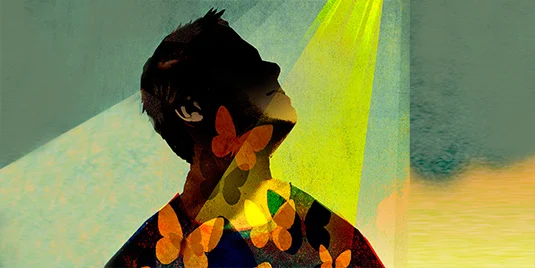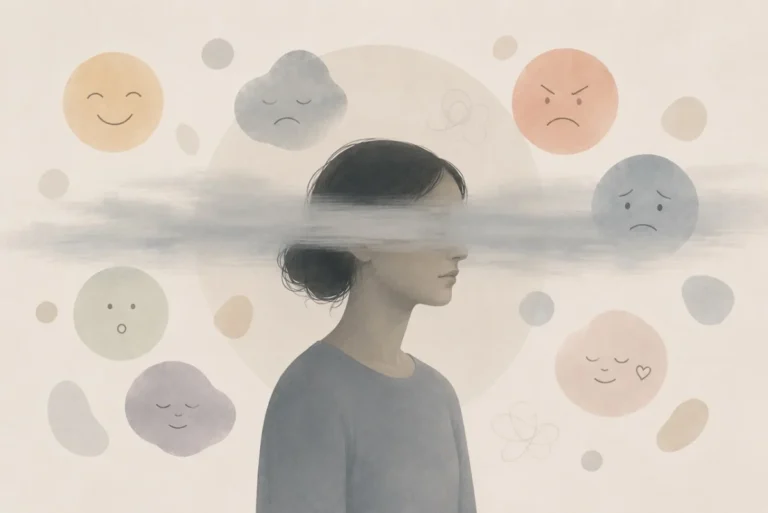






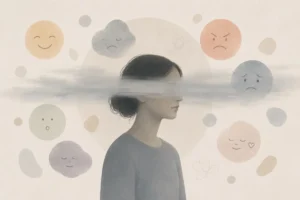



The image of the "mad genius"—the painter, writer, or musician whose brilliance is inextricably linked to their psychological suffering—is one of the most enduring archetypes in Western culture. From the tragic life of Vincent van Gogh to the volatile brilliance of Sylvia Plath, society has long romanticized the idea that mental illness, particularly bipolar disorder, is the "price" one pays for extraordinary creativity.
However, for those living with the condition, this romanticization is not just a cliché; it is a dangerous deterrent to recovery. For an award-winning novelist who has lived with bipolar disorder for decades, the reality is far more pragmatic: untreated mania does not produce art; it produces chaos. By stabilizing the neurological storm through medication, the artist is not "dulling" their spark, but rather building the furnace necessary to contain and direct it.
Main Facts: The Intersection of Bipolar Disorder and Artistic Output
Bipolar disorder, characterized by extreme shifts in mood, energy, and activity levels, has a statistically significant presence among creative professionals. According to various psychological studies, individuals in creative fields are disproportionately likely to experience bipolar symptoms compared to the general population. This correlation has fueled the persistent fear that pharmacological intervention—specifically mood stabilizers like lithium—acts as a "creative lobotomy."
The central conflict for many artists diagnosed with the disorder is the fear of losing the "highs" of hypomania. During these periods, ideas flow rapidly, sleep seems unnecessary, and the ego expands to a point of absolute confidence. However, as the novelist at the heart of this discussion points out, there is a distinct and often ignored line between the productive energy of hypomania and the destructive "gibberish" of full-blown mania.
Since beginning treatment nearly 20 years ago, this novelist has published four critically acclaimed books. His experience serves as a direct rebuttal to the myth that medication erases the artistic soul. Instead, he argues that medication protects the cognitive faculties required to translate raw emotion into a structured, communicative medium.
Chronology: From Untreated Chaos to Disciplined Creation
The journey from a state of untreated bipolar disorder to a stabilized, productive career typically follows a specific, often painful, trajectory.
The Era of Unchecked Mania
In the early stages of a creative career, an individual may rely on the "electric" energy of hypomania. During these phases, the artist feels they are tapping into a divine or cosmic source. However, this period is often followed by a devastating "crash" into clinical depression, where the ability to write or create vanishes entirely. The novelist describes this era as one of inconsistency—where the "inspiration" felt during a manic episode often resulted in work that, upon later review, was incoherent and unusable.
The Turning Point and Diagnosis
The transition to medication usually occurs after a crisis point—an episode of full-blown mania that disrupts the artist’s life, relationships, and health. In this state, thoughts become a "chaotic torrent" of disconnected ideas. The novelist notes that while the person in the grip of mania feels they are being profound, to the outside world, their expression is merely an "unrestrained, egocentric babble."
The Stabilization Phase
The first few years of treatment are often marked by a period of adjustment. This is the "danger zone" where many artists stop taking their medication. Because the brain is used to the dopamine-heavy highs of mania, a stable, "normal" mood can initially feel flat or "boring." It takes time for the creative mind to relearn how to generate ideas without the artificial propellant of a manic episode.
The Productive Plateau
For the novelist, the last two decades have represented a new chapter. By maintaining a consistent medication regimen, he has moved away from the "all or nothing" cycle of bipolar disorder. While there were still periods of writer’s block or poor drafts, he realized these were part of the standard creative process, not side effects of his medication.
Supporting Data: The Science of Creativity and Mood Stabilizers
The fear that medication inhibits creativity is a topic of significant psychiatric research. To understand why medication is actually beneficial, one must look at the cognitive requirements of high-level art.
- The "U-Shaped" Relationship: Research suggests that creativity and mood disorders follow an inverted U-shaped curve. Mild symptoms (hypomania) may correlate with increased fluency and divergent thinking. However, as symptoms become severe (mania), cognitive functions such as "executive control" and "working memory" collapse. Without these functions, an artist cannot organize their thoughts into a coherent narrative or composition.
- Lithium and Cognitive Clarity: While some patients report "mental fog" on high doses of lithium, clinical studies indicate that at therapeutic levels, mood stabilizers can actually protect the brain. Chronic, untreated manic and depressive episodes have been linked to neuroprogression—the actual physical degradation of brain tissue over time. By preventing these episodes, medication preserves the brain’s long-term capacity for complex thought.
- The "Flow State" vs. Mania: Psychologists distinguish between the "flow state"—a period of intense, focused concentration—and mania. Mania is characterized by distractibility and "flight of ideas." Flow, which is essential for finishing a novel or a painting, requires the very stability that bipolar medication provides.
Official Responses: Medical and Artistic Perspectives
The psychiatric community has shifted its approach toward treating creative individuals. Rather than focusing solely on symptom suppression, modern psychiatry emphasizes "functional recovery"—helping the patient maintain their identity and vocation while managing their illness.
The Clinical Perspective:
Dr. Kay Redfield Jamison, a clinical psychologist and professor of psychiatry at Johns Hopkins University—who herself has bipolar disorder—has written extensively on this topic. Her work suggests that while the disorder may provide the "raw material" of intense emotion, it is the disciplined, stable mind that turns that material into art. The medical consensus is that the "dulling" effect patients fear is often a matter of dosage. If a patient feels "emotionally flat," the solution is usually a collaborative adjustment of the medication, not a total cessation of treatment.
The Artistic Community’s Response:
More creative professionals are speaking out against the "tortured artist" narrative. From musicians like Demi Lovato to actors like Stephen Fry, the message is becoming clearer: mental health is a tool of the trade. The novelist emphasizes that young artists often view their condition as a "badge of specialness" that separates them from "ordinary folk." However, he argues that this perspective is a trap. True artistic maturity involves recognizing that one’s "specialness" comes from their soul and their craft, not from a clinical diagnosis.
Implications: The Future of Creativity and Mental Health
The implications of this shift in perspective are profound for the next generation of artists. If the creative community continues to debunk the myth that medication kills creativity, we may see a decrease in the tragic loss of life and talent associated with untreated bipolar disorder.
1. The Democratization of the Artist
By rejecting the idea that mental illness is a prerequisite for genius, the art world becomes more inclusive. It moves away from the "cult of personality" and back toward a focus on the work itself. As the novelist notes, being stabilized allows an artist to be "useful" to others, contributing something of value to society rather than being consumed by their own internal whirlwind.
2. Longevity Over Intensity
The "burn fast, die young" model of creativity is being replaced by a model of longevity. Medication allows an artist to have a career that spans decades rather than a few explosive years. For a writer, this means the ability to develop complex themes and refine their voice over multiple volumes—a task that is nearly impossible in the midst of untreated mood cycles.
3. The Ethical Responsibility of Mentorship
There is a growing responsibility for established artists and educators to guide young talents toward health. When a "budding artist" refuses medication, they are often making a choice based on a misunderstanding of what art is. Art is communication; mania is isolation.
Conclusion: The Soul vs. The Symptom
The novelist’s message to the mothers of young artists—and to the artists themselves—is one of profound hope. Creativity is not a byproduct of a malfunctioning brain; it is an inherent quality of the human spirit. Medication does not touch the "deep place" where meaning and purpose reside. Instead, it clears the wreckage of the disorder so that the artist can access that deep place with "intelligence, imagination, and intuition."
In the end, the goal of treatment is not to make the artist "ordinary." It is to ensure that the artist survives long enough to share their extraordinary vision with the world. Stability is not the enemy of the muse; it is her greatest ally.