







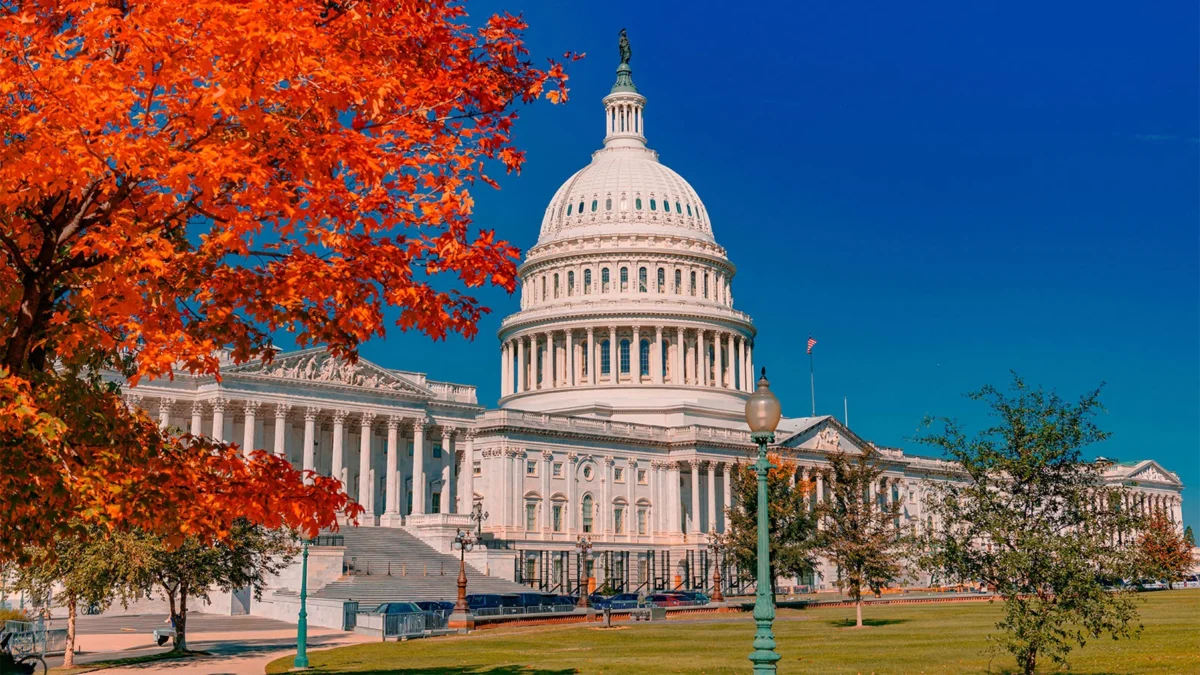
October 29, 2026 — As the nation turns its eyes toward the upcoming midterm elections, the corridors of Capitol Hill are already echoing with a familiar, high-stakes question: What remains on the congressional healthcare menu for the post-election "lame duck" session? While the results of the midterms will undoubtedly reshape the political landscape for 2027, the legislative window between November’s election and the end of the year offers a narrow, precarious opportunity for Congress to address lingering healthcare policy concerns.
Policy experts suggest that while significant reform is unlikely, a series of "must-pass" vehicles—including appropriations, the National Defense Authorization Act (NDAA), and the Farm Bill—will serve as the primary conduits for any healthcare provisions that manage to survive the legislative gauntlet.
The Landscape of the Lame Duck Session
The post-election period is traditionally characterized by a frantic scramble to clear the legislative deck before a new Congress is sworn in. According to Michael Baker, director of healthcare policy at the American Action Forum, the productivity of this session is intrinsically linked to the election’s outcome, even before new members take their seats.
"Post-election health policy productivity will depend not only on projected party control of the chambers, but also which sitting members are returning next year, and who may be expected to assume gavels in the new Congress," Baker noted. "A prospective chairmanship or ranking membership slot may influence what policies a member or committee considers for passage in the remaining 2026 legislative days or holds for action in the new year."
The prevailing consensus among analysts is one of caution. With a divided Congress and a lack of aggressive pressure from the White House to push through landmark healthcare initiatives, the legislative output is expected to be modest, focusing on technical fixes and routine extensions rather than sweeping structural overhauls.
Chronology of Legislative Pressures
The healthcare agenda for the remainder of 2026 is governed by a set of expiration dates and looming fiscal cliffs. Understanding the timeline of these pressures is essential to predicting what will survive the legislative process.
1. The Immediate Horizon (November 2026)
Following the midterms, leadership will focus on stabilizing the federal budget. Because government funding must be finalized to avoid a shutdown, healthcare provisions that carry a price tag will be tethered to these appropriations bills.
2. The Extenders Cliff (December 2026)
Several high-profile programs, including Medicare telehealth authorities and acute hospital care-at-home models, are approaching expiration. These are widely viewed as non-controversial. The legislative strategy here is simple: bundle these into a broader package to ensure continuity of care without inviting floor debates that could stall the process.
3. The "Doc Fix" Window (Year-End)
As the year closes, the Centers for Medicare & Medicaid Services (CMS) physician payment schedules become a focal point. With a proposed 1% reduction in reimbursement rates on the table—coupled with restrictions on same-day services—provider groups are mounting a significant lobbying effort to secure a reprieve.
Medicare Reimbursement and the "Doc Fix"
The most significant area where legislative action is deemed probable is the so-called "doc fix." Joe Antos, PhD, senior fellow emeritus at the American Enterprise Institute, emphasizes that the pressure on Congress is driven by the stark financial reality facing physicians.
"Congress will be under pressure to override CMS’s proposed 1%+ reduction in Medicare physician payment as well as a CMS plan to limit payment for same-day physician services," Antos said. "Since this is mostly just money, I can see some change included in the final budget bill."
The argument for the "doc fix" is largely rooted in the inflationary pressures affecting medical practices. If these cuts are allowed to proceed, advocates argue it could lead to reduced access to care for Medicare beneficiaries. Because the fix is primarily budgetary rather than ideological, it remains the most likely candidate for inclusion in a final omnibus package.
The "No Surprises" Impasse and 340B Uncertainty
While the "doc fix" enjoys a degree of consensus, other pressing issues remain mired in complexity. The No Surprises Act, while successful in its primary mission of shielding patients from unexpected out-of-network bills, has created significant administrative friction.
"It’s not clear what the fix is, but the current system is creating a lot of friction," Antos noted regarding the arbitration process that payers and providers have found increasingly burdensome. However, fixing the mechanics of the act is a heavy lift for a short session. Wendell Primus, PhD, visiting fellow at the Brookings Schaeffer Initiative on Health Policy, was blunt in his assessment: "No way surprise billing gets done—too big—they will do that next year."
Similarly, the 340B drug discount program—which allows safety-net hospitals to purchase outpatient drugs at a discount—faces an uncertain future. The current administration has proposed shifting the program to a rebate-based system, a move that has met with fierce resistance from hospital lobbies. Primus predicts that any fundamental reform to 340B will be deferred, noting that hospitals are actively pushing for a delay, and in the current climate, they are likely to get it.
Official Responses and Expert Projections
The legislative stalemate is compounded by a lack of cross-party incentives. With little motivation for Democrats and Republicans to engage in deep negotiations, the scope of what is possible has shrunk significantly.
"Congress hasn’t been at work for a long time," Antos observed. "Democrats and Republicans have no incentive to negotiate with each other even if they did come into town, and the White House isn’t pushing anything on health."
However, there is a narrow window for bipartisan cooperation on price transparency. According to Baker, there are several transparency bills that have already cleared committee hurdles. If these can be reconciled and attached to a broader "must-pass" vehicle, they could emerge as one of the few substantive policy achievements of the late 2026 session.
"I wouldn’t expect new policies," Antos concluded. "At most, there might be some fixes on existing policies that are causing problems. But small fixes, not fundamental changes."
Implications for Healthcare Stakeholders
For patients, providers, and insurers, the current legislative climate suggests a period of continued status quo, interspersed with minor technical adjustments.
For Providers
The primary concern remains the Medicare physician fee schedule. A failure to pass a "doc fix" could have immediate implications for practice viability, particularly for smaller, independent practices already grappling with rising operational costs.
For Hospitals
The delay in 340B reforms provides a temporary reprieve from a structural shift that could have significantly altered hospital revenue models. However, the lack of certainty means that financial planning for the 2027 fiscal year remains complicated.
For Patients
The legislative focus on "extenders" provides a measure of security. The continuation of telehealth and hospital-at-home programs ensures that the convenience and access gains made during and after the pandemic will persist into the new year.
Conclusion: A Limited Legislative Horizon
As 2026 draws to a close, the healthcare policy landscape in Washington is defined by its limitations. The upcoming midterm elections have created a political environment where bold initiatives are sidelined in favor of preserving current operations.
While the "doc fix" offers a glimmer of hope for physicians, and transparency legislation remains a dark horse candidate for passage, the broader, more contentious issues—such as the overhaul of the No Surprises Act arbitration system and the restructuring of the 340B program—are almost certain to be pushed into the next Congress.
In the final assessment, the 2026 lame duck session will likely be remembered not for what it changed, but for what it chose to preserve, ensuring that the existing healthcare infrastructure continues to function until a new, post-election Congress can address the deeper systemic challenges facing the American medical system.