









September 3, 2026
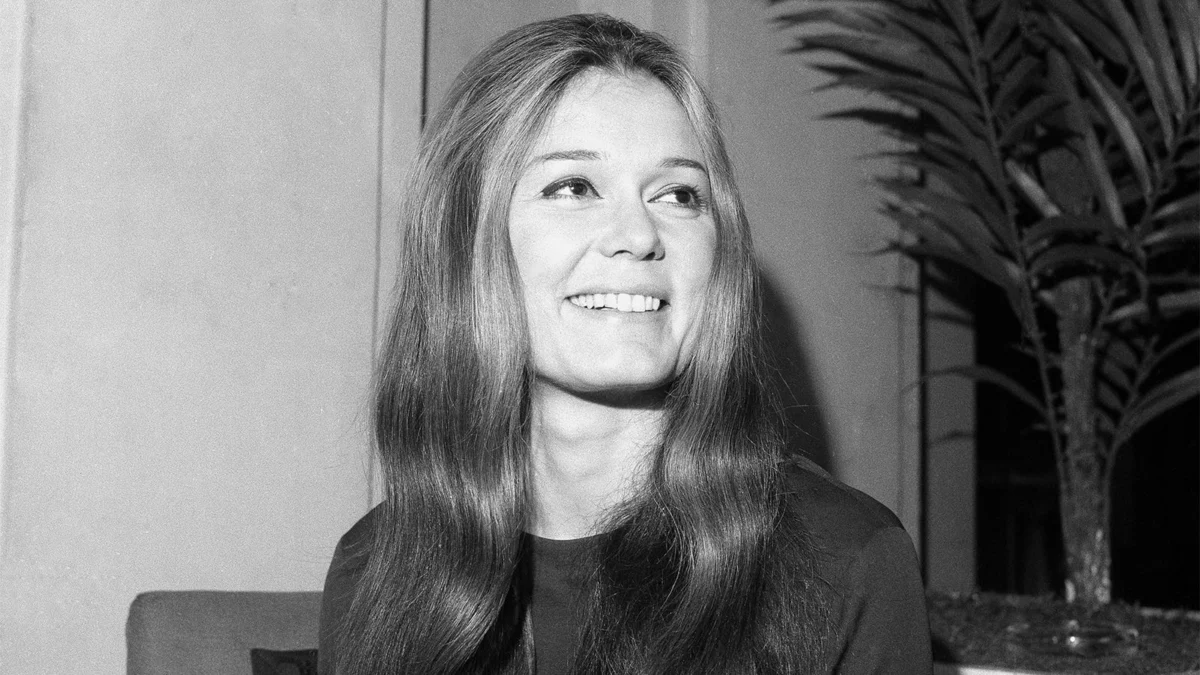
The world of activism and letters lost its most enduring luminary this week. Gloria Steinem, the pioneering journalist, political activist, and face of the second-wave feminist movement, passed away on Wednesday at the age of 92. Her life, which spanned nearly a century of radical social transformation, served as the blueprint for modern gender equality advocacy.
For decades, Steinem was more than just a public intellectual; she was a cultural touchstone. Whether she was reporting from the front lines of the 1960s women’s liberation movement, co-founding Ms. magazine, or offering sharp, witty rebukes to the status quo, Steinem remained a steadfast champion for bodily autonomy and democratic parity. As we reflect on her legacy, we look back at the words she shared with the Associated Press—a collection of reflections that illuminate her sharp wit, her blunt political analysis, and her relentless optimism.
The Genesis of an Icon: A Life in Chronology
Born in 1934, Steinem’s early life was marked by an unconventional upbringing that she often credited for her independent spirit. In a reflection shared as recently as March 2026, Steinem revealed the unique circumstances of her youth: "In the wintertime, my father always put the whole family in a house trailer and we were working our way, buying and selling antiques and so on, to Florida or California. I think my family thought because I was always reading books in the back seat, that was enough."
She did not attend a traditional school until the sixth grade. This lack of rigid, early institutionalization likely fostered the inquisitive, contrarian nature that would later define her career. After graduating from Smith College, Steinem moved to New York City to pursue journalism—a field then dominated almost exclusively by men.
Her career was defined by "guerrilla journalism." She famously went undercover as a Playboy Bunny in 1963 to expose the degrading working conditions of the women in the clubs, a feat of reporting that signaled the arrival of a writer who would not settle for the surface-level narrative. By the 1970s, she had co-founded Ms. magazine, providing a national platform for women to discuss issues that mainstream media deemed "too trivial" or "too radical," including reproductive rights, workplace discrimination, and domestic violence.
Reproductive Freedom as the Bedrock of Democracy
Perhaps no issue was as central to Steinem’s life’s work as the fight for reproductive rights. She viewed the control of reproduction as the primary mechanism of patriarchal power. In May 2016, she distilled this complex sociological issue into a piercing observation: "We know sexism is not inevitable. It’s only about controlling reproduction and therefore controlling women. If we have reproductive freedom, that is the ability to decide for ourselves when and whether to have children and what happens to our bodies, it can be reversed."
Steinem was known for her ability to dismantle the rhetoric of her opponents. When confronted with the "pro-abortion" label, she would quickly pivot to the core issue of agency. In a May 2017 interview, she stated, "It’s obviously ridiculous to say somebody is ‘pro-abortion.’ Nobody wakes up in the morning and says, ‘I think I’ll have an abortion. It’s a pleasurable experience.’ The question is not pro-abortion or anti-abortion, the question is who makes the decision: a woman and her physician, or the government."
The Shadow of Roe v. Wade
The overturning of Roe v. Wade in 2022 was a devastating blow to the movement Steinem helped build. However, her reaction was not one of defeat, but of renewed defiance. In an email sent to reporters in June 2022, she framed the court’s decision as an assault on the very concept of American governance: "Obviously, without the right of women and men to make decisions about our own bodies, there is no democracy."
She urged supporters to view the decision as a catalyst for civil disobedience. "Women have always taken power over our own bodies, and we will keep right on," she wrote. "An unjust court can’t stop abortion, but it guarantees civil disobedience and disrespect for the court."
Political Underrepresentation and the "Half-Talent" Problem
Steinem’s critique of the American political apparatus remained sharp until the very end. As of early 2026, she continued to lament the persistent glass ceiling that prevented women from reaching the highest office in the land.
"We live in a democracy that’s one of the few in the world that’s never had a female elected leader," she remarked in March 2026. "That’s kind of ridiculous. I mean, we’re choosing from half the country’s talent."
This argument—that the exclusion of women from leadership is not merely an issue of fairness but a strategic failure of the nation—was a hallmark of her advocacy. She consistently pushed for a systemic overhaul of political parties, arguing that true democracy requires representation that reflects the demographic reality of the populace.
Wit, Wisdom, and the "B-Word"
While Steinem’s politics were serious, her delivery was often characterized by a disarming wit. She was famously unbothered by the vitriol directed at her by critics, particularly those who used gendered slurs to diminish her influence.
In a July 2020 interview, she offered a masterclass in handling harassment with grace and power: "It took me years to learn what to do when someone calls you a bitch. Just smile in a calm triumphant way, and say, ‘Thank you!’"
This anecdote encapsulates the "Steinem style"—the ability to neutralize aggression by refusing to play by the rules of the aggressor. Her book of quotations, The Truth Will Set You Free, But First It Will Piss You Off! (2019), remains a staple for activists, serving as both a guide to the struggles ahead and a reminder to maintain one’s sense of humor in the face of inevitable pushback.
The Implications of a Legacy
The passing of Gloria Steinem marks the end of an era, but it also prompts a vital national conversation about the trajectory of the feminist movement. As the country navigates a volatile landscape regarding civil rights, reproductive healthcare, and democratic integrity, Steinem’s philosophy provides a road map for those looking to continue the fight.
The Institutional Impact
Steinem’s influence on the American legal and cultural landscape is immeasurable. From her early work with the National Women’s Political Caucus to her lifetime of mentorship, she helped shift the American zeitgeist from a culture of silence to one of vocal advocacy.
The Future of Activism
As activists look toward the future, the lessons Steinem left behind are clear:
- The Personal is Political: Every private struggle—from healthcare decisions to family dynamics—is inextricably linked to public policy.
- Persistence is Required: Change is not a sprint, but a long-term commitment. As she famously noted in 2015 regarding the act of writing—a metaphor for her activism—the work is difficult and often avoided, but essential. "If you’re a writer and you really care about writing, you put it off. You wax the floor." For Steinem, the "floor-waxing" was the daily grind of organizing, which she undertook with unwavering commitment.
- Disrupt the Courtroom and the Classroom: Steinem believed that when institutions fail, they lose their moral authority. Her call for civil disobedience in the face of the Roe reversal serves as a foundational principle for future generations of protesters.
Conclusion: A Voice that Resonates
Gloria Steinem leaves behind a world that is fundamentally different from the one she entered in 1934. While she remained critical of the pace of progress—particularly regarding the lack of female presidential leadership—she never lost sight of the fact that the struggle itself was the point.
She was a woman who lived by her own rules, taught a generation how to stand up for their rights, and reminded us all that the truth is often uncomfortable, but it is the only path toward genuine liberation. As we move forward, the "calm, triumphant smile" she recommended remains perhaps the most powerful tool in the arsenal of those who seek to change the world.
The icons of the past have laid the groundwork; the work, as Steinem would insist, is now up to the living.