









In the race to dominate the global artificial intelligence landscape, a fundamental physical reality is being obscured by political rhetoric and corporate PR. While Silicon Valley markets the "cloud" as an ethereal, clean, and boundless frontier of innovation, the physical infrastructure required to power it is tethered to the most precious resource on Earth: water. Recently, Commerce Secretary Howard Lutnick claimed that AI data centers do not consume water—a statement that has ignited a firestorm among environmental scientists, hydrologists, and community advocates who argue that this rhetoric ignores a looming resource catastrophe.
The Mirage of the "Waterless" Data Center
The assertion that data centers operate without water is, by all technical and empirical measures, a fallacy. Modern hyperscale data centers—massive industrial complexes housing tens of thousands of servers—require constant cooling to prevent hardware from failing under the intense heat generated by AI computation.
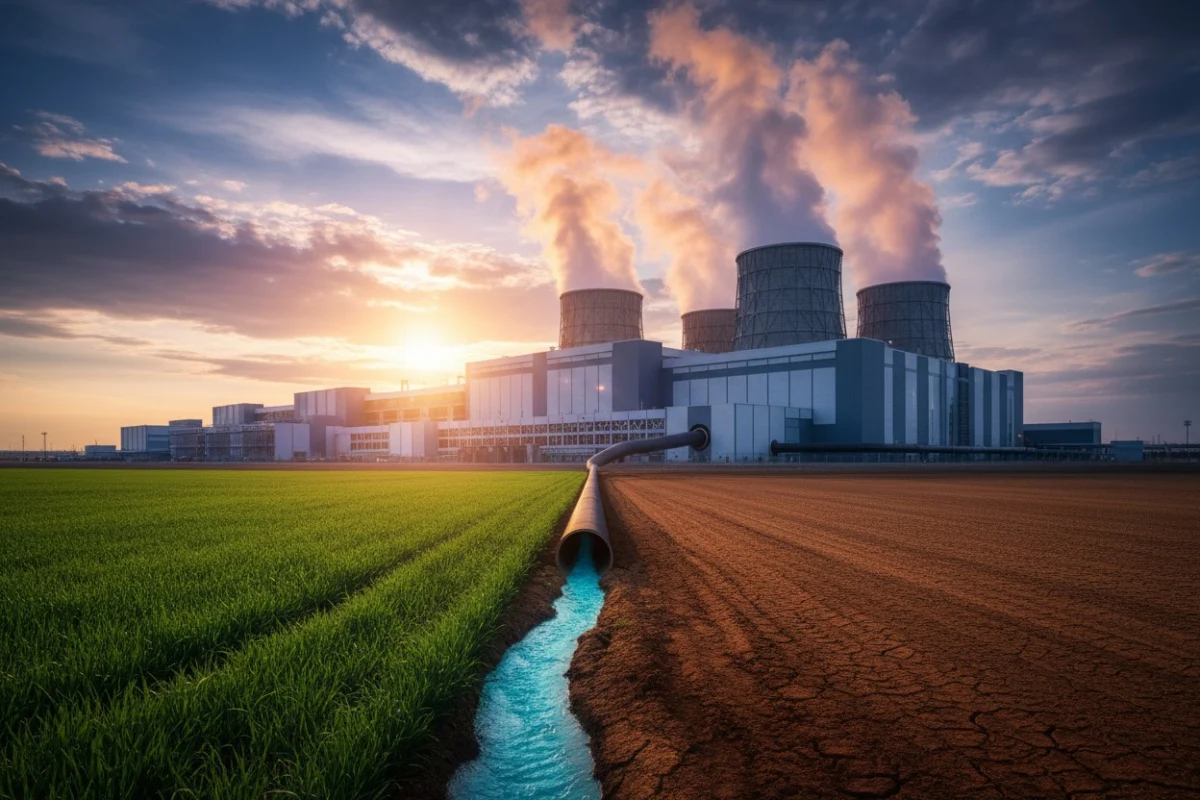
Most of these facilities rely on evaporative cooling systems. In these setups, water is pumped through cooling towers where it is exposed to the air; as the water evaporates, it draws heat away from the facility’s internal environment. This water is not recycled; it is vented into the atmosphere as vapor, effectively removing it from the local hydrological cycle. For a standard hyperscale facility, this process consumes roughly 300,000 to 5 million gallons of water daily. When applied to the thousands of data centers currently in development, the scale of consumption shifts from industrial usage to regional resource depletion.
Chronology of a Growing Conflict
The tension between technological expansion and water security has been escalating for years, though it has only recently moved to the center of national political discourse.
- 2021–2022: As the generative AI boom began, tech giants accelerated the construction of hyperscale facilities. Local communities in water-stressed areas like Arizona and Texas began reporting significant drops in well levels and increased utility costs.
- 2023: Investigative reports began highlighting the "hidden" water costs of the power plants feeding these data centers. Public outcry grew in regions where data centers were granted priority access to water during periods of extreme drought.
- 2024: Tech giants published their annual sustainability reports, revealing staggering consumption figures. Google reported a 20% increase in water consumption year-over-year, totaling 7.7 billion gallons, while Amazon’s AWS division recorded 2.5 billion gallons.
- 2025–2026: Political rhetoric reached a fever pitch. In an effort to fast-track energy and infrastructure dominance, high-ranking officials began publicly downplaying the environmental impact of these facilities, culminating in Secretary Lutnick’s recent, controversial claims.
Supporting Data: The Quantitative Reality
To understand the scope of the crisis, one must look beyond the direct intake of the cooling towers and consider the "indirect" water footprint of AI.
Direct Consumption
The direct evaporation occurring in cooling towers is merely the tip of the iceberg. With 40% of new data centers located in regions classified as having "high" or "extreme" water stress, the competition for municipal water is reaching a breaking point. Projections for Texas alone are alarming; researchers estimate that water demand from data centers in the state will surge from 49 billion gallons in 2025 to nearly 400 billion gallons by 2030.
The Power Generation Drain
The hidden colossus in this equation is the electricity grid. Data centers are among the most power-hungry facilities on the planet. The vast majority of the electricity they consume is generated by thermoelectric power plants (coal, nuclear, and natural gas). These plants require immense volumes of water for cooling their own steam-cycle operations. In 2023 alone, the power plants supporting U.S. data centers consumed an estimated 211 billion gallons of water—roughly ten times the volume of the water used directly by the data centers themselves.
The Poisonous Aftermath: Blowdown and Contamination
Industry advocates often cite "closed-loop" systems as a solution to water waste. However, experts point to a significant, under-regulated problem: the "blowdown."
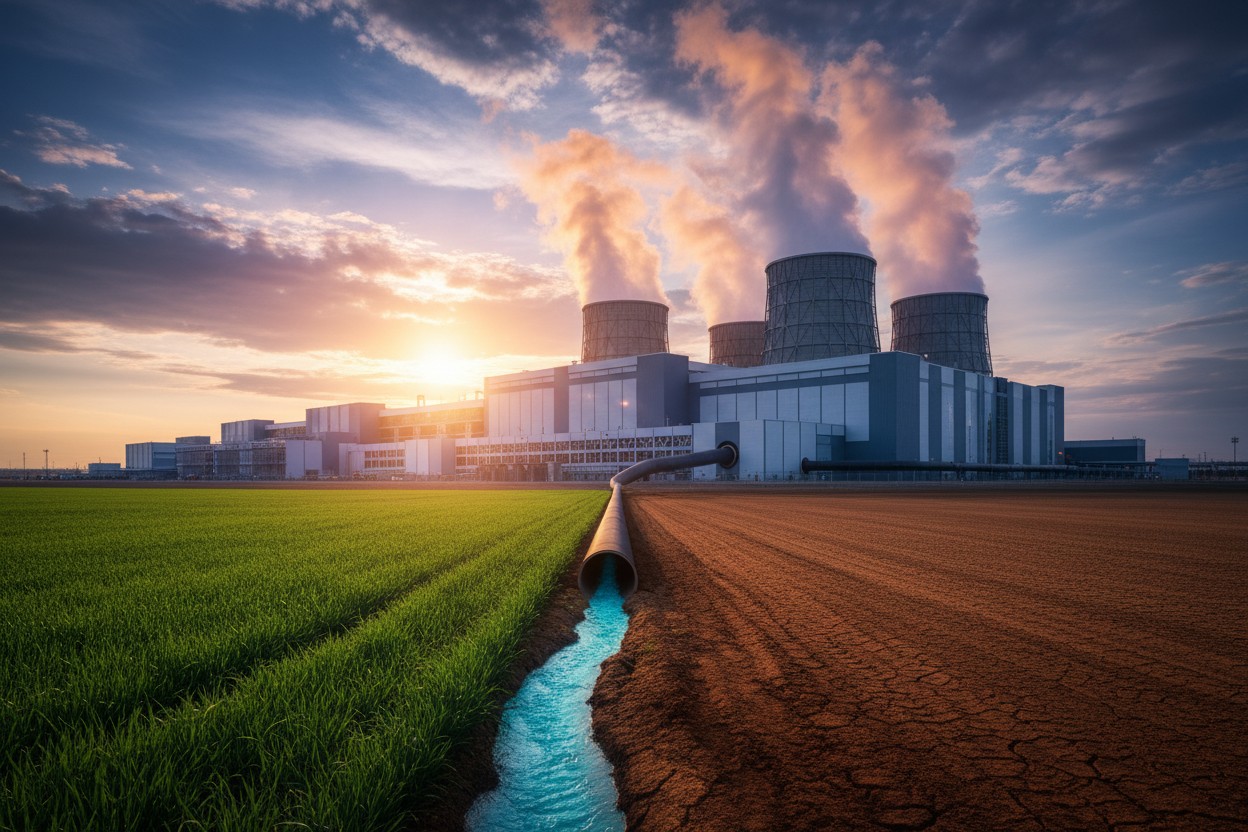
Even in closed-loop systems, water cannot be recycled indefinitely. As it circulates, it accumulates dissolved minerals, salts, and chemical corrosion inhibitors. If this water is not periodically drained (blown down) and replaced with fresh water, the system will scale and corrode, leading to catastrophic equipment failure.
The resulting blowdown is a chemical cocktail containing heavy metals, nitrites, and often PFAS—the so-called "forever chemicals" used in industrial pipe coatings. Because federal oversight on these specific industrial discharges is currently fragmented or nonexistent, these toxic byproducts are frequently released into municipal sewers and local waterways, turning public infrastructure into a site for private industrial waste disposal.
Official Responses and Political Implications
The political response to these findings has been deeply polarized. Supporters of the AI buildout, including the current administration’s leadership, frame the expansion as a matter of national security and economic competitiveness. They argue that the transition to AI is an "all-or-nothing" race against international rivals, and that environmental externalities are a secondary concern compared to the potential for technological hegemony.
Conversely, state and local officials are increasingly pushing back. In states like Arizona, local governments have begun to implement stricter zoning laws and water-impact fees on data center developers. The consensus among these local actors is that the current model of rapid expansion is unsustainable and unfairly shifts the cost of industrial growth onto the public.
Socioeconomic and Ecological Implications
The implications of this resource extraction are profound, touching on the fundamental human rights of water access and food security.
- Agricultural Displacement: As data centers compete for the same aquifers used by farmers and ranchers, the price of water increases. This creates a scenario where agricultural production—essential for food security—is rendered economically unviable by the massive water demand of high-compute server farms.
- Groundwater Depletion: In regions where the water table is already falling, the "pumping race" between developers and municipalities is accelerating the permanent exhaustion of aquifers. Once these ancient water sources are depleted, they cannot be recharged within a human timeframe.
- Community Health: The discharge of chemical blowdown into local watersheds presents a long-term public health risk that has yet to be fully accounted for by the EPA. As data centers continue to proliferate in rural areas, the risk of localized contamination increases, potentially impacting the drinking water of millions.
Conclusion: A Call for Transparency and Stewardship
The debate over data center water consumption is not an argument against technological progress; it is an argument for environmental accountability. As society pivots toward an AI-integrated future, the infrastructure supporting that transition must be transparent, regulated, and sustainable.
The current path—characterized by a lack of federal oversight, the downplaying of scientific data, and the aggressive extraction of shared resources—is creating a collision course between Big Tech and the basic requirements for human survival. To avoid a future of parched landscapes and toxic water supplies, the industry must move toward verifiable, water-neutral technologies and accept strict regulatory standards for their waste discharge.
Water is not a corporate commodity; it is a vital foundation for life. As the digital age accelerates, the responsibility to protect this foundation lies not just with the regulators, but with the public, who must demand that the "cloud" does not come at the cost of the ground beneath our feet. The true cost of our technological ambition is measured in gallons, and it is time we account for every single drop.